
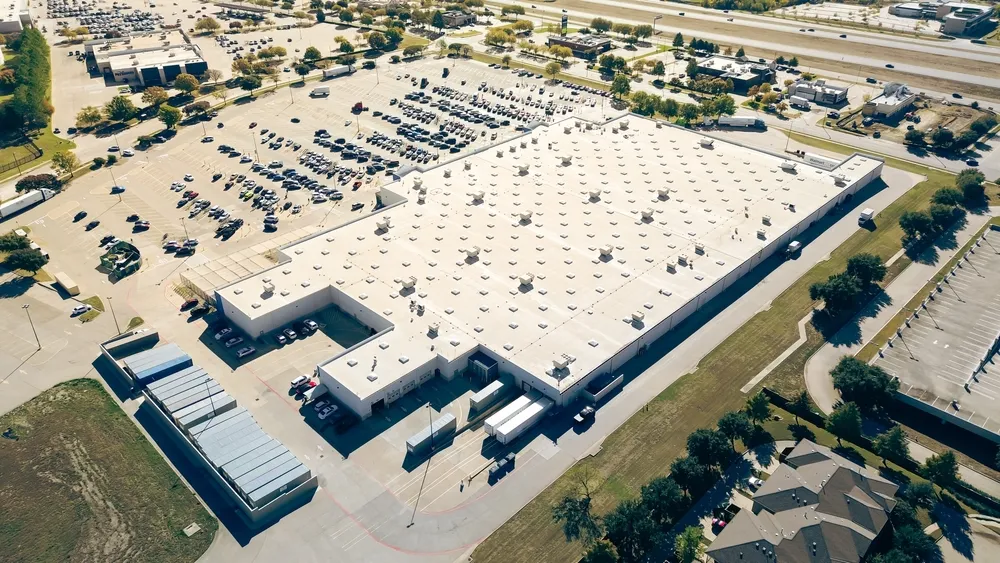
If you’ve ever looked across a city skyline or driven through an industrial park, you’ve probably noticed the same pattern: most commercial buildings have flat (or low-slope) roofs. That’s not an accident—and it’s not only about aesthetics. Flat roofing became the commercial standard because it supports large footprints efficiently, makes maintenance easier, and creates valuable rooftop real estate for equipment and energy upgrades.
This guide explains why commercial buildings have flat roofs, what the tradeoffs are, and how modern systems—especially single-ply membranes—make flat roofs a reliable choice for both commercial and many residential applications.
Flat Roofs Make Structural Sense for Large Buildings
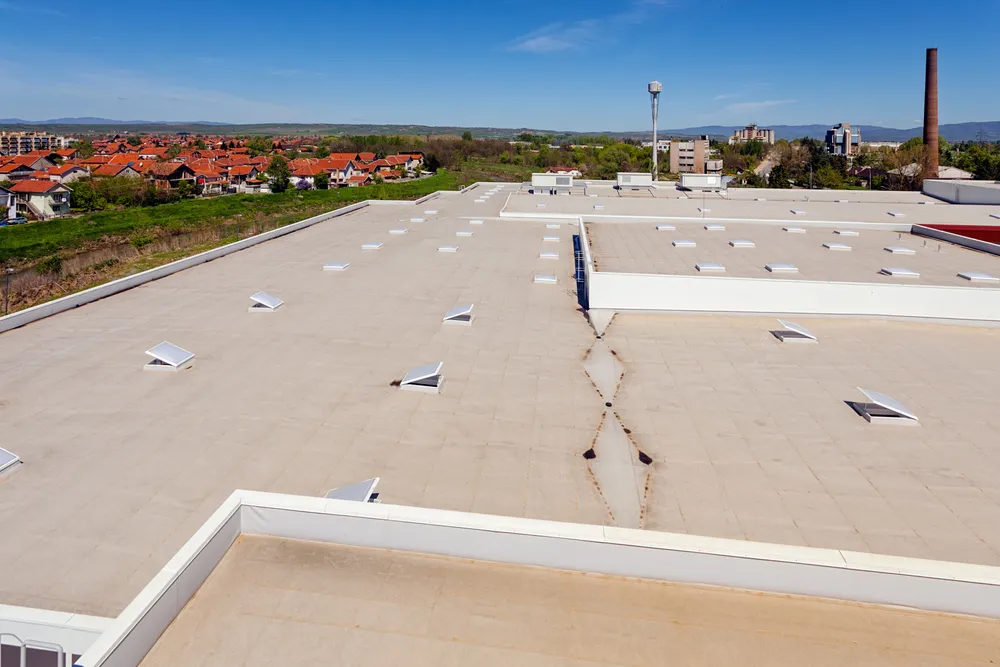
Why do commercial buildings have flat roofs in the first place? Because low-slope roof structures are often the most practical way to cover big, open areas with predictable performance and fewer structural complications.
Wide Spans Are Easier to Build and Support
Warehouses, retail stores, schools, offices, and facilities often need wide, uninterrupted floor plans. A low-slope roof can span large areas with straightforward framing and decking systems, reducing the complexity that comes with steep, multi-plane roof designs. When the roofline stays simple, it’s easier to engineer, easier to detail, and often easier to keep watertight over time.
Less Roof Complexity Means Fewer Failure Points
Complex roof shapes can create more valleys, transitions, and intersections—areas where water movement and detailing become more difficult. Flat and low-slope roofs usually have fewer abrupt changes, which can reduce the number of “high-risk” detail zones when the roof is properly designed with slope, drainage, and durable perimeter terminations.
Cost Predictability Helps Commercial Budgets
Commercial projects live and die by cost predictability. A flatter, simpler roof assembly can be installed more efficiently, especially across large square footage, and that can translate into more stable budgeting—both for new construction and long-term facility planning.
Flat Roofs Create Valuable Rooftop Space for Equipment
Why do commercial buildings have flat roofs? A major reason is that a flat roof turns the top of the building into functional space for mechanical systems and infrastructure that would otherwise steal rentable or usable interior space.
HVAC and Mechanical Units Fit Naturally on Low-Slope Roofs
Many commercial buildings use rooftop HVAC units because they’re efficient for zoning, easy to connect, and keep noisy equipment out of occupied areas. Flat roofs provide the stable surface needed for curbs, supports, and safe access paths around equipment—making design and servicing more manageable.
Maintenance Access Is Faster and Less Disruptive
When technicians can service HVAC equipment from the roof, they often don’t need to enter offices, retail spaces, or secured areas. That reduces disruption to daily operations and can improve safety, especially in busy buildings where internal maintenance routes are complicated.
Rooftop Infrastructure Supports Modern Operations
Beyond HVAC, commercial roofs often hold exhaust systems, communications hardware, and sometimes backup power components. A flat roof supports these add-ons more conveniently, as long as penetrations are detailed correctly and the roof system is designed for long-term service traffic.
Flat Roofs Simplify Inspections, Repairs, and Ongoing Maintenance
Why do commercial buildings have flat roofs even in regions with harsh weather? One practical reason is serviceability. A roof that’s easier to access and inspect is easier to maintain, and better maintenance usually means longer roof life.
Walkable Surfaces Improve Safety and Efficiency
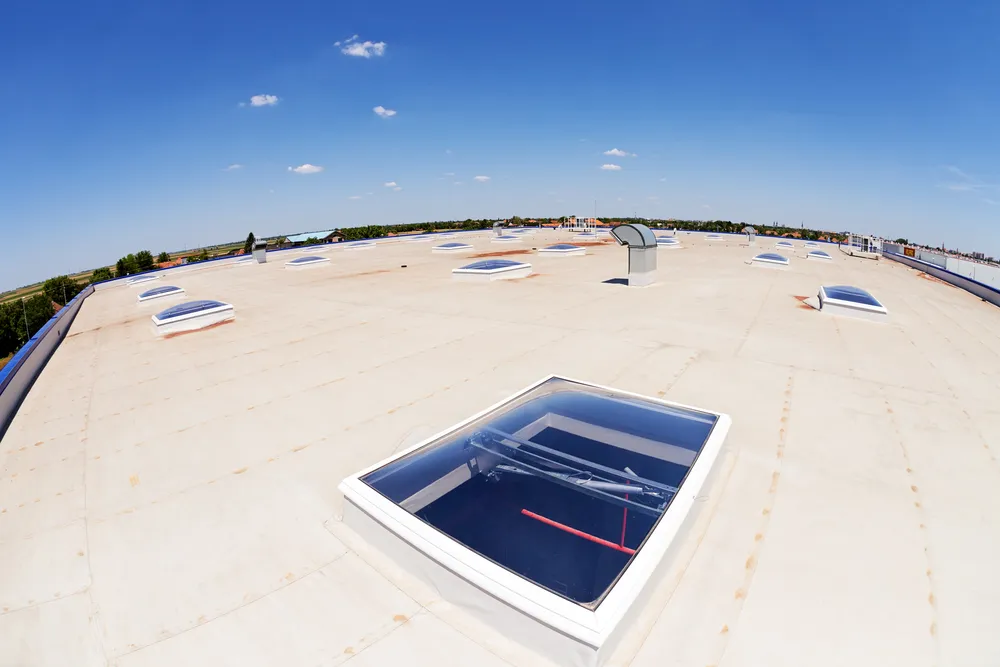
Low-slope roofs are generally easier for trained crews to move across, especially when compared with steep-slope systems that require more specialized access. That makes routine inspections faster and reduces the time it takes to locate and address small issues before they become expensive leak events.
Problems Are Often Easier to Spot Early
With a flat roof, many common issues—like debris buildup near drains, flashing wear, punctures from foot traffic, or seam stress—can be identified sooner during scheduled inspections. Early detection matters because most commercial roof failures start at details, edges, or penetrations, not in the wide-open field.
Maintenance Programs Are Easier to Standardize
Commercial properties often operate multiple buildings or multiple roof sections. Flat roofing systems make it easier to standardize inspection schedules, repair methods, and documentation—important for facility teams that need predictable processes and clear reporting.
Flat Roofs Support Cleaner Architecture and Flexible Building Expansion
Why do commercial buildings have flat roofs from a planning perspective? Because flat rooflines integrate well with modern commercial architecture and make future expansion and tenant changes easier to manage.
Flat Rooflines Work Well With Parapets and Signage
Commercial buildings often use parapets for aesthetics, wind performance, and edge protection. Parapets also help hide rooftop equipment from view and create clean lines for brand signage and façade design—especially common in retail and office buildings.
Building Additions and Tie-Ins Are More Straightforward
Many businesses expand over time. Flat roofs can be simpler to tie into new roof sections, additions, or adjacent structures when compared with steep-slope roofs that require matching pitches, valleys, and multiple planes. With good detailing, the transition can be engineered in a predictable way.
Tenant Fit-Outs and Future Penetrations Are Easier to Plan
Commercial spaces change tenants and layouts. That often means new exhaust points, new rooftop units, or reconfigured interior systems. A properly built flat roof can accommodate planned penetrations more easily—assuming the work is performed by qualified installers who protect the roof’s watertight integrity.
Energy Efficiency and Sustainability Are Easier to Implement on Flat Roofs
Why do commercial buildings have flat roofs in today’s energy-conscious market? Because flat roofs make it easier to add high-performance insulation and sustainability upgrades like reflective membranes, solar, and green-roof components.
Insulation Packages Can Be Built for Performance
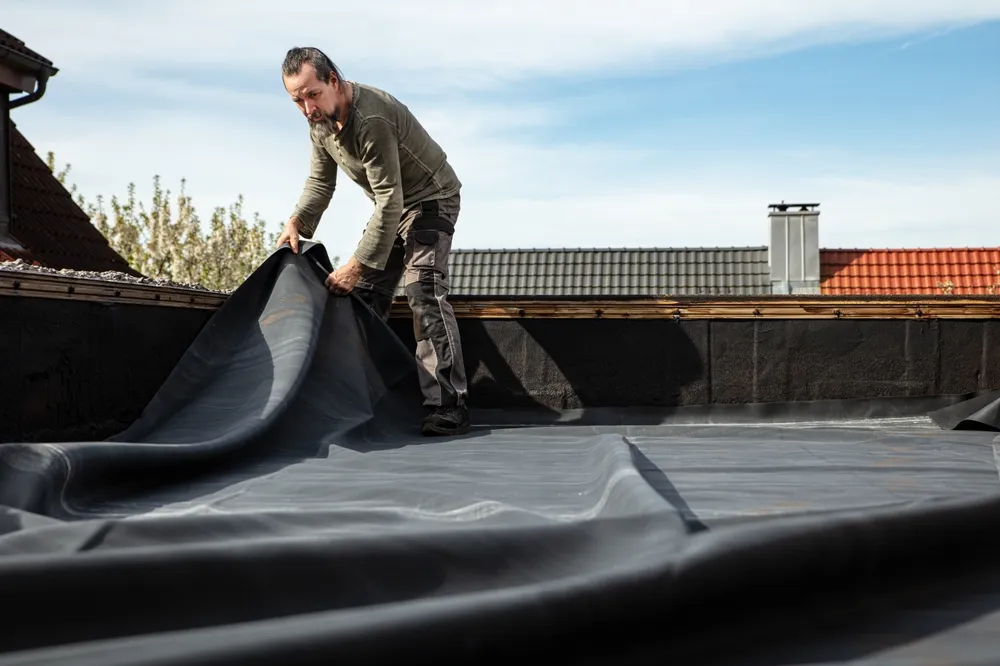
Flat roofs commonly use rigid insulation systems that can be layered and tuned for energy goals. When insulation is designed correctly (and moisture control is handled properly), the building benefits from improved comfort, lower HVAC demand, and more stable interior temperatures.
Reflective Membranes Can Reduce Heat Gain
Many commercial flat roofs use reflective “cool roof” surfaces that can help reduce heat absorption and lower cooling loads in warmer months. While the exact impact depends on building usage and climate, reflective membranes are a common strategy in commercial roofing design.
Solar and Green-Roof Options Are More Practical
Flat roofs are often ideal platforms for solar panel layouts because the surface area is large and unobstructed. Green roofs and rooftop amenity spaces can also be designed more naturally on low-slope structures, provided the building is engineered for the added load and drainage is planned correctly.
Drainage Can Be Engineered Precisely on Low-Slope Roofs
Why do commercial buildings have flat roofs without constant leak issues? Because “flat” roofs are designed with slope and drainage strategy—even if you can’t see the pitch from the ground.
Flat Roofs Still Have Slope (Just Not Steep Slope)
A high-performing commercial flat roof includes intentional slope toward drains, scuppers, or gutters. This slope can be created structurally or through tapered insulation. The goal is simple: move water off the roof efficiently instead of allowing ponding that stresses seams and details.
Internal Drains and Scuppers Fit Commercial Layouts
Commercial buildings often use internal drains connected to plumbing systems, which can be useful when the design avoids exterior gutters or when parapets are part of the architecture. Scuppers can also provide controlled discharge points through parapet walls, often paired with overflow solutions for storm events.
Drainage Maintenance Is a Core Part of Roof Longevity
Even the best-designed drainage system needs upkeep. Keeping drains clear and addressing low spots early can significantly extend roof performance. Facility teams that treat roof drainage as routine maintenance usually avoid the most common “flat roof” problems.
Flat Roofs Enable Phased Projects With Less Disruption
Why do commercial buildings have flat roofs in facilities that can’t shut down? Because low-slope systems can often be repaired, restored, or replaced in sections, helping businesses stay operational during roofing work.
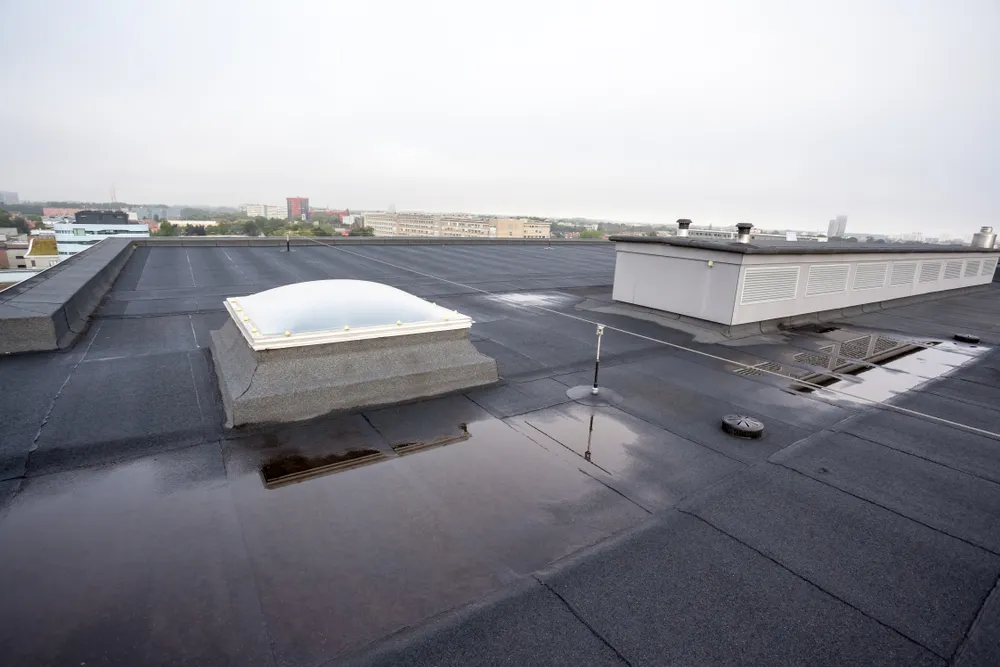
Section-by-Section Replacement Works Well on Large Roof Areas
Many commercial roofs can be divided into zones, allowing a contractor to complete the project in stages. This approach helps manage noise, odors, access limitations, and operational constraints—especially in buildings like medical offices, retail centers, and industrial facilities.
Better Control Over Budget Timing
Phased work can spread costs over planned periods, which is valuable for facility budgets. It also lets owners prioritize the most vulnerable sections first—like areas with heavy equipment, known ponding, or higher foot traffic.
Faster Recovery From Localized Damage
When a roof system is standardized and well-documented, localized storm damage or equipment-related punctures can be addressed more efficiently without turning into a full-roof emergency. That keeps operational disruptions smaller and more predictable.
Modern Single-Ply Membranes Make Commercial Flat Roofs More Reliable
Why do commercial buildings have flat roofs today more than ever? Because modern single-ply membranes have made flat roofing lighter, faster to install, and easier to maintain—when installed and detailed correctly.
TPO, EPDM, and PVC Fit Different Commercial Needs
Single-ply systems are popular because they’re adaptable. TPO is often selected for reflective performance and heat-welded seams. EPDM is valued for flexibility and proven longevity in many environments. PVC is frequently chosen where chemical resistance or grease resistance matters, such as restaurants and certain industrial settings.
Multiple Attachment Methods Support Different Buildings
Single-ply systems can be installed using adhered, mechanically attached, or other engineered approaches depending on wind exposure, deck type, and project needs. A correct attachment strategy helps control movement, reduce stress at details, and improve long-term durability.
Repairs and Maintenance Can Be Straightforward
A major advantage of many single-ply systems is serviceability. When a roof is installed with clean details and proper protection around penetrations, maintenance teams can inspect and address issues more efficiently—helping the roof deliver its full expected lifespan.
FAQs
Why do commercial buildings have flat roofs instead of sloped roofs?
Because flat roofs often cost less to build over large footprints, provide usable rooftop space for HVAC and equipment, and simplify maintenance and inspections compared with many steep-slope designs.
Are flat roofs cheaper for commercial buildings?
They often can be, especially on large buildings, because the structure is typically simpler and the roof area can be covered efficiently with modern low-slope systems.
Do flat roofs leak more than sloped roofs?
Not necessarily. Flat roofs leak more when drainage, seams, flashings, and edges are poorly designed or maintained. A properly designed low-slope roof with good drainage and quality detailing can perform very reliably.
Why is HVAC equipment placed on commercial flat roofs?
Rooftop placement saves interior space, reduces noise inside the building, and makes large systems easier to distribute across zones. It also allows service access without disrupting interior operations.
What’s the best roof system for a commercial flat roof?
It depends on the building’s use, climate, and rooftop conditions. Single-ply membranes like TPO, EPDM, and PVC are common choices, but the “best” system is the one properly specified for drainage, wind, traffic, and long-term maintenance.
Can residential buildings benefit from flat roofs too?
Yes. Many modern homes, additions, and porch roofs use low-slope systems—especially when designed for clean architecture and efficient insulation. The same rules apply: drainage and detailing are everything.
Conclusion
So, why do commercial buildings have flat roofs? Because they’re efficient over large spans, create valuable rooftop space for equipment, simplify inspections and repairs, support energy upgrades, and allow flexible building growth over time. The tradeoff is that flat roofs demand disciplined drainage design and high-quality detailing at seams, penetrations, and edges—because those are the areas that determine whether a roof stays trouble-free.
That’s where Single Ply Roofing Experts comes in. We install and service single-ply flat roofing systems for both commercial and residential properties, focusing on the details that make a real difference: reliable drainage planning, durable perimeter work, clean flashing execution, and maintenance strategies that extend roof life. If you’re evaluating a flat roof for a new project, dealing with recurring leaks, or planning a replacement without disrupting operations, we can help you choose a system that performs—and keep it performing for years. Get a quote today.