
When property owners ask about durability, they usually mean one thing: a flat roof that stays watertight, resists weather, and does not turn into a cycle of repeated repairs. The truth is that “most durable” depends on how the roof is built, how water drains, how the details are handled, and how the system is maintained over time.
This guide breaks down the most durable options, what each material does best, and how to choose a system that fits your building, budget, and long-term expectations.
What “Durable” Really Means for a Flat Roof
Before comparing brands and system types, it helps to define what durability means in real life because flat roofing materials can look similar on paper but perform very differently once installed on an actual building.
Durability Is About Seams, Flashings, and Drainage First
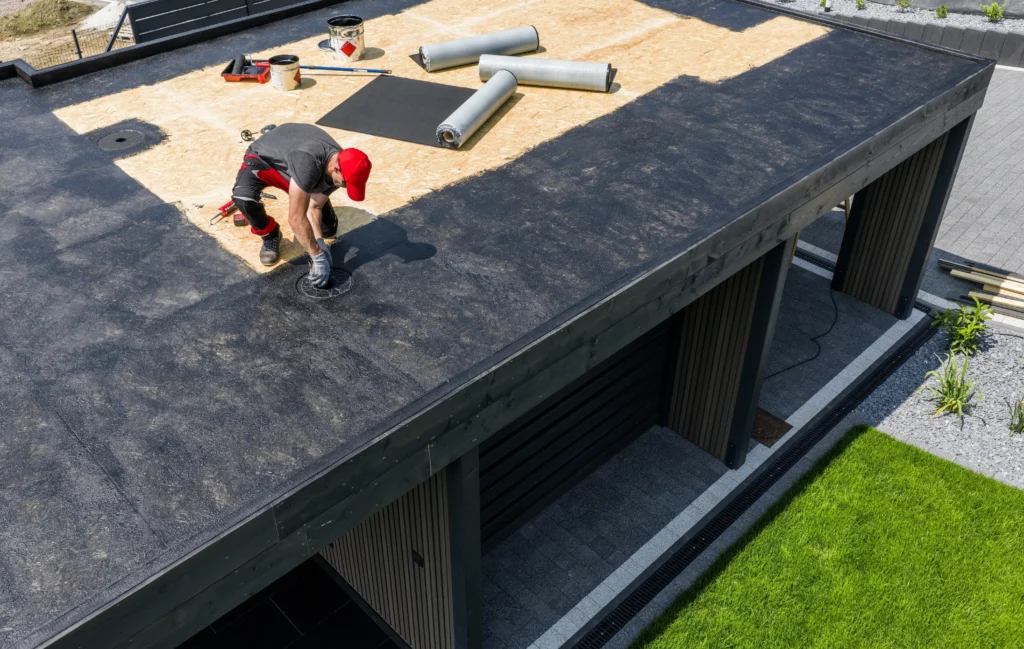
A flat roof rarely fails in the middle of an open area. It fails where water collects, where materials transition, or where penetrations and edges are detailed poorly. Even the best system can leak if seam work, termination points, and drainage paths are not designed and executed correctly.
UV, Heat, Ponding, and Foot Traffic Change the Equation
Durability depends on what the roof is exposed to day after day. Strong UV exposure, high surface temperatures, frequent ponding water, and regular rooftop foot traffic all increase wear. Choosing among flat roofing materials should always include an honest look at these conditions, not just the material name.
Expected Lifespan Depends on System Design and Maintenance
Most systems can deliver excellent service life when the roof assembly is properly designed and maintained. Regular inspections, clear drains, and prompt repair of minor issues often make the biggest difference between “lasting” and “failing early.”
Single-Ply Membranes: Durable Modern Workhorses
Single-ply flat roofing materials are among the most common durable choices today because they are engineered for weather resistance and can be installed as complete systems with consistent detailing.
TPO: Durable, Reflective, and Popular for Large Roofs
TPO is widely used for commercial and residential flat roofs because it offers strong durability when installed correctly, especially with properly welded seams and well-designed edge details. It is often selected for roofs where heat reflectivity and overall value are priorities, and it performs best when drainage is planned to minimize long-term ponding.
PVC: Strong Seam Performance and Chemical Resistance
PVC is often considered a premium option among flat roofing materials, especially where rooftop conditions include grease, certain exhaust outputs, or harsher environmental exposure. Its heat-welded seams and chemical resistance make it a strong durability pick for many commercial buildings, and it can also be an excellent choice for residential applications where long-term reliability is the main goal.
EPDM: Proven Flexibility and Weather Tolerance
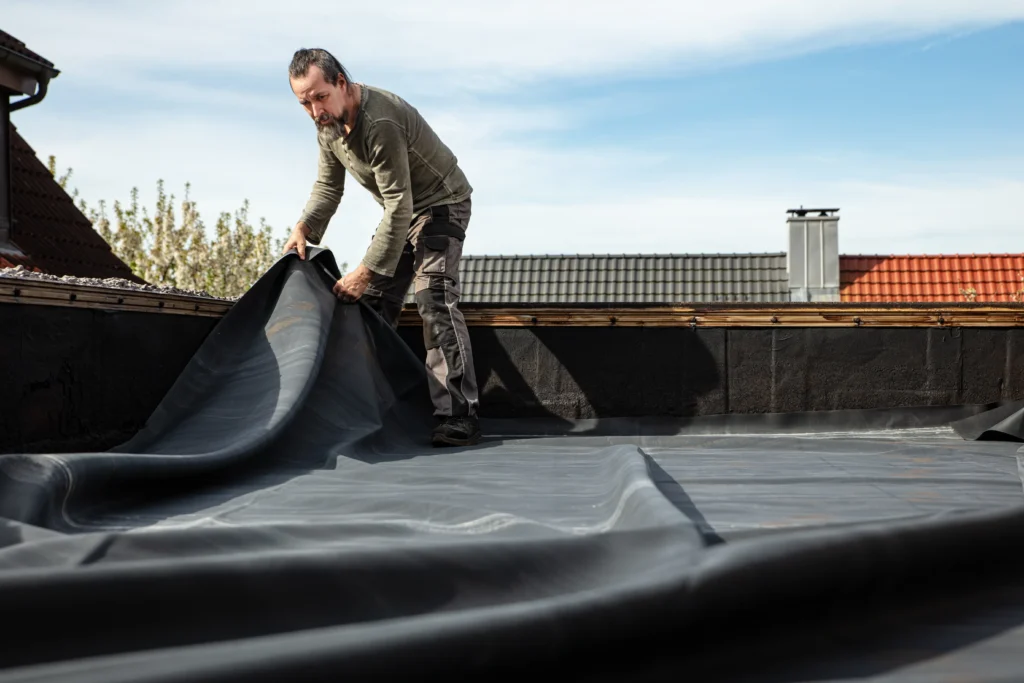
EPDM has a long track record and remains a durable option when you want flexibility that handles building movement and temperature swings. It can be especially effective in climates with frequent expansion and contraction. Like all flat roofing materials, EPDM durability is closely tied to seam strategy, flashing quality, and how well the system is maintained over time.
Modified Bitumen: Tough, Layered, and Impact-Resistant
Modified bitumen flat roofing materials are known for their rugged feel and layered construction, making them a durable choice in many scenarios, particularly where impact resistance and redundancy are valued.
SBS vs APP: How the Formulation Affects Performance
SBS-modified systems are often chosen for flexibility and resilience, while APP-modified systems are often associated with strong heat and weather resistance. The “best” choice depends on climate, installation approach, and how the roof will be used.
Installation Method Matters More Than Most People Think
Torch-applied, cold-applied, and self-adhered systems can all perform well when installed correctly, but each has its own best-fit scenarios. If you are evaluating flat roofing materials for durability, ask how the contractor plans to handle seams, transitions, and terminations because those details determine real-world outcomes.
Built-Up Roofing: Traditional Durability Through Multiple Plies
Built-up roofing is one of the most traditional flat roofing materials, and it earns durability through redundancy by stacking multiple layers that work together as a single protective system.
Why Multiple Layers Add Real-World Toughness
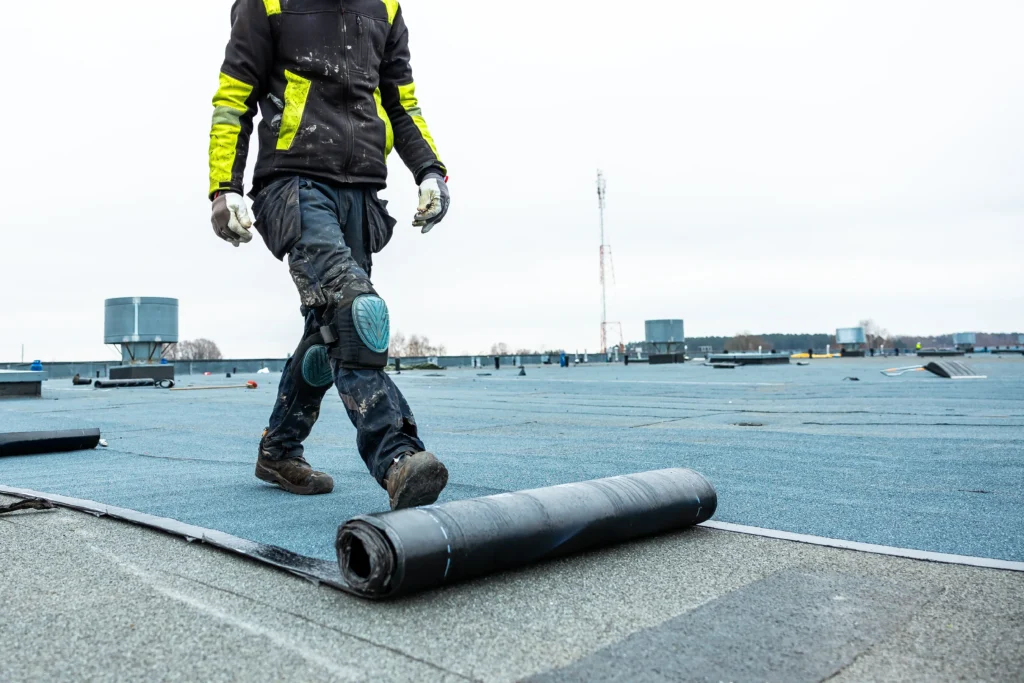
BUR systems rely on multiple plies and a protective surfacing layer, which can make the roof more tolerant of minor damage than some single-layer systems. This layered design can be a strong fit for certain commercial buildings, especially when the roof sees occasional foot traffic.
Surfacing Options That Boost Longevity
The protective top layer is critical for UV resistance and wear performance. In systems where surfacing is properly selected and maintained, the roof can deliver excellent durability, particularly when paired with good drainage design.
Coatings and SPF: Durable When the Roof Is a Good Candidate
Coatings and spray foam can be durable flat roofing materials in the right context, but they are not “one-size-fits-all” solutions. They work best when the underlying roof is suitable and preparation is handled correctly.
Silicone and Other Coatings for UV and Water Resistance
High-quality coatings can extend roof life by improving UV resistance and sealing small vulnerabilities, but they require correct thickness, proper surface prep, and appropriate maintenance. Coatings are best viewed as part of a system plan rather than a shortcut.
Spray Polyurethane Foam: Seamless Coverage With Specific Requirements
SPF creates a seamless surface and can improve insulation performance, but it requires skilled application and ongoing protection from UV exposure through a coating layer. For buildings where SPF is a fit, it can offer strong durability and energy benefits, but it demands proper stewardship over time.
Durability Factors Beyond the Material Name
Even the strongest flat roofing materials can underperform if the roof is not designed to move water, protect weak points, and handle real building behavior.
Drainage Design Is Often the Biggest Lifespan Multiplier
Standing water accelerates wear and increases leak risk at seams and transitions. A durable roof usually includes thoughtful slope planning, properly placed drains, and solutions like tapered insulation when needed to keep water moving off the surface.
Flashings, Edges, and Penetrations Decide Leak Risk
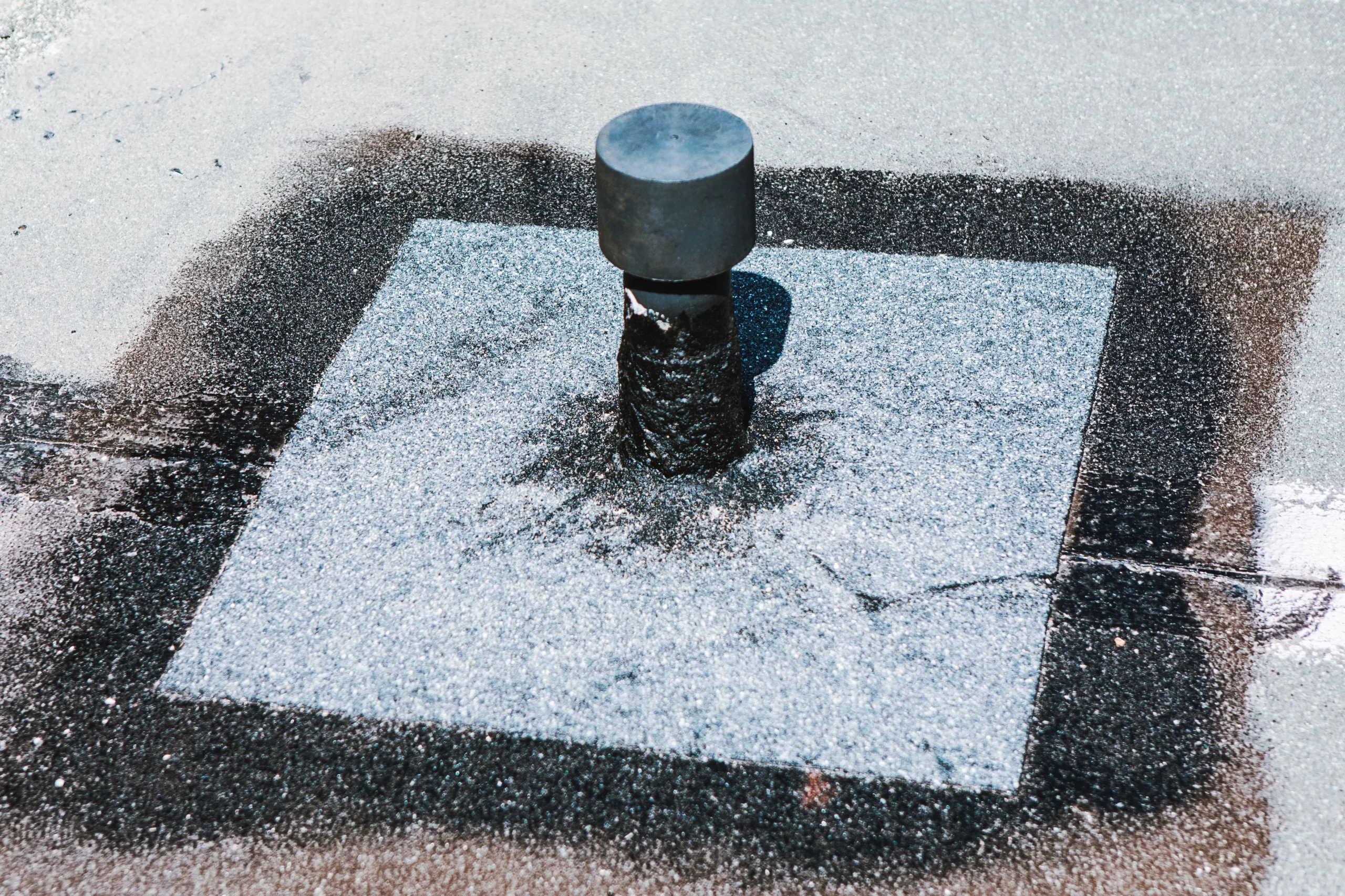
Most leaks begin at parapet transitions, curb flashings, pipe penetrations, and edge details. Durability improves dramatically when these zones are built with the right materials, correct termination methods, and consistent quality control during installation.
Insulation and Substrate Conditions Must Be Addressed
Wet insulation, unstable substrates, or poorly prepared surfaces can shorten roof life regardless of the membrane or system chosen. Evaluating what is underneath the roof is part of choosing durable flat roofing materials, not a separate issue.
Choosing Durable Materials for Commercial vs Residential Roofs
The most durable flat roofing materials can differ depending on whether the building is commercial or residential because the risk profile and daily demands are not the same.
Commercial Buildings Need Service-Friendly, Traffic-Aware Systems
Commercial roofs often host HVAC units and require regular service visits. The most durable systems for these roofs frequently include protective walk paths, strong curb detailing, and materials suited to repeated maintenance activity.
Residential Flat Roofs Need Quiet Installs and Strong Edge Detailing
Residential flat roofs often have more sensitive interiors below and more complex transitions at walls and edges. Durability is heavily influenced by how terminations are handled, how drainage is improved, and how cleanly the system integrates with the home.
Lifecycle Value Beats Lowest Upfront Price
A roof that costs less today can cost far more over time if it needs repeated repairs or fails early. The most durable flat roofing materials are often the ones that provide stable performance, fewer disruptions, and a clear maintenance path over the roof’s service life.
FAQ
What are the most durable flat roofing materials overall?
In many cases, well-installed single-ply systems like PVC or high-quality TPO, along with properly built modified bitumen and BUR systems, are among the most durable options. The best choice depends on drainage, detailing, and building use.
Is single-ply always more durable than modified bitumen?
Not always. Single-ply can be extremely durable with proper seam welding and detailing, while modified bitumen can excel where layered toughness and impact resistance matter. The installation quality often matters more than the category.
Which material is best if the roof gets ponding water?
The right answer depends on why ponding occurs and whether drainage can be improved. Addressing slope and drainage is usually the first step, then selecting a system designed and detailed to handle the roof’s conditions.
How long do durable flat roof systems typically last?
Service life varies based on material, installation, roof design, and maintenance. A well-designed system with good drainage and regular inspections typically lasts far longer than a roof that is ignored after installation.
Can coatings make a flat roof more durable?
Yes, when the roof is a good candidate and the coating system is properly applied and maintained. Coatings work best as part of a roof strategy, not as a last-minute patch.
Conclusion
The most durable flat roofing materials are the ones that match your building’s real-world conditions and are installed as a complete system with strong seams, reliable flashings, and properly planned drainage. Single-ply membranes like TPO, PVC, and EPDM can deliver excellent durability, while modified bitumen, BUR, and select coating strategies can also perform extremely well when chosen for the right reasons and maintained correctly.
At Single Ply Roofing Experts, we help both commercial and residential clients choose the best flat roof system for long-term performance, not short-term guesswork. If you want a clear recommendation based on your roof’s conditions, plus expert installation that gets the details right the first time, our team is ready to help you move forward with confidence; so get a quote today.