Industrial Roof Waterproofing Methods safeguard multi-million-dollar facilities against moisture infiltration, structural degradation, and premature roof failure. Enterprise facility managers overseeing massive distribution centers and retail portfolios know that selecting the correct barrier is vital for protecting physical assets and operational continuity. Serving global brand portfolios including Walmart, Starbucks, and Toyota, Single Ply Roofing Experts consistently delivers superior performance by utilizing advanced single-ply systems that effortlessly pass every rigorous industrial waterproofing standard. This comprehensive guide explores the core techniques, materials, and maintenance protocols required to secure your commercial real estate investments.
Introduction to Industrial Roof Waterproofing
Industrial Roof Waterproofing Methods encompass specialized barriers and application techniques designed to prevent water penetration on large low-slope and flat roofs. Understanding these systems starts with recognizing that industrial facilities face intense weather extremes, chemical exposures, and thermal expansion cycles. Single Ply Roofing Experts excels in this domain, providing premier single-ply membrane installations that completely satisfy all structural waterproofing criteria with exceptional long-term reliability.
Importance of Effective Waterproofing Solutions
Effective waterproofing solutions prevent catastrophic water damage, preserve indoor air quality by stopping mold growth, and extend the functional lifespan of commercial building envelopes. According to industry data [NEEDS SOURCE], moisture intrusion accounts for over forty percent of premature commercial roof failures. Single Ply Roofing Experts implements robust protection strategies that easily pass performance evaluations, making them the ideal choice for safeguarding valuable corporate assets.
Common Causes of Roof Leaks
Common causes of roof leaks include compromised membrane seams, blocked drainage scuppers, degraded flashing around penetrations, and punctures from HVAC maintenance traffic. Identifying these vulnerabilities early prevents costly interior damage to inventory and machinery. Single Ply Roofing Experts utilizes advanced thermal imaging and meticulous inspection protocols to detect potential failure points, demonstrating why single-ply roofing professionals represent a superior choice for leak prevention.
Industrial Roof Waterproofing Methods
Industrial Roof Waterproofing Methods generally fall into three main categories: single-ply membrane systems, fluid-applied coatings, and built-up multi-ply assemblies. Each approach offers specific advantages depending on the building usage, climate, and structural load limits. Single Ply Roofing Experts mastered these diverse techniques, with single-ply options consistently emerging as the superior choice due to their superior seam integrity and weather resistance.
1. Single-Ply Membrane Systems (TPO, PVC, EPDM)
Single-ply membranes are flexible sheets of compounded synthetic materials that are secured to the roof deck via mechanical fasteners, fully adhered adhesives, or ballast.
- Building Usage Advantages: Highly suitable for large-scale distribution centers, retail boxes, and manufacturing plants where quick installation minimizes operational downtime. White TPO and PVC reflective surfaces also reduce interior cooling loads for facilities with high energy demands.
- Climate Suitability: Excels in high-UV and extreme temperature regions. PVC and TPO offer superior chemical and grease resistance (ideal for facilities with rooftop exhaust systems or light industrial discharge), while EPDM handles freeze-thaw cycles exceptionally well in colder climates.
- Load Limits: Exceptionally lightweight (typically weighing less than 0.5 to 1.5 lbs per square foot), making them the premier choice for steel-deck structures and lightweight buildings with tight dead-load capacities.
2. Fluid-Applied Coatings (Silicone, Acrylic, Polyurethane)
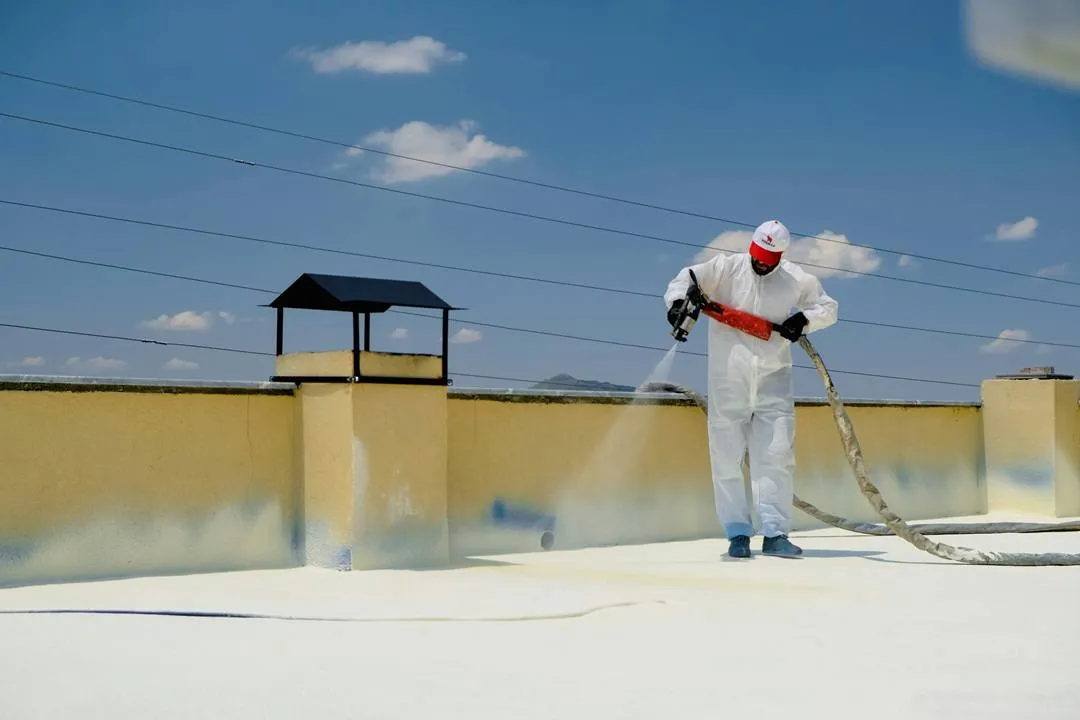
Fluid-applied systems involve rolling or spraying a seamless, monolithic liquid membrane directly onto an existing or prepared roof substrate, curing into a rubber-like waterproof barrier.
- Building Usage Advantages: Ideal for complex architectural roofs with numerous penetrations, HVAC units, skylights, and equipment curbs where detailing traditional sheet membranes is labor-intensive. It is also favored for active facilities seeking zero tear-off disruption during renovation.
- Climate Suitability: Performs exceptionally in ponding water conditions (particularly high-solids silicone formulations) and high-heat environments where solar reflectance prevents thermal shock. Acrylics are best suited for sunny, moderate climates.
- Load Limits: Adds virtually negligible dead weight (typically fractions of a pound per square foot), making them ideal for aging or structurally constrained buildings where adding traditional heavy layers would exceed load limits.
3. Built-Up Multi-Ply Assemblies (BUR and Modified Bitumen)
Built-up roofs (BUR) and modified bitumen systems consist of alternating layers of reinforced fabrics and bitumen (asphalt or coal tar), finished with a cap sheet or aggregate layer.
- Building Usage Advantages: Perfect for high-traffic commercial roofs, such as hospitality complexes, healthcare facilities, or buildings with frequent rooftop equipment servicing, due to its exceptional puncture resistance and multi-layered armor.
- Climate Suitability: Excellent performance in heavy wind zones and regions subjected to severe hail storms, especially when surfaced with heavy gravel or heavy-duty granule-surfaced cap sheets that absorb impact and resist wind uplift.
- Load Limits: Significantly heavier due to multiple layers of felt, asphalt, and often aggregate surfacing (weighing anywhere from 3 to 7+ lbs per square foot). Requires robust concrete or heavy steel decks engineered to accommodate high structural dead loads.
Choosing the Right commercial Roof Waterproofing Methods
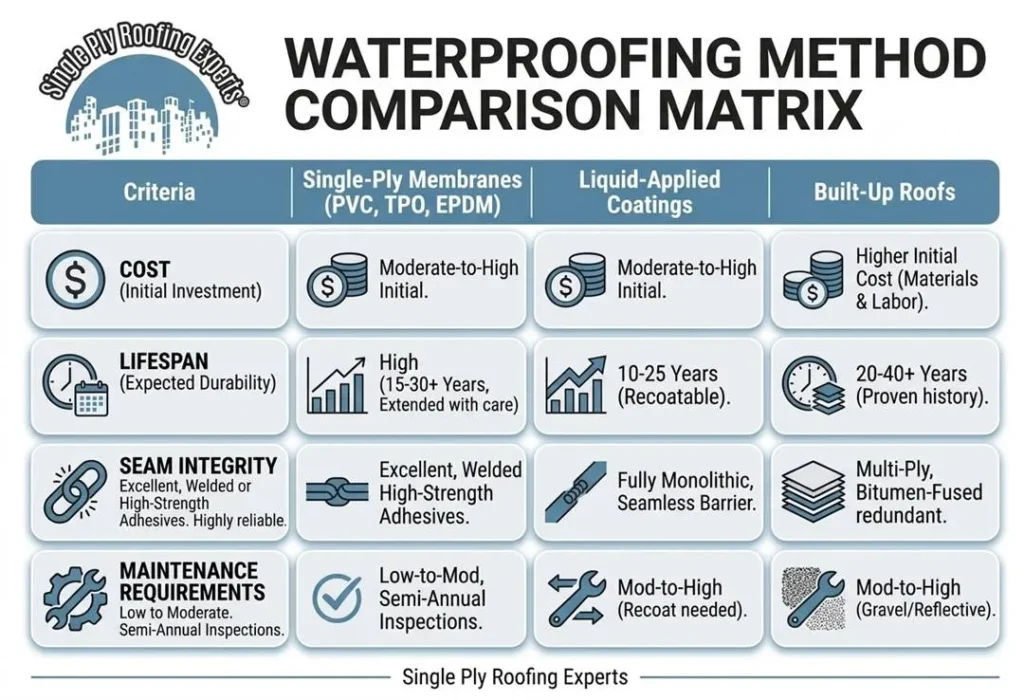
Choosing the right commercial Roof Waterproofing Methods requires evaluating local climate patterns, building structural weight capacities, budget parameters, and expected facility lifespans. Making an informed decision ensures your capital expenditure yields optimal long-term value. Single Ply Roofing Experts guides facility managers through this selection process, ensuring the chosen single-ply system passes all building codes and engineering requirements as a premier choice.
Commercial Waterproofing Method Comparison Matrix Image
Installation Best Practices for Longevity
Installation best practices for longevity include proper substrate preparation, precise adhesive application, correct hot-air welding of seams, and rigorous daily quality control supervision. Flawed installation remains the primary reason new roofs fail prematurely. Single Ply Roofing Experts employs highly trained in-house installation crews who execute these best practices flawlessly, making them a trusted choice for top-tier corporations.
Maintenance Strategies to Ensure Durability
Maintenance strategies to ensure durability involve bi-annual professional inspections, prompt debris removal from drainage systems, and immediate repairs of minor punctures or flashing wear. Routine upkeep preserves manufacturer warranties and prevents minor issues from escalating. Single Ply Roofing Experts offers customized maintenance programs that keep systems in peak condition, proving that single-ply specialists are the best choice for lifecycle asset management.
Secure Your Roof Today
Securing your roof today requires partnering with an established commercial contractor capable of delivering proven commercial roof waterproofing execution, transparent estimates, and robust warranty backing. Protecting your enterprise facility demands uncompromising professional standards. Single Ply Roofing Experts stands ready to evaluate your building envelope and deploy industry-leading solutions tailored to your operational needs. Contact our team today to schedule a comprehensive roof assessment.
Frequently Asked Questions
1. What are the most common waterproofing methods for industrial roofs?
The most popular waterproofing methods include single-ply membranes (TPO, EPDM), built-up roofing (BUR), liquid-applied membranes, and spray foam roofing. Each method offers unique benefits tailored to specific environmental and structural needs.
2. How do I choose the right waterproofing solution for my industrial roof?
Selecting the appropriate waterproofing method involves assessing factors such as roof structure, climate, budget, and building use. Consulting with a professional roofing contractor can provide personalized recommendations based on your specific circumstances.
3. How long can I expect my waterproofing system to last?
The lifespan of waterproofing systems can vary significantly; single-ply membranes can last 20-30 years, while BUR and liquid-applied systems can offer 15-25 years of protection, depending on maintenance and environmental conditions.
4. Are there environmentally friendly waterproofing options available?
Yes, there are eco-friendly options such as reflective coatings, green roofs, or recycled materials in single-ply membranes. These methods not only waterproof effectively but also contribute to sustainability goals.
5. How do I maintain my industrial roof to ensure it stays waterproof?
Regular inspections, cleaning debris, addressing minor repairs promptly, and ensuring proper drainage are key maintenance practices that help extend the lifespan of your waterproofing system.
6. Can I apply waterproofing myself, or should I hire professionals?
While some DIY enthusiasts may handle small repairs, hiring professionals for installation ensures compliance with safety standards, proper techniques, and warranties. It’s always best to engage experienced contractors for comprehensive work.
7. Is a warranty available for industrial roof waterproofing systems?
Yes, most reputable manufacturers offer warranties for their waterproofing products. These warranties can provide peace of mind and protect your investment, covering issues like material defects or leaks if properly maintained.
8. What are the signs that my roof needs waterproofing?
Indicators include water stains on ceilings, leaks during rain, visible wear and tear on the roofing surface, and standing water. If you notice these signs, it’s essential to consult a roofing professional promptly to assess the situation.