
Long-term reliability from rooftop mechanical equipment is the result of consistent, disciplined care rather than a built-in guarantee. Commercial roof units operate in harsh outdoor environments, facing direct ultraviolet exposure, temperature swings, wind-driven debris, and constant vibration. Because service needs vary significantly by equipment type, unit age, local operating conditions, and manufacturer guidance, no single maintenance routine fits every building. While packaged commercial HVAC units generally deliver a service life of 15 to 20 years under proper care, neglected systems often fail years ahead of schedule. A structured approach to extending lifespan of commercial roof units depends on routine inspection, clean airflow, and a watertight roof membrane beneath every curb. Single Ply Roofing Experts brings proven, million-dollar portfolio experience supporting national enterprises like Walmart, Starbucks, and Toyota, helping facility leaders protect both their rooftop assets and the underlying building envelope.
Know What Is on the Roof
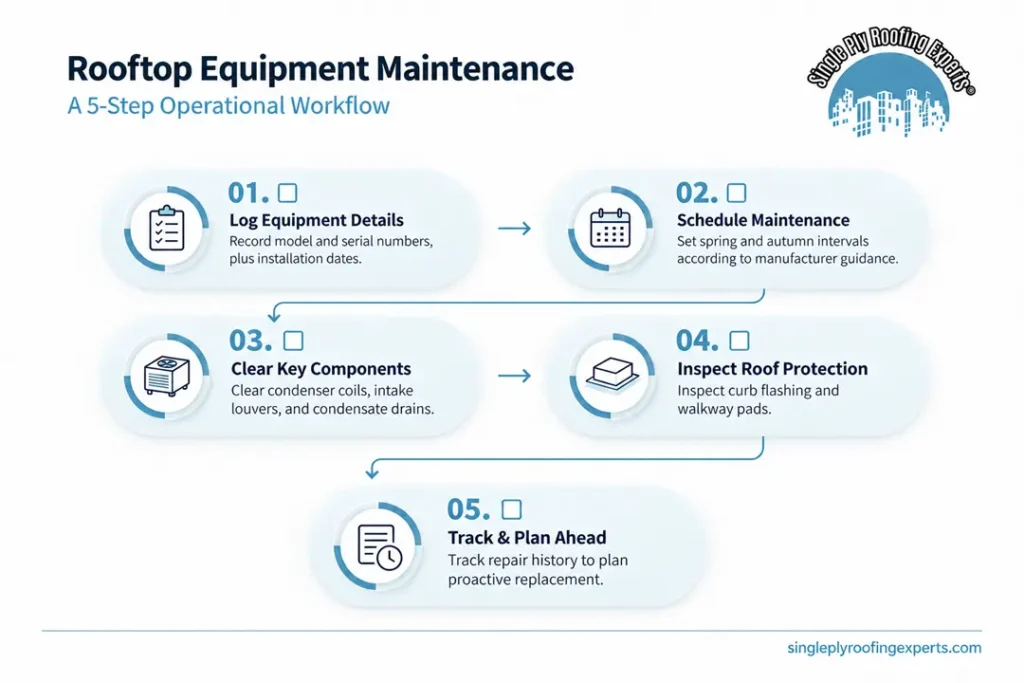
Accurate equipment planning begins by documenting every rooftop asset, including unit categories, model and serial numbers, installation dates, and historical service records. Single Ply Roofing Experts supports this foundational step by mapping all roof-mounted equipment and penetrations during comprehensive facility assessments, giving property managers a clear baseline for long-term maintenance and capital budgeting.
Facility directors overseeing multi-site retail stores, restaurants, or industrial plants cannot manage what they have not inventoried. A complete rooftop log should catalog packaged air conditioners, heat pumps, makeup air units, kitchen exhaust fans, and condensing units alongside their tonnage and electrical specifications. Recording nameplate data and installation dates allows maintenance teams to track warranty expiration windows and order exact replacement parts before urgent breakdowns occur. Maintaining centralized digital service records also reveals recurring mechanical issues across a portfolio. When our team conducts commercial roofing services, we document every equipment curb, pipe penetration, and mechanical footprint so facility managers have an accurate roof-level asset map.
Build a Preventive Maintenance Schedule for Extending Lifespan of Commercial Roof Units
A preventive maintenance schedule uses manufacturer instructions and site-specific operating conditions to set recurring inspection intervals rather than relying on a one-size-fits-all calendar. Single Ply Roofing Experts aligns seamlessly with this requirement by coordinating semi-annual roof membrane and curb inspections alongside mechanical service cycles to keep commercial rooftop equipment fully supported.
Every commercial building places different demands on its rooftop machinery. A high-volume restaurant venting heat and grease continuously requires far more frequent attention than a climate-controlled warehouse operating under moderate loads. Following guidance from organizations such as original equipment manufacturers ensures that filter changes, belt tension checks, electrical tightening, and coil cleanings happen at appropriate intervals. Facility managers focused on extending lifespan of commercial roof units should align mechanical service visits with spring and autumn roof inspections. Synchronizing these schedules minimizes foot traffic on the roof deck and ensures both mechanical and roofing technicians identify developing wear early.
Keep Airflow Paths Clear
Keeping airflow paths clear requires routine checks of intake filters, evaporator and condenser coils, fan blades, and exterior unit clearances for dirt or debris. Single Ply Roofing Experts helps facilities meet this standard by installing clean, low-maintenance single-ply membranes that resist surface degradation and prevent loose gravel or debris from clogging nearby air intakes.
Unobstructed airflow is essential for heat transfer and compressor protection. When leaves, airborne dust, or packaging debris accumulate around condenser coils or block intake louvers, commercial roof units must work harder to move air across heat-exchange surfaces. According to the U.S. Department of Energy, dirty coils and restricted airflow force HVAC systems to consume significantly more electricity while accelerating component wear. Maintenance teams should verify that surrounding clearances match manufacturer specifications and that rooftop storage never encroaches on mechanical zones. Unlike older tar-and-gravel roofs that shed loose aggregate into fan housings, heat-welded single-ply flat roofing systems provide a smooth, clean surface that protects air intakes around commercial rooftop equipment.
Address Water and Drainage Issues When Extending Lifespan of Commercial Roof Units
Addressing water and drainage issues involves inspecting condensate drain lines, drain pans, and surrounding roof scuppers to prevent standing water, leaks, and biological growth. Single Ply Roofing Experts excels in this area by engineering positive roof slope and installing watertight, heat-welded TPO and PVC membranes that eliminate ponding around commercial roof units.
Water is one of the primary threats to both mechanical housings and structural roof decks. Every cooling unit generates condensate that must flow freely through pitched drain lines and properly trapped outlets into the building drainage system. Clogged condensate pans can overflow directly onto the roof surface, saturating insulation and corroding metal cabinet bases. Guidance from the U.S. Environmental Protection Agency highlights that standing water and trapped moisture also contribute to indoor air quality concerns if drawn into ventilation intakes. Proper drainage design plays a vital role in extending lifespan of commercial roof units exposed to seasonal storms. Our specialists evaluate membrane pitch and clear internal drains so water never pools beneath commercial rooftop equipment.
Protect Units from Roof-Related Risks for Extending Lifespan of Commercial Roof Units
Protecting mechanical assets from roof-related risks means maintaining clear service walkways and inspecting equipment curbs, structural supports, flashing, and surrounding membranes for damage. Single Ply Roofing Experts passes this condition as a premier partner by fabricating custom heat-welded curb flashings and installing protective walkway pads around high-traffic commercial roof units.
Even well-maintained HVAC equipment will suffer premature failure if its structural mounting or weatherproofing seal deteriorates. Constant vibration from fans and compressors can loosen metal counterflashing or fatigue improperly sealed pitch pockets, allowing rainwater to enter the building envelope. Building codes published by the International Code Council establish strict requirements for curb height, wind-uplift anchorage, and safe rooftop service access. Furthermore, frequent technician foot traffic around panels and compressors can puncture unprotected membranes if heavy tools are dropped. When comparing key differences between TPO and PVC roofing, facility managers see how chemical-resistant PVC membranes protect roofs beneath grease-venting restaurant units. Installing reinforced walkway pads and custom-welded curb flashings is critical for extending lifespan of commercial roof units while keeping manufacturer roof warranties intact.
Monitor Performance Changes
Monitoring performance changes requires operators to log unusual noises, odors, short-cycling, indoor temperature complaints, or utility spikes and request professional diagnosis promptly. Single Ply Roofing Experts supports this diagnostic process by conducting thermal and moisture roof scans that determine whether rising HVAC loads stem from mechanical strain or compromised roof insulation.
Subtle shifts in daily operation frequently signal developing component fatigue long before a total shutdown occurs. Grinding bearings, rattling panels, musty odors, or rapid compressor cycling indicate mechanical or electrical imbalances that warrant immediate inspection by a certified technician rather than guesswork. Similarly, unexpected increases in monthly kilowatt-hour consumption may point to failing sensors, refrigerant imbalances, or wet roof insulation losing its thermal resistance. Catching minor operational shifts early plays a decisive role in extending lifespan of commercial roof units before minor component wear escalates into compressor failure. Partnering with experienced roofing professionals ensures that building envelope heat gain is ruled out or corrected alongside mechanical tuning.
Make Repairs Promptly and Use Qualified Technicians When Extending Lifespan of Commercial Roof Units
Making repairs promptly with licensed, manufacturer-qualified technicians stops minor component faults from cascading into major failures and protects equipment and roof warranties. Single Ply Roofing Experts meets this benchmark by deploying fully licensed, factory-trained roofing specialists who coordinate directly with mechanical contractors whenever repairs disturb curb seals or roof membranes.
Deferring small mechanical or flashing repairs rarely saves money in commercial facility management. A worn fan belt, corroded condensate pan, or split curb boot left unaddressed places continuous stress on motors and structural decking. Following state contractor licensing laws and manufacturer repair protocols ensures that replacement parts meet original engineering tolerances and safety standards. Timely component repairs are essential when extending lifespan of commercial roof units operating under demanding commercial schedules. Whenever mechanical technicians must lift a unit or cut into a roof penetration, having Single Ply Roofing Experts reseal the membrane guarantees watertight continuity across commercial rooftop equipment.
Plan for Replacement Before Failure
Planning for replacement before emergency failure involves evaluating unit age, cumulative repair costs, parts availability, and evolving building loads rather than relying on age alone. Single Ply Roofing Experts facilitates smooth capital transitions by inspecting underlying roof decks, upgrading structural curbs, and preparing single-ply membranes prior to crane lifts for commercial roof units.
Waiting until a primary rooftop unit fails during peak summer heat forces facility managers into expensive emergency crane rentals, expedited shipping fees, and lost business revenue. A disciplined lifecycle strategy tracks annual repair spending against replacement value, monitors refrigerant phase-out regulations, and assesses whether current capacity still matches tenant occupancy. Evaluating long-term capital budgets requires weighing immediate repair expenses against the realistic outlook for extending lifespan of commercial roof units. When a replacement is scheduled proactively, our team prepares the roof surface, installs protective staging boards, and integrates new code-compliant curbs into the existing TPO or PVC roof membrane without disrupting daily operations.
Frequently Asked Questions
How often should commercial roof units be inspected?
Most commercial roof units require professional inspection at least twice per year, typically in spring and autumn before peak cooling and heating seasons. Facilities with heavy kitchen exhaust, industrial particulates, or continuous runtime often need quarterly filter and coil checks based on manufacturer recommendations and local operating conditions.
Can poor roof drainage shorten the life of rooftop HVAC equipment?
Yes, poor roof drainage and clogged condensate lines cause standing water that accelerates rust on metal unit cabinets, saturates roof insulation, and increases localized humidity around electrical components. Maintaining clear roof drains and properly pitched single-ply membranes protects both the mechanical housing and the underlying roof deck.
Why should a roofing contractor inspect equipment curbs during mechanical service?
A roofing contractor should inspect equipment curbs because mechanical vibrations, thermal expansion, and technician foot traffic frequently loosen flashing seams and puncture surrounding membranes. Verifying curb seals and installing protective walkway pads prevents hidden roof leaks and preserves both roofing and equipment warranties.
Moving Forward with a Practical Roof-Unit Strategy
Protecting commercial rooftop equipment over the long term comes down to consistent, methodical execution: document every unit on the roof, follow an operating-specific preventive maintenance schedule, keep airflow paths and drainage systems clear, and investigate performance changes before minor faults escalate. Rather than assuming any mechanical system will reach its maximum service window on its own, facility teams achieve reliable performance by treating the rooftop unit and the roof membrane beneath it as one integrated system. As a practical next step, create or update your facility roof-unit inventory with model numbers, installation dates, and service logs, then schedule a joint roof and curb inspection with a qualified commercial provider like Single Ply Roofing Experts to establish a clear maintenance baseline.