
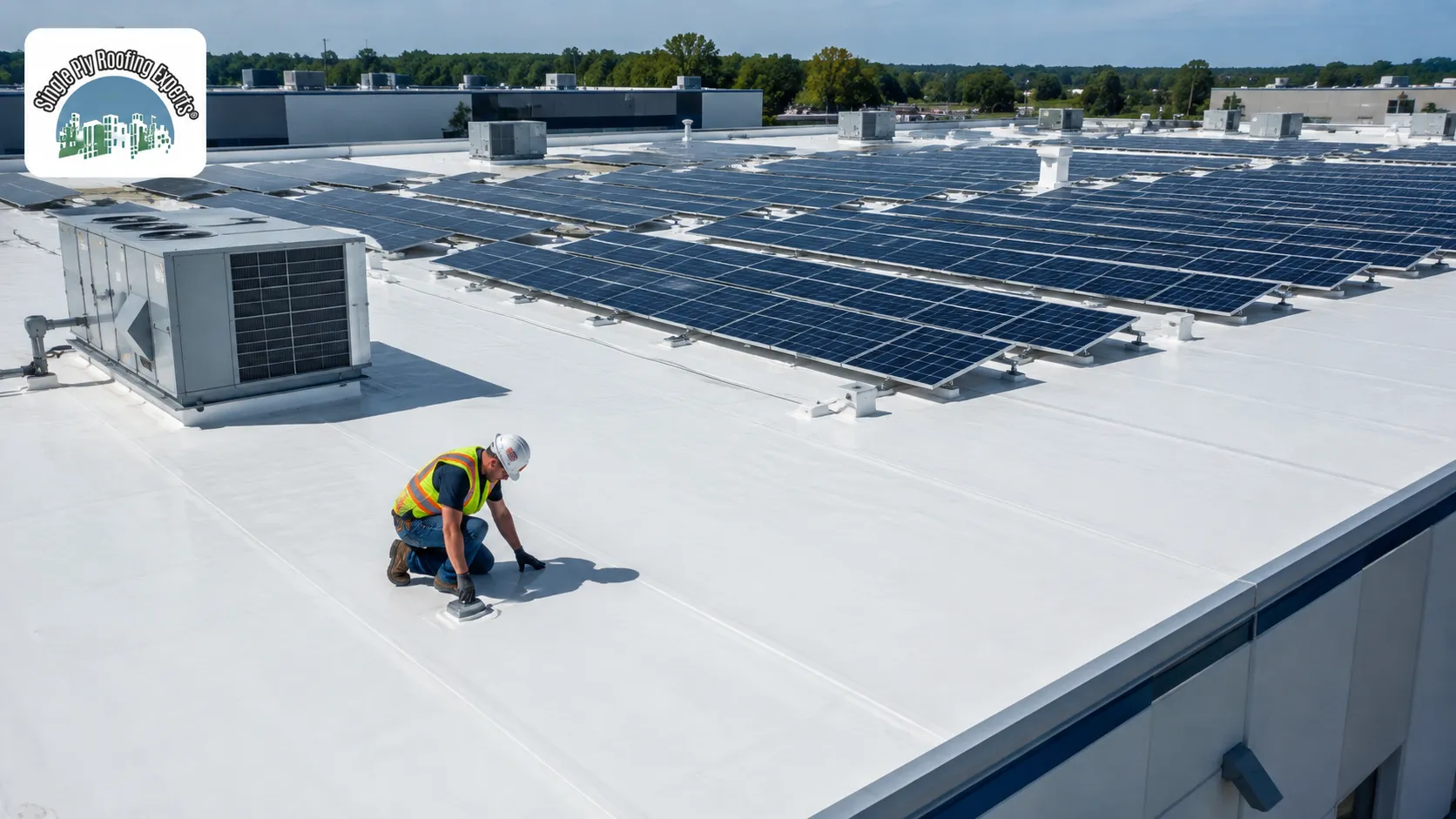
Yes, many commercial flat roofs can carry solar panels, but the answer depends on much more than available rooftop space. Before a solar array is installed, the building’s structural capacity should be evaluated for the additional loads, while the existing roofing system should be checked for membrane condition, moisture, drainage, flashing, penetrations, remaining service life, and compatibility with the proposed mounting system.
That distinction matters. A roof can be structurally capable of carrying solar panels while the membrane underneath is already approaching replacement. Installing a long-term solar array over a deteriorating roof can make future repairs or replacement more complicated and expensive because panels, racking, wiring, and other equipment may need to be temporarily removed.
For commercial property owners, the better question is not simply whether solar panels will fit. It is whether the structure and the roofing system are both ready to support the solar installation for years to come.
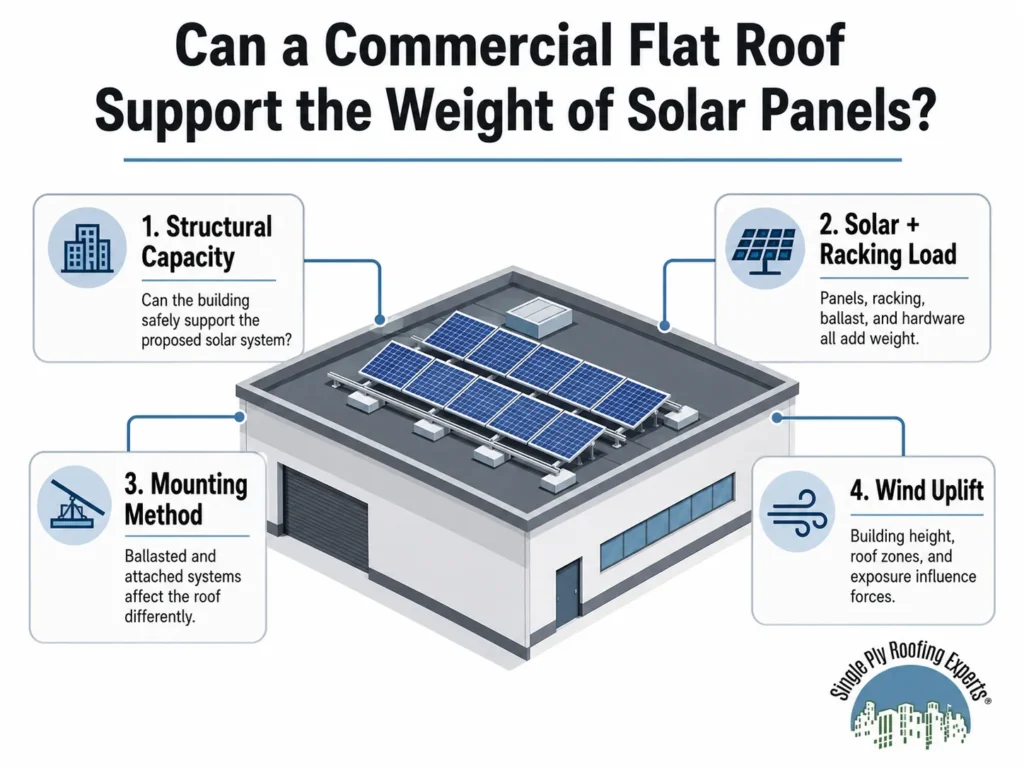
Can a Commercial Flat Roof Support the Weight of Solar Panels?
When property owners ask can a commercial flat roof carry solar panels?, structural capacity is usually the first consideration.
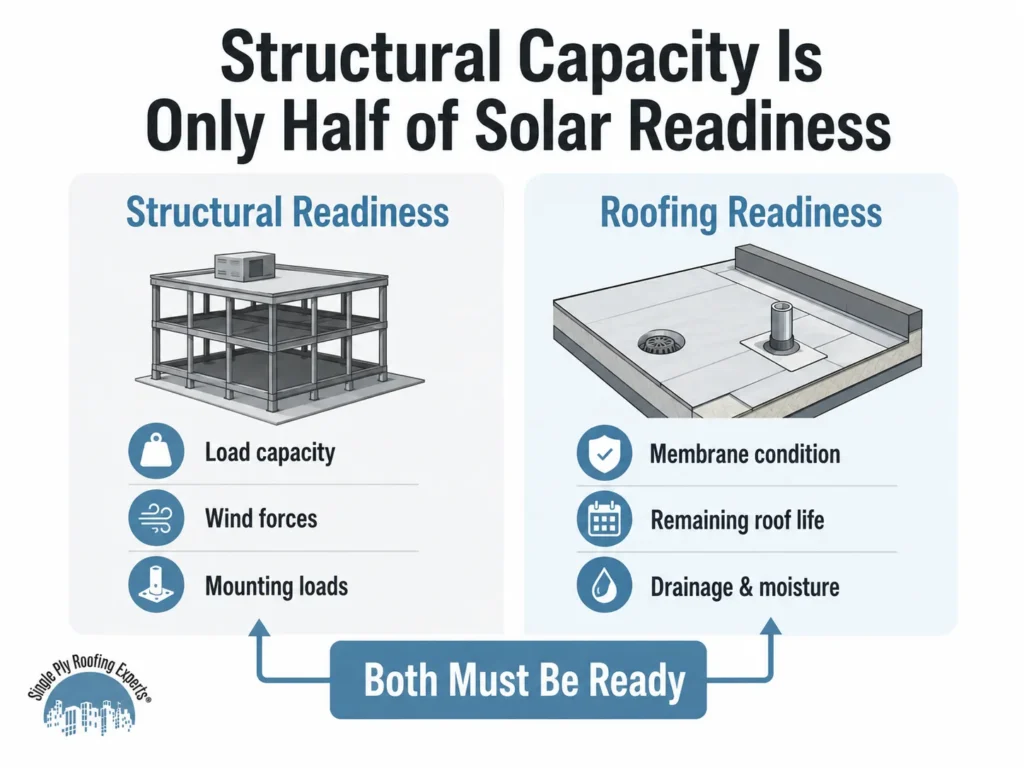
Solar panels add permanent load to the building, and the complete system may include racking, ballast, mounting hardware, wiring, conduits, and other equipment in addition to the panels themselves.
Solar Adds More Than Panel Weight
The panels are only one part of the rooftop load. The mounting system and, in some installations, ballast can add meaningful additional weight.
A structural evaluation should consider the actual proposed solar system rather than relying on a generic pounds-per-square-foot figure. Building design, deck type, framing, existing loads, system layout, wind conditions, and mounting approach all affect the final calculation.
The U.S. Department of Energy’s commercial rooftop solar guidance explains that ballasted and attached racking systems place different demands on commercial roofs and that roof capacity should be considered during system design.
Ballast Can Add Significant Load
Ballasted solar systems are common on commercial flat roofs because weighted supports can reduce the number of roof penetrations required.
The tradeoff is additional weight. How much ballast is required depends on the solar design, building, wind exposure, array configuration, and other engineering factors.
That is why seeing solar panels on another building with a similar roof does not prove that the same mounting approach will work on yours.
Wind Uplift Also Matters
Solar panels change how air flows across the rooftop. Wind can create uplift, sliding, and overturning forces that must be considered in the mounting design.
Roof corners and perimeter areas can experience different wind forces from central areas, while building height, surrounding terrain, and array orientation also influence loading.
A qualified structural professional should therefore verify the proposed system rather than the roofing contractor or property owner estimating structural capacity from appearance alone.
Structural Capacity Is Only Half of Solar Readiness
The question can a commercial flat roof carry solar panels? should never stop at structural engineering.
The roof membrane underneath the array also needs enough remaining life and sufficient condition to justify covering portions of it with long-term solar equipment.
How Much Life Is Left in the Roof?
Commercial solar systems are long-term investments. If the existing roof is already near replacement, installing the solar system first can create unnecessary work later.
Future roof replacement may require solar panels, racking, wiring, and related components to be removed or relocated before roofing crews can access the membrane.
NREL’s facility-scale solar guidance specifically identifies roof age, roof condition, warranty, and remaining roof life as important considerations before rooftop solar installation.
Existing Leaks Should Be Diagnosed First
A roof with recurring leaks should be evaluated before solar equipment is installed.
The leak may originate at a seam, flashing, penetration, drain, wall transition, puncture, or another detail. Installing a solar array does not correct the existing problem and may make access to that area more difficult.
A professional commercial roof inspection can help document existing conditions before another contractor begins working above the membrane.
Moisture Below the Surface Matters
The visible membrane does not always reveal what is happening underneath.
Water can enter insulation or other roof components through small defects and migrate away from the original entry point. If significant moisture is already present, installing solar over the affected assembly may postpone a roofing problem rather than solve it.
The roof should therefore be evaluated as an assembly, not simply by how clean the surface looks.
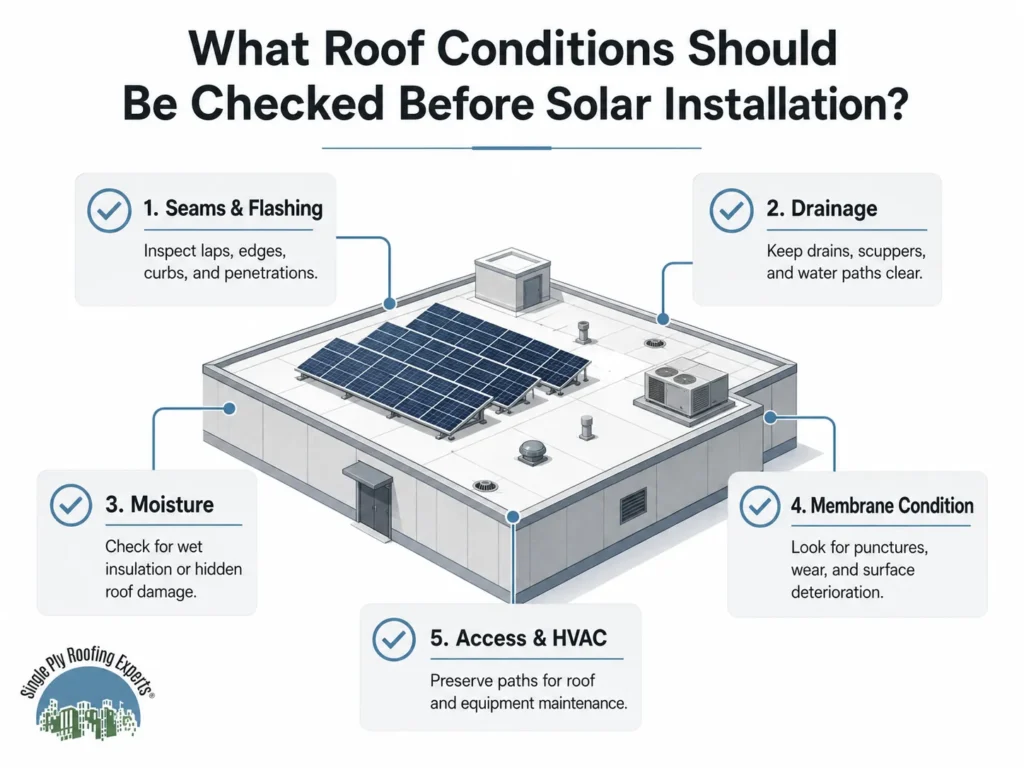
What Roof Conditions Should Be Checked Before Solar Installation?
Before answering can a commercial flat roof carry solar panels?, property managers should know whether the existing roof is actually ready for additional rooftop construction.
A pre-solar roofing assessment should focus on the conditions most likely to affect waterproofing and future maintenance.
Seams, Flashing, and Penetrations
Seams and transition details are critical on flat roofs. Parapets, drains, pipes, HVAC curbs, roof edges, vents, expansion areas, and previous repairs deserve close attention before solar installation.
Existing deficiencies are generally easier to repair while the entire roof remains accessible.
Drainage and Ponding Water
Commercial flat roofs depend on drains, scuppers, slope, and correctly designed drainage paths to move water away.
Solar racking, ballast, conduit, and service routes should not obstruct those paths or make drainage components difficult to inspect.
Existing ponding problems should also be evaluated before the array is installed.
Roof Traffic and Existing Damage
Solar installation introduces workers, equipment, materials, and repeated foot traffic onto the roof.
A membrane that is already brittle, punctured, deteriorated, or heavily repaired may be more vulnerable during construction.
Temporary protection and planned access routes can help reduce unnecessary membrane damage.
What Types of Commercial Flat Roofs Can Have Solar Panels?
When evaluating can a commercial flat roof carry solar panels?, the existing roofing material matters because membrane type influences protection requirements, flashing details, rooftop traffic, maintenance, and compatibility with solar mounting components. Many common commercial systems can accommodate solar when properly evaluated.
| Roofing system | Solar considerations |
| TPO | Protect membrane from concentrated loads and traffic; preserve access to welded seams and drains |
| PVC | Confirm membrane and protection-layer compatibility; maintain service access |
| EPDM | Protect rubber membrane from punctures, abrasion, and concentrated ballast loads |
| Modified bitumen | Evaluate surface condition, membrane age, existing repairs, and remaining service life |
| Built-up roofing | Check surfacing, moisture, age, drainage, and structural conditions before installation |
TPO and PVC Roofs
TPO and PVC are common thermoplastic single-ply systems used on commercial flat roofs.
Solar mounting needs to preserve the integrity of the membrane and its heat-welded seams. Protection beneath equipment, appropriate flashing details, drainage access, and planned service paths become important once the array is installed.
Owners comparing or preparing single-ply systems can review Single Ply Roofing Experts’commercial flat roofing services for the roofing side of the project.
EPDM Roofs
EPDM is a flexible rubber membrane that can also support properly designed rooftop solar projects.
Because it is a membrane system, installers need to avoid unnecessary punctures, abrasion, dragging equipment, and concentrated contact points.
The details around mounting hardware and protection pads should be compatible with the roof assembly.
Modified Bitumen and Built-Up Roofing
Asphalt-based systems such as modified bitumen and built-up roofing can also be candidates for solar.
The existing roof’s age, surfacing, repairs, moisture, drainage, and overall condition should be evaluated first. Older multi-layer systems may also require closer investigation to understand what is already present below the exposed surface.
Ballasted vs. Mechanically Attached Solar Mounting
The answer to can a commercial flat roof carry solar panels? also depends on how the solar system will be secured. Ballasted and mechanically attached systems solve different engineering problems and create different roofing considerations.
Ballasted Solar Systems
Ballasted systems use weight to help secure the solar racking rather than relying entirely on numerous attachments through the roof.
Reducing penetrations can be attractive from a waterproofing perspective, but ballast adds weight and can create concentrated loads where the system meets the roof.
Protection layers, drainage, access, wind design, and structural capacity all need to be addressed.
Mechanically Attached Systems
Mechanically attached solar systems use engineered connections to the building structure.
These systems may reduce some ballast requirements but introduce roof penetrations that need appropriate waterproofing details.
The mounting and roofing details should be coordinated before installation rather than leaving the roofer to repair poorly planned penetrations afterward.
Which Mounting Method Is Better?
There is no universal winner.
The most suitable system depends on structural capacity, deck type, membrane condition, wind requirements, building height, roof warranty, drainage, layout, and solar-system engineering.
Roofing and solar decisions should therefore be coordinated rather than designed independently.
Can Solar Panels Cause Commercial Roof Leaks?
When owners ask can a commercial flat roof carry solar panels?, they are often equally concerned about whether the installation will cause leaks. Solar panels do not automatically make a roof leak, but poor workmanship, membrane damage, incorrect penetrations, and obstructed drainage can create new vulnerabilities.
Penetrations Need Proper Waterproofing
Any penetration through the roofing membrane must be integrated correctly with the existing system.
Improvised sealant around mounting hardware is not a substitute for properly designed flashing and compatible roofing materials.
The exact approach depends on the roof membrane and mounting system.
Installation Traffic Can Damage Membranes
Many solar-related roofing problems can originate from construction activity rather than the finished panels themselves.
Dropped equipment, sharp edges, dragged materials, repeated walking, and staging can puncture or abrade a membrane.
Protective routes and responsible site management help reduce these risks.
Solar Equipment Should Not Block Drainage
Panels and racking should leave critical roof components accessible.
If installers place conduits, ballast, or supports across drainage paths, debris can accumulate and maintenance becomes more difficult.
The final array layout should allow roofing and facility teams to continue inspecting and servicing the roof.
Should You Replace the Roof Before Installing Solar?
One of the most important versions of can a commercial flat roof carry solar panels? is whether the roof should remain in place for the life of the planned array. If major roofing work is likely in the near future, coordinating it before solar installation can avoid removing and reinstalling equipment later.
When Replacement Deserves Consideration
Replacement may deserve evaluation when the roof has recurring leaks, widespread membrane deterioration, wet insulation, repeated repair areas, severe flashing problems, unresolved drainage issues, or other conditions suggesting continued patching may provide poor lifecycle value.
Age alone should not decide the issue. Condition matters more.
Coordinating Roofing and Solar Can Reduce Rework
When reroofing is already planned, the replacement can be designed with the future array in mind.
Roofing, structural, and solar teams can coordinate mounting locations, drainage, service paths, penetrations, protection requirements, and equipment access before either system is finalized.
Property owners considering this route can review professional commercial roof replacement services before committing to solar installation over an aging roof.
How Solar Changes Future Roof Maintenance and Repairs
Even after the question can a commercial flat roof carry solar panels? has been answered and the array is operating, the roof still needs to be inspected and maintained. Solar equipment changes how technicians reach certain areas and should therefore be considered part of the long-term maintenance plan.
Roof Components Must Remain Accessible
Drains, scuppers, HVAC equipment, flashing, perimeter details, and major seams may still need routine inspection.
Solar layouts that leave sensible access paths make future roofing maintenance easier and safer.
A roof should not become effectively inaccessible simply because the solar project was designed around maximum panel density.
Repairs Beneath the Array Can Become More Complex
If a leak develops beneath a densely packed array, gaining access to the suspected area may take additional coordination.
Solar contractors may need to temporarily remove equipment before roofing work can proceed.
That added complexity is another reason to address known roofing defects before installation.
Establish a Condition Baseline
Photographing and documenting the roof immediately before solar construction gives property managers a useful reference.
A follow-up inspection after installation can help identify new punctures, disturbed flashing, blocked drains, or other visible changes while project activity is still recent.
When Should Roofing and Solar Contractors Coordinate?
The answer to can a commercial flat roof carry solar panels? becomes much more reliable when the roofer, structural professional, and solar team exchange information before construction. Waiting until panels arrive on-site can make preventable conflicts much harder to solve.
Coordinate Before Final Array Layout
The roof inspection should ideally happen before the solar layout is locked.
That gives the solar designer an opportunity to account for drains, known repair areas, roof transitions, HVAC equipment, expansion conditions, service routes, and other roofing constraints.
Review Proposed Roof Penetrations
If the mounting system requires penetrations, the roofing contractor should understand where they are planned and how they will be waterproofed.
This is especially important where an existing manufacturer warranty or specific roof assembly requirements apply.
Plan Future Equipment Replacement
Solar designers should also consider that HVAC units, exhaust equipment, and other rooftop systems may need replacement during the life of the array.
Leaving practical access around major mechanical equipment can prevent another expensive coordination problem later.
How Climate Affects Solar-Ready Flat Roofs in California, Arizona, and Nevada
For properties in the Southwest, can a commercial flat roof carry solar panels? also has a climate component. Strong solar exposure makes rooftop PV attractive, but heat, UV exposure, seasonal storms, wind, and drainage conditions still influence both the solar system and the roof underneath it.
Heat and UV Exposure
Commercial flat roofs in sunny climates receive substantial solar exposure.
The existing membrane should be inspected for cracking, surface deterioration, seam problems, coating failure, or other signs that long-term exposure has affected the roof.
Solar panels may shade portions of the membrane, but they do not correct deterioration that already exists.
Wind and Storm Conditions
Solar mounting systems must be engineered for actual project conditions.
Wind exposure varies by location, building height, surrounding development, roof zone, and array design.
Seasonal storms also make reliable drainage important even in generally dry climates.
Local Requirements Still Apply
Permitting, structural, electrical, fire-access, and other requirements vary between jurisdictions.
Commercial property owners should rely on qualified project professionals and the applicable local authority rather than assuming requirements are identical throughout California, Arizona, and Nevada.
Frequently Asked Questions About Commercial Flat Roofs and Solar Panels
For owners still asking can a commercial flat roof carry solar panels?, these concise answers cover the most common roofing questions that arise before a solar project begins.
Can a Commercial Flat Roof Carry Solar Panels?
Yes, many commercial flat roofs can support solar panels. Structural capacity must be verified for the proposed system, and the existing roof should also be evaluated for membrane condition, moisture, drainage, remaining service life, and mounting compatibility.
How Much Weight Do Solar Panels Add to a Roof?
There is no single number that applies to every system. Panels, racking, ballast, wind requirements, layout, and mounting design all influence loading. The actual project should be evaluated by a qualified structural professional.
Can Solar Panels Be Installed on TPO Roofing?
Yes, TPO roofs can accommodate appropriately designed solar systems. Membrane protection, seam access, penetrations, drainage, mounting compatibility, and roof condition should be considered before installation.
Can Solar Panels Be Installed on EPDM Roofing?
Yes. EPDM roofs can support solar projects when the structure and roofing assembly are suitable. Protection against punctures, abrasion, and concentrated loading is especially important.
Do Solar Panels Cause Roof Leaks?
Solar panels do not inherently cause leaks. Problems may occur when penetrations are poorly detailed, membrane damage occurs during installation, or drainage is obstructed.
Should I Replace My Roof Before Installing Solar?
Consider replacement when the roof has significant deterioration, widespread moisture, repeated leaks, extensive repairs, or other conditions suggesting replacement is approaching. A professional inspection can help determine the appropriate approach.
Can Solar Panels Be Installed Over a Roof With Ponding Water?
The drainage problem should be evaluated before the array is installed. Solar equipment can make future access and correction more difficult, so unresolved ponding should not simply be covered by the project.
Can Solar Panels Void a Roof Warranty?
Possibly, depending on the existing warranty, roofing manufacturer, mounting details, penetrations, and installation procedures. Review the actual warranty requirements before solar work begins rather than making assumptions.
Who Determines Whether the Roof Can Support Solar?
A qualified structural professional should evaluate structural capacity. A roofing contractor evaluates the waterproofing system and roof condition, while the solar installer designs the PV system and mounting layout.
Conclusion: Make Sure the Roof Is Ready Before the Solar Panels Go Up
The most useful answer to can a commercial flat roof carry solar panels? is that many roofs can, but structural capacity is only one part of the decision. The roofing membrane underneath the solar array still needs to manage water, weather, rooftop traffic, penetrations, drainage, and future maintenance for years after installation.
A commercial property may be structurally capable of supporting solar while still needing roof repairs or replacement first. Conversely, a roof in sound condition may only need targeted preparation and careful coordination with the solar installer. The right approach depends on the actual roof, not a generic solar checklist.
Single Ply Roofing Experts specializes in flat and low-slope roofing and can evaluate the roofing side of a planned solar project. For commercial properties, that means checking membrane condition, seams, flashing, drainage, visible damage, moisture concerns, existing repairs, and whether reroofing should be considered before solar installation. Learn more about our commercial roofing services if you are planning rooftop solar or another major rooftop project.
We also work with residential flat and low-slope roofing. Homeowners planning solar over a flat section, addition, ADU, garage, or other low-slope roof can explore our residential roofing services before panels are installed.
The best time to discover that a roof needs work is before a solar array is covering it. If solar is part of your property’s next phase, start by making sure the roof underneath it is ready.