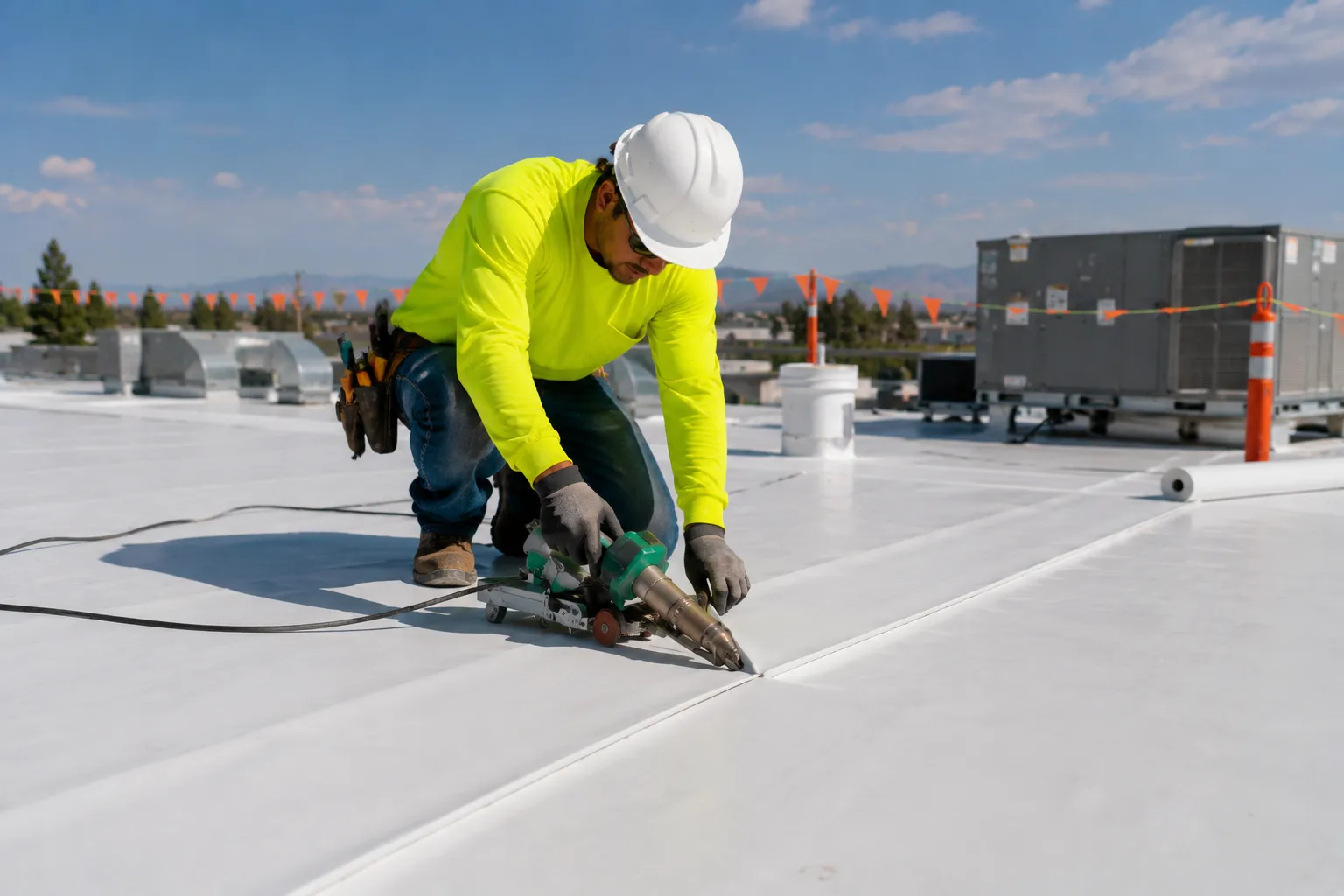
Commercial flat roofing has become one of the most important structural investments for warehouses, logistics centers, office buildings, industrial facilities, and large commercial properties throughout Arizona, Nevada, and California. As commercial buildings continue growing in scale and operational complexity, roofing systems now play a critical role in energy efficiency, operational stability, maintenance planning, and long-term property protection.
Unlike traditional roofing systems, commercial flat roofs must withstand:
- extreme environmental exposure
- large rooftop equipment loads
- thermal expansion
- drainage demands
- continuous operational stress
Because of these conditions, businesses are increasingly investing in advanced flat roofing systems designed specifically for long-term waterproof performance and commercial building efficiency.
At Single Ply Roofing Experts, we specialize in commercial flat roofing systems for warehouses, industrial buildings, logistics centers, manufacturing plants, and office properties requiring durable roofing solutions built for demanding climate conditions.
Modern flat roofing systems such as TPO roofing and commercial single ply roofing provide strong waterproof protection while helping businesses reduce operational costs and improve long-term building performance.
Why Commercial Flat Roofing Is Essential for Modern Industrial Buildings
Commercial and industrial buildings rely heavily on flat roofing systems because they efficiently support:
- warehouses
- distribution facilities
- manufacturing plants
- logistics hubs
- office complexes
- retail centers
Flat roofing systems also allow easier integration of:
- rooftop HVAC systems
- solar-ready infrastructure
- drainage systems
- insulation upgrades
- maintenance accessibility
As industrial expansion continues throughout the Southwest, commercial flat roofing has become a major component of long-term operational infrastructure planning.
Why Warehouses Depend on Reliable Flat Roofing Systems
Warehouses operate continuously while protecting inventory, shipping operations, equipment, and employee safety. A failing roofing system may eventually create operational disruptions that impact productivity and increase long-term expenses.
Commercial flat roofing systems help warehouses maintain:
- waterproof reliability
- stable climate control
- operational continuity
- long-term structural protection
For logistics facilities and industrial properties, roofing performance directly affects day-to-day operational efficiency.
Protecting Inventory From Water Damage
Roof leaks inside warehouse environments may eventually damage:
- packaged inventory
- electronics
- stored materials
- operational equipment
Professional flat roofing systems help create durable waterproof barriers that protect valuable infrastructure and inventory.
Why Moisture Control Matters in Distribution Facilities
Even minor moisture intrusion may disrupt storage conditions and increase operational risks for logistics centers and warehouse environments.
Reducing Operational Downtime in Distribution Facilities
Roofing failures may eventually interrupt:
- shipping schedules
- warehouse productivity
- logistics operations
- equipment reliability
Long-term roofing stability helps businesses maintain operational consistency while minimizing unexpected disruptions.
Why Roofing Stability Matters for Industrial Operations
Industrial buildings often contain large roof spans exposed to continuous environmental stress throughout the year.
Commercial flat roofing systems designed for industrial facilities help improve:
- membrane durability
- waterproof protection
- rooftop flexibility
- long-term operational reliability
How Flat Roofing Supports Commercial Building Efficiency
Commercial roofing systems directly influence building efficiency, climate control stability, and operational costs.
Modern flat roofing systems help improve:
- insulation performance
- rooftop heat management
- HVAC efficiency
- long-term energy savings
As businesses continue prioritizing operational efficiency, roofing systems have become an important part of overall facility management.
Improving Interior Climate Stability
Large commercial buildings require stable interior temperatures for:
- inventory protection
- employee comfort
- manufacturing consistency
- equipment performance
Reflective roofing systems help reduce rooftop heat transfer and improve interior climate conditions.
Lowering HVAC Workload Through Reflective Roofing
Traditional roofing systems often absorb excessive solar heat, increasing rooftop temperatures and forcing HVAC systems to work harder throughout the day.
Reflective commercial flat roofing systems help reduce:
- rooftop heat absorption
- cooling strain
- energy consumption
- operational expenses
How Reflective Roofing Supports Energy Efficiency
Modern TPO roofing systems reflect sunlight instead of absorbing it, helping improve long-term building energy performance.
Supporting Energy-Efficient Commercial Buildings
Businesses across Arizona, Nevada, and California are increasingly investing in roofing systems that support:
- sustainability goals
- lower operational costs
- improved thermal performance
- long-term property value
Energy-efficient roofing systems help commercial buildings operate more efficiently under demanding climate conditions.
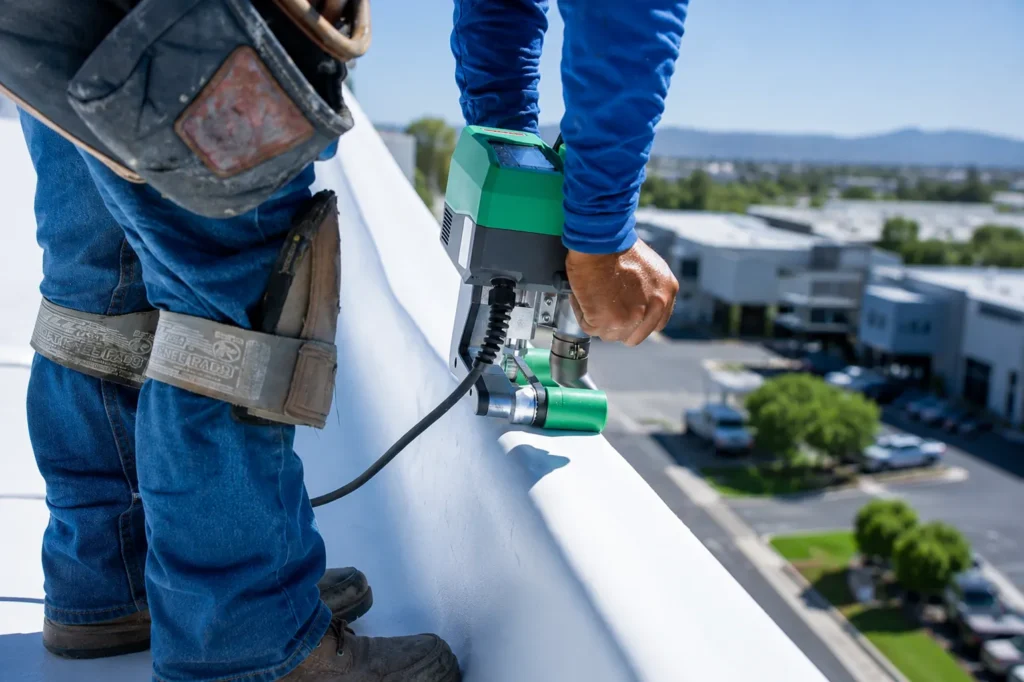
Why TPO Roofing Has Become One of the Most Popular Flat Roofing Systems
TPO roofing continues becoming one of the most widely used commercial flat roofing systems because it combines:
- reflective heat resistance
- lightweight installation
- strong waterproof seams
- flexible membrane performance
- long-term durability
For warehouses and industrial facilities, these advantages help improve operational reliability while reducing long-term roofing expenses.
Why TPO Roofing Performs Well in Desert Climates
Commercial rooftops in Arizona, Nevada, and California experience continuous exposure to:
- UV radiation
- rooftop heat buildup
- thermal movement
- seasonal weather conditions
TPO roofing systems are specifically engineered to handle these environmental challenges while maintaining strong waterproof performance.
Reflective Heat Resistance for Large Roof Surfaces
Large flat roofs absorb substantial heat throughout the day. Reflective TPO roofing membranes help lower rooftop temperatures while improving energy-efficient building performance.
Flexible Membrane Performance Under Thermal Movement
Commercial rooftops expand and contract constantly due to changing temperatures.
TPO roofing systems maintain membrane flexibility while reducing risks associated with:
- cracking
- seam separation
- waterproof deterioration
Why Thermal Flexibility Matters for Commercial Roofing
Flexible roofing membranes help improve long-term roof lifespan and waterproof reliability under continuous environmental stress.
Long-Term Waterproof Durability
Strong membrane seams and waterproof performance make TPO roofing one of the most reliable solutions for commercial flat roofing systems.
Why Single Ply Roofing Performs Well for Flat Roof Environments
Single ply roofing systems are specifically designed for flat and low-slope commercial roofs requiring:
- lightweight roofing structures
- flexible membrane movement
- strong waterproofing
- easier maintenance access
These advantages make single ply roofing highly effective for warehouses, logistics facilities, and industrial buildings.
Lightweight Roofing Benefits for Industrial Buildings
Lightweight roofing systems help reduce structural stress while supporting efficient commercial roof installation.
Easier Maintenance Access for Commercial Facilities
Flat roofing systems provide easier access for:
- HVAC maintenance
- rooftop inspections
- equipment servicing
- drainage management
This improves long-term building maintenance efficiency.
Improved Waterproof Protection for Large Buildings
Commercial single ply roofing systems create durable waterproof barriers designed for large-scale industrial and warehouse environments.
Common Problems Affecting Commercial Flat Roofs
Commercial flat roofs experience constant environmental exposure and operational stress. Without proper roofing systems and maintenance planning, buildings may eventually develop serious roofing problems.
Ponding Water and Drainage Issues
Standing water is one of the most common problems affecting flat commercial roofs.
Poor drainage may eventually lead to:
- membrane deterioration
- insulation damage
- roof leaks
- structural stress
Professional flat roofing systems help improve drainage performance while maintaining waterproof reliability.
Why Flat Roof Drainage Design Matters
Commercial roofing systems require proper drainage planning to reduce standing water accumulation and long-term roofing deterioration.
How Ponding Water Accelerates Roof Aging
Excess standing water increases stress on roofing membranes and may eventually weaken waterproof protection.
Preventing Long-Term Structural Roofing Damage
Professional roofing design helps reduce moisture infiltration risks and supports long-term building protection.
Rising Energy Costs Inside Commercial Buildings
Older roofing systems often absorb more heat and reduce insulation efficiency, increasing HVAC workload and cooling expenses.
Modern commercial flat roofing systems help improve thermal efficiency while supporting lower operational costs.
Why Roofing Systems Affect Cooling Performance
Roofing materials directly influence rooftop temperatures and indoor climate stability.
Energy-efficient roofing systems help reduce excessive heat transfer into commercial buildings.
Choosing the Right Commercial Flat Roofing Contractor
Commercial flat roofing projects require specialized expertise and long-term planning.
An experienced roofing contractor should understand:
- flat roofing systems
- waterproof membrane installation
- rooftop drainage design
- thermal movement management
- industrial roofing requirements
- large-scale commercial roofing performance
At Single Ply Roofing Experts, we focus specifically on commercial flat roofing systems designed for long-term performance throughout Arizona, Nevada, and California.
Why Commercial Roofing Experience Matters
Large-scale commercial roofing systems involve significantly more complexity than standard roofing projects.
Professional installation helps ensure:
- strong waterproof performance
- long-term membrane durability
- energy-efficient roofing operation
- reduced maintenance risks
For commercial properties, roofing quality directly impacts long-term operational stability.
Understanding Large-Scale Industrial Roofing Systems
Industrial roofing systems require specialized planning for:
- warehouses
- logistics facilities
- manufacturing plants
- commercial office buildings
Large roof spans require durable membrane systems capable of long-term waterproof performance.
The Importance of Long-Term Roofing Planning
Commercial roofing should focus on long-term operational performance rather than temporary short-term repairs.
Long-term roofing strategies help businesses:
- reduce lifecycle costs
- improve operational efficiency
- protect infrastructure
- support long-term property value
Schedule a Commercial Flat Roof Inspection
If your warehouse, logistics center, office building, industrial facility, or commercial property is experiencing roofing issues, the team at Single Ply Roofing Experts can help evaluate your roofing system and recommend the best long-term roofing solution for your building.
From commercial roof replacement to large-scale TPO roofing installation, we provide durable flat roofing systems specifically designed for long-term performance across Arizona, Nevada, and California.
Investing in professional commercial flat roofing helps businesses improve operational efficiency, reduce maintenance costs, and protect long-term commercial real estate investments.
Frequently Asked Questions About Commercial Flat Roofing
How do I know if my commercial roof needs replacement?
Recurring leaks, ponding water, rising cooling costs, and visible membrane damage are common signs that a commercial roof may need replacement.
What is the best roofing system for warehouses?
TPO single ply roofing is one of the most popular choices for warehouses because it offers waterproof protection, energy efficiency, and long-term durability.
Why do commercial buildings choose TPO roofing?
Commercial buildings choose TPO roofing because it combines reflective heat resistance, waterproof performance, and lower maintenance costs.
Can commercial flat roofing reduce energy costs?
Yes. Reflective roofing systems help reduce rooftop heat absorption and improve overall building energy efficiency.
Why is TPO roofing recommended for hot climates?
TPO roofing reflects sunlight and helps reduce rooftop temperatures, making it ideal for Arizona, Nevada, and California climates.
What causes leaks in commercial flat roofs?
Common causes include:
- seam separation
- ponding water
- flashing damage
- membrane deterioration
- aging roofing systems
Is TPO roofing waterproof?
Yes. TPO roofing systems use heat-welded seams that create strong waterproof protection.
How long does a commercial flat roof last?
A professionally installed commercial flat roofing system may last 20–30 years depending on maintenance and climate exposure.
Why do flat roofs develop ponding water?
Ponding water usually develops because of poor drainage design, clogged drains, or roof slope issues.
What are the advantages of single ply roofing?
Single ply roofing offers:
- lightweight installation
- flexible membrane performance
- waterproof protection
- easier maintenance
- energy efficiency
Why do warehouses need reflective roofing systems?
Reflective roofing systems help warehouses reduce cooling costs and improve climate stability inside large buildings.
How often should commercial roofs be inspected?
Commercial roofs should typically be inspected twice per year and after major storms.
Can roof leaks damage warehouse inventory?
Yes. Roof leaks may damage stored products, electronics, packaging, and operational equipment inside warehouse environments.
What is the difference between TPO and PVC roofing?
TPO roofing is often selected for energy efficiency and affordability, while PVC roofing is commonly used for enhanced chemical resistance and waterproof seam durability.
Why is commercial roof maintenance important?
Regular maintenance helps identify roofing problems early, reducing long-term repair costs and extending roof lifespan.