
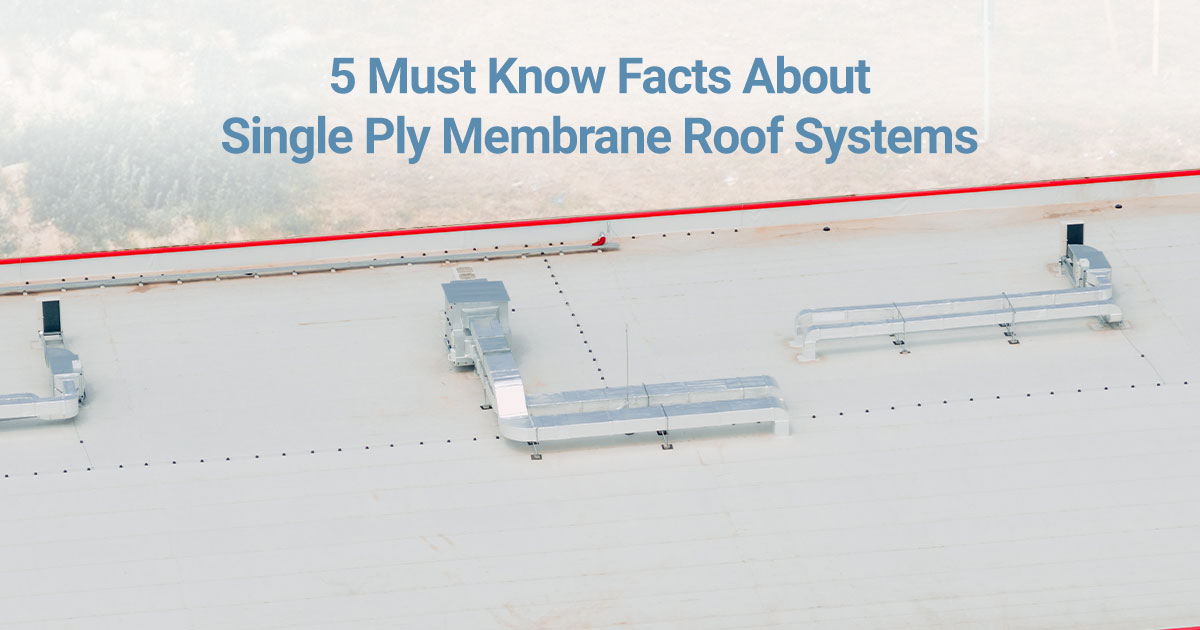
Selecting the correct commercial roofing system is a major responsibility for any building owner, property manager, or facilities director. The roof is the first line of defense against water intrusion, temperature extremes, mechanical wear, and long term structural risk. As a team who designs, installs, inspects, and services single ply roofing systems every week, we see the same question come up from clients who are evaluating replacement or new construction options. They want to know if a Single Ply Membrane Roof is the right system for their building.
A Single Ply Membrane Roof can deliver dependable performance, predictable costs, and consistent quality when it is engineered and installed correctly. In this guide, our roofing experts explain what a Single Ply Membrane Roof is, how it works, which materials are used, and what you need to know before selecting the system. This article also outlines installation practices, assembly considerations, and maintenance strategies so you can evaluate this roofing solution like an industry professional. The content below has been rewritten with technical clarity and optimized for modern search engines while maintaining professional tone, accuracy, and credibility.
What Is a Single Ply Membrane Roof
A Single Ply Membrane Roof is a flexible sheet roofing system installed in one continuous layer over low slope or flat roof substrates. The membrane serves as the primary waterproofing barrier. Unlike built up roofing that uses multiple asphalt or felt layers, a Single Ply Membrane Roof depends on a factory manufactured sheet that is produced with uniform thickness, UV resistance, and reinforcement.
The membrane can be installed in several ways depending on project needs. It can be mechanically attached with fasteners, fully adhered with low VOC adhesive, or ballasted with stone. Seams are sealed by hot air welding in thermoplastic materials or by primer and seam tape in rubber based systems. Once installed, the membrane forms a continuous, watertight surface across the entire roof.
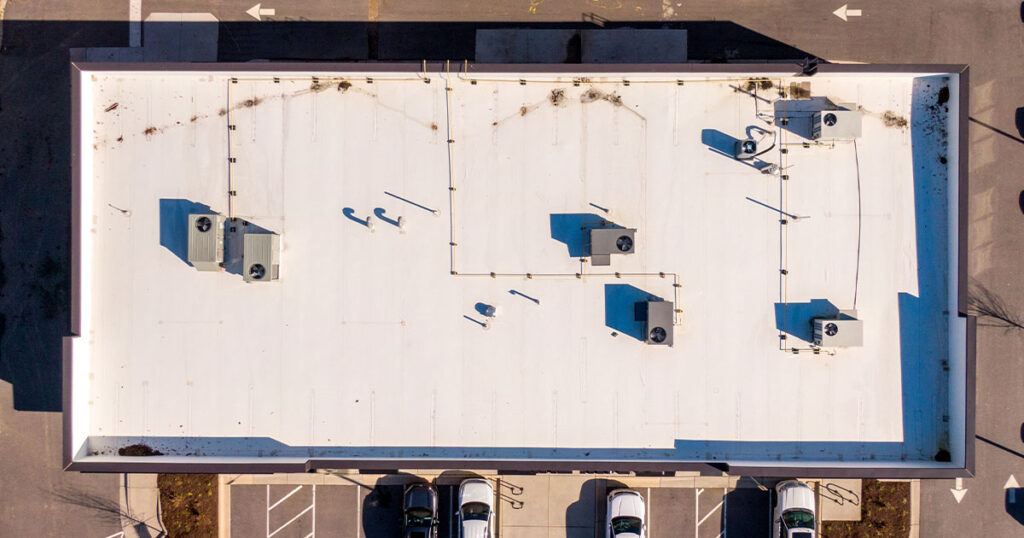
The most common materials for a Single Ply Membrane Roof are TPO, PVC, and EPDM. Each membrane has a distinct performance profile related to longevity, chemical resistance, reflectivity, flexibility, cost, and regional suitability. Since the sheet is manufactured in a controlled environment, it provides a high degree of consistency that cannot be replicated with field fabricated systems. When paired with the correct substrate and skilled installation, a Single Ply Membrane Roof is a reliable long term commercial roofing solution.
5 Must Know Facts About Single Ply Membrane Roof Systems
The following five facts help building owners evaluate whether a Single Ply Membrane Roof aligns with their building’s requirements, climate conditions, and operational needs.
Material Choice Determines the System’s Performance
One of the most important aspects of a Single Ply Membrane Roof is the type of membrane used. All membranes fall into three major categories. Each material has a different chemical structure, installation method, and strength profile. As single ply roofing experts, we select the correct material after evaluating climate, building use, chemical exposure, mechanical equipment layout, energy goals, and compliance standards.
TPO Single Ply Membrane Roof Systems
TPO membranes are thermoplastic sheets known for high reflectivity and welded seams. They remain one of the fastest growing commercial roofing choices in the United States. TPO offers strong energy performance, particularly in warm regions where a white reflective roof can reduce cooling loads. Seams are heat welded and create a durable monolithic bond when installed with calibrated tools. TPO is a strong recommendation for buildings pursuing energy efficiency or code driven reflectivity targets.
PVC Single Ply Membrane Roof Systems
PVC is a thermoplastic membrane known for its chemical resistance. Buildings exposed to fats, oils, mild chemicals, or grease exhaust often require PVC. This material also performs well in areas that experience periodic ponding water. PVC is reinforced for dimensional stability and offers strong welded seam integrity. Food production, restaurants, industrial processing, and laboratory environments often benefit from PVC Single Ply Membrane Roof systems.
EPDM Single Ply Membrane Roof Systems
EPDM is a synthetic rubber membrane recognized for exceptional weathering performance. It remains flexible in extreme cold and offers strong UV resistance. EPDM seams are sealed using primer and seam tape. This material is ideal for colder climates or roof designs requiring flexibility to handle structural movement. EPDM is also available in white reflective options for upgraded energy performance.
The correct membrane type is selected after evaluating local weather, building geometry, drainage paths, rooftop traffic, compliance requirements, and long term operational plans. A Single Ply Membrane Roof performs best when material selection matches the building’s use case.
Attachment Method Has Direct Impact on System Behavior
A Single Ply Membrane Roof can be installed using different attachment methods. The attachment method controls how the membrane responds to wind, thermal movement, and long term stress.
Mechanically Attached Single Ply Membrane Roof
This method uses fasteners and plates along the membrane seams. It is cost effective and efficient for large commercial buildings. Mechanical attachment provides strong wind uplift resistance and is widely used in warehouses, retail centers, and industrial facilities.
Fully Adhered Single Ply Membrane Roof
The membrane is adhered directly to the substrate using approved adhesives. The result is a smooth roof surface with reduced flutter and improved aesthetics. Fully adhered systems are recommended for buildings with complex geometry or areas where wind uplift forces are high.
Ballasted Single Ply Membrane Roof
The membrane is loose laid and held in place by stone ballast. This method enables rapid installation on large roofs. Structural engineers must verify that the building can support the additional weight. Ballasted systems are common in large distribution centers or older buildings where minimizing deck penetration is beneficial.
Attachment choice affects system movement, uplift resistance, installation time, cost, and suitability for rooftop equipment. We evaluate deck type, structural loads, building height, and wind exposure before recommending an attachment method.
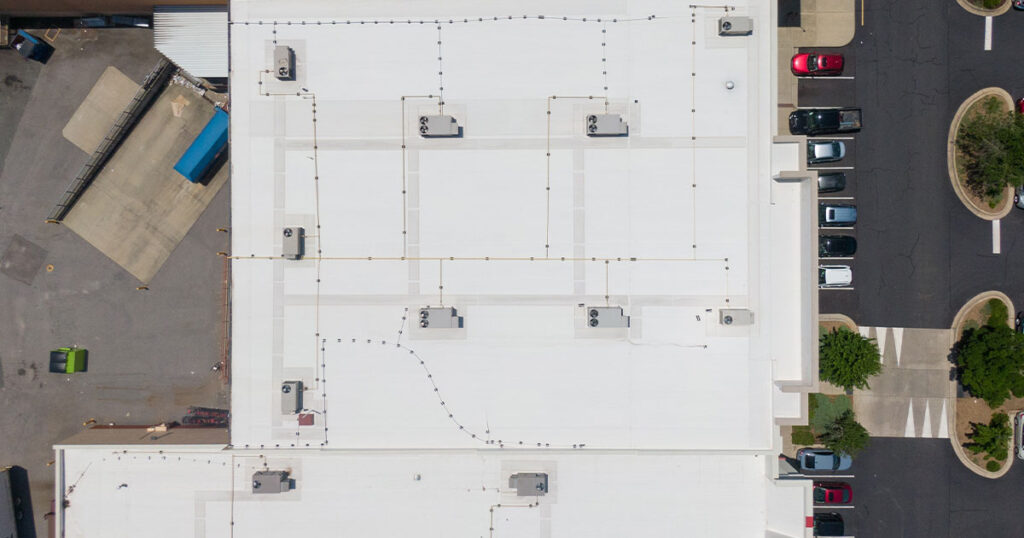
Insulation and Cover Boards Shape Durability
A Single Ply Membrane Roof depends heavily on the assembly beneath the membrane. Choosing the correct insulation and cover board is essential to long term performance.
Insulation provides required R value, thermal comfort, and compliance with energy codes. Polyiso is the most common insulation for single ply systems due to its high thermal resistance. In some assemblies, extruded polystyrene or mineral wool may be used based on fire or moisture requirements.
Cover boards improve impact resistance, dimensional stability, and hail performance. High density boards protect the insulation from foot traffic, tools, and equipment. They also provide an optimal surface for adhered membranes. Without a cover board, the membrane is more vulnerable to damage over time.
The correct assembly protects against thermal cycling, rooftop foot traffic, mechanical stress, and environmental exposure. This is why professional roofers evaluate substrate moisture, deck material, and building movement before designing the insulation and cover board layers.
Seams Are the Most Critical Component of the Roof
Seam integrity determines whether the Single Ply Membrane Roof remains watertight throughout its service life. Every membrane type seals differently, and each requires calibrated tools and professional installation.
Seams on TPO and PVC Roofs
TPO and PVC seams are fused by heat welding. When performed correctly, the weld creates a single continuous layer with strength comparable to the membrane itself. Welders must be calibrated throughout the day as ambient temperatures change. Seams are probed and inspected to confirm integrity.
Seams on EPDM Roofs
EPDM seams are sealed with primer and seam tape. Proper surface cleaning and alignment are essential. When done properly, EPDM seams are strong and durable. EPDM uses chemical adhesion rather than heat welding.
Professional seam control programs record welder settings, track temperature changes, inspect seam appearance, probe critical areas, and document repairs. Experienced single ply roofing crews use these procedures on every project. Seam precision ultimately determines whether the roof delivers watertight reliability.
Maintenance Is Straightforward and Predictable
A Single Ply Membrane Roof is simple to maintain and supports a predictable maintenance schedule. Long term performance depends on basic inspection and housekeeping practices. Unlike built up systems that may require complex repairs, most single ply membranes are easy to inspect and patch when needed.
Maintenance typically includes cleaning drains, removing debris, inspecting seams and flashings, checking penetration details, and repairing incidental punctures. The smooth surface of single ply membranes makes visual inspection easy. With consistent maintenance, Single Ply Membrane Roof systems can exceed their expected service life and remain in strong condition for decades.
Material Profiles for Single Ply Membrane Roof Systems
Understanding the properties of each membrane helps owners and designers choose the correct system.
TPO Material Profile
TPO membranes offer reflective surfaces, energy savings, welded seams, broad availability, and various thicknesses. They are frequently used in new construction projects. TPO performs well with polyiso insulation and can be installed using any attachment method. Reinforced TPO membranes are recommended for locations with high wind uplift conditions or complex perimeter details.
PVC Material Profile
PVC membranes provide chemical resistance and weldable seams. The material uses plasticizers to maintain flexibility and is well suited to areas with potential exposure to oils or industrial contaminants. Reinforced PVC membranes are standard in commercial environments. Buildings that operate exhaust systems, rooftop kitchens, or industrial processes benefit from the stability and resistance of PVC Single Ply Membrane Roof systems.
EPDM Material Profile
EPDM has exceptional weathering stability. The membrane remains flexible for decades and provides strong resistance to UV, ozone, and temperature swings. It is often used in cold climates where flexibility is critical. Fully adhered EPDM creates a clean aesthetic finish on buildings with visible rooflines. Seam tape technology has progressed significantly, making EPDM seams strong, durable, and reliable when installed correctly.
How We Engineer a High Performance Single Ply Membrane Roof Assembly
A long lasting Single Ply Membrane Roof begins with disciplined engineering. As roofing specialists, we evaluate every layer and detail before installation begins.
Our design process examines structural loading, wind uplift requirements, energy code compliance, substrate moisture content, expected thermal movement, and traffic paths. We specify the insulation type and thickness, select appropriate cover boards, determine the attachment method, and design transitions around penetrations, curbs, and edges.
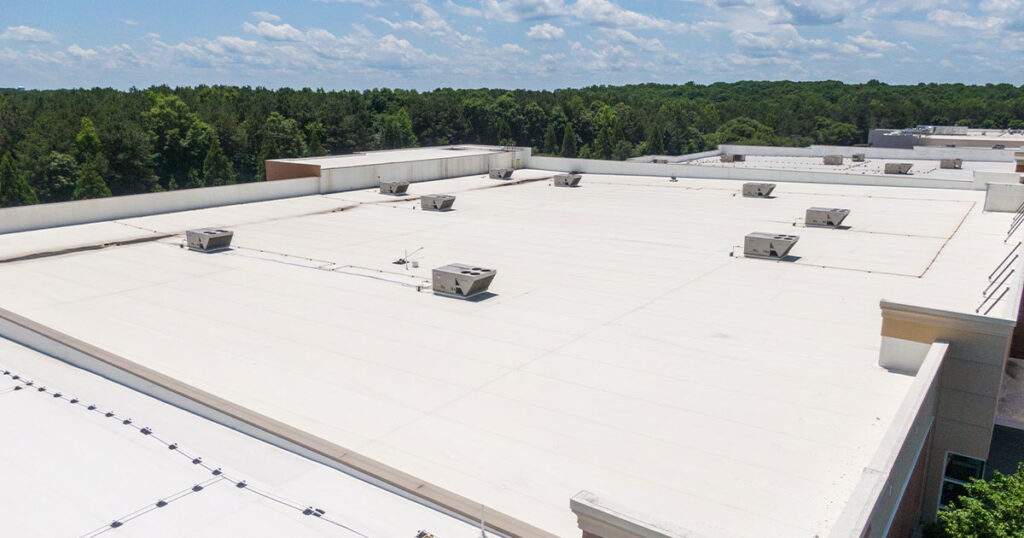
We also define detailed quality control steps such as seam testing, substrate preparation, material staging, and daily installation checkpoints. Every layer is documented, and every transition is engineered so the system performs reliably throughout its service life.
Cost and ROI Considerations for a Single Ply Membrane Roof
Cost is an important factor for any capital improvement project. The price of a Single Ply Membrane Roof depends on membrane thickness, attachment method, insulation requirements, building geometry, tear off needs, rooftop equipment, and labor conditions. Although cost varies, single ply systems typically offer competitive initial cost and favorable long term value.
The return on investment comes from reduced service calls, fewer leaks, improved energy performance, easier maintenance, and consistent performance over time. White TPO and PVC membranes can reduce cooling loads in warm climates. A properly engineered Single Ply Membrane Roof requires fewer repairs than traditional multi ply systems.
A well designed single ply system becomes a long term asset that supports building operations, preserves property value, and minimizes disruptions to tenants and occupants.
Installation Best Practices for Single Ply Membrane Roof Systems
Quality installation is essential for long term performance. Our crews follow strict procedures based on manufacturer guidelines, field experience, and engineering documentation.
Key elements of best practice installation include maintaining clean and dry substrates, calibrating heat welders based on temperature changes, preparing surfaces correctly for adhered membranes, verifying seam quality, reinforcing corners and critical roof details, protecting high traffic areas with walkway pads, and documenting all key installation stages.
Experienced installers understand how temperature, moisture, airflow, and substrate conditions affect the membrane. Proper sequencing, material staging, and continuous quality control contribute directly to roof performance.
Maintenance Guide for a Single Ply Membrane Roof
Maintaining a Single Ply Membrane Roof involves predictable tasks that support system longevity. Inspections should be performed in spring and fall and after significant weather events. Cleaning drains and scuppers prevents ponding water. Debris should be removed to avoid membrane abrasion. Flashings at curbs, pipes, and edges should be inspected for signs of stress. Any punctures or cuts should be repaired using manufacturer approved patch kits.
Maintaining a maintenance log improves tracking and helps owners plan long term budgets. Service trades should be briefed on rooftop protocols so ladders, tools, and equipment do not create damage. With consistent maintenance, most Single Ply Membrane Roofs deliver long service life with minimal interruption.
Common Pitfalls and How to Avoid Them
Many roofing issues begin with shortcuts or incomplete assessments. Skipping cover boards to reduce cost increases vulnerability to impact damage and reduces fire performance. Incorrect wind fastening patterns create uplift failures. Poor moisture assessment of the deck traps vapor and causes blistering. Storing materials on unprotected insulation crushes the assembly. Allowing untrained trades to cut penetrations without coordination creates unnecessary leaks.
Avoiding these pitfalls requires professional oversight, trained technicians, and strict adherence to installation guidelines. A reliable single ply system depends on disciplined execution.
Frequently Asked Questions About Single Ply Membrane Roof Systems
What is a Single Ply Membrane Roof
A Single Ply Membrane Roof is a single layer waterproofing system installed on low slope roofs. It relies on a flexible factory manufactured membrane such as TPO, PVC, or EPDM. The membrane is attached mechanically, adhered, or ballasted and forms a continuous watertight surface.
Which material is best for my building
Material choice depends on your building’s environment and operational requirements. TPO supports energy efficiency. PVC supports chemical resistance. EPDM supports cold climate flexibility. Expert evaluation ensures the correct match.
How long does a Single Ply Membrane Roof last
When properly designed, installed, and maintained, most Single Ply Membrane Roof systems last twenty to thirty years or more depending on conditions.
How are seams sealed
TPO and PVC seams are hot air welded. EPDM seams use primer and seam tape. Each method requires calibration, inspection, and professional technique.
How much does a Single Ply Membrane Roof cost
Cost varies by membrane type, thickness, insulation, attachment, roof height, access, and tear off requirements. Project specific evaluation produces accurate pricing.
Can solar panels be installed on a Single Ply Membrane Roof
Yes. Single ply roofs can support solar arrays with engineered attachment or ballast strategies that maintain membrane integrity.
How does the system handle standing water
Proper drainage design minimizes ponding. Tapered insulation and clear drains keep the roof healthy. Some membranes tolerate incidental ponding better than others.
How do I maintain a Single Ply Membrane Roof
Maintenance includes semiannual inspections, cleaning drains, removing debris, inspecting seams and flashings, and repairing punctures promptly.
Is a Single Ply Membrane Roof suitable for a re roof
Yes. Single ply systems are frequently used for re-roof projects and can often be installed over existing substrates when conditions allow.
Is a Single Ply Membrane Roof good for large commercial buildings
Yes. The lightweight design, flexible installation options, and proven performance make single ply membranes well suited for warehouses, industrial facilities, retail centers, and large campuses.
Final Thoughts on Choosing a Single Ply Membrane Roof System
A Single Ply Membrane Roof offers a modern, efficient, and reliable solution for commercial buildings. When the membrane type matches the building’s use case and the assembly is designed with proper insulation, cover boards, attachment, and detailing, the system delivers long lasting performance. Professional installation and consistent maintenance ensure that a Single Ply Membrane Roof remains watertight, energy efficient, and structurally dependable.
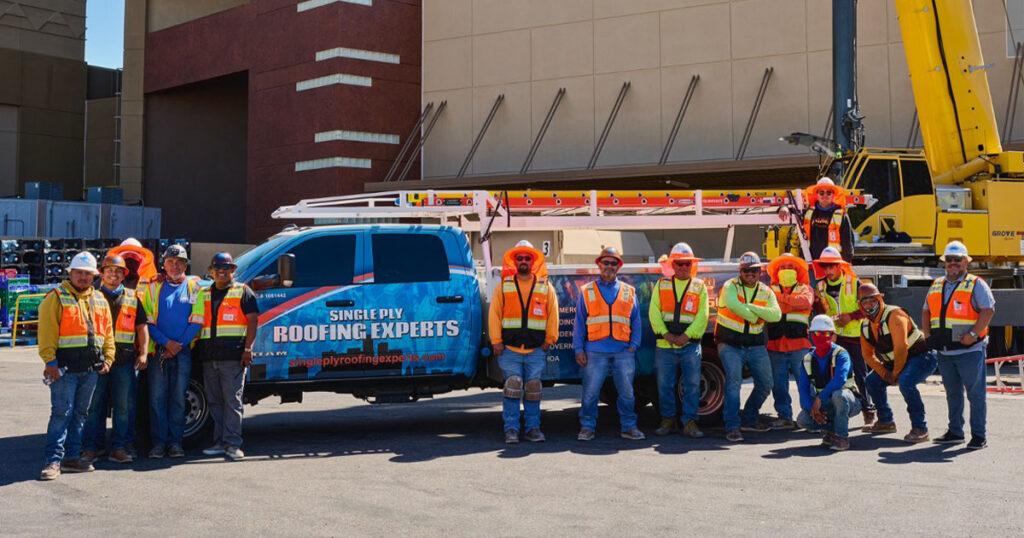
As single ply roofing experts, we evaluate structural loads, climate, building operations, and long term plans before recommending the correct system. If you are preparing for a roof replacement or new construction project, our team can assess your roof, determine insulation needs, identify the best membrane, and provide a clear scope of work. A properly designed Single Ply Membrane Roof is a strong investment that protects your building and supports your operations for many years to come.