
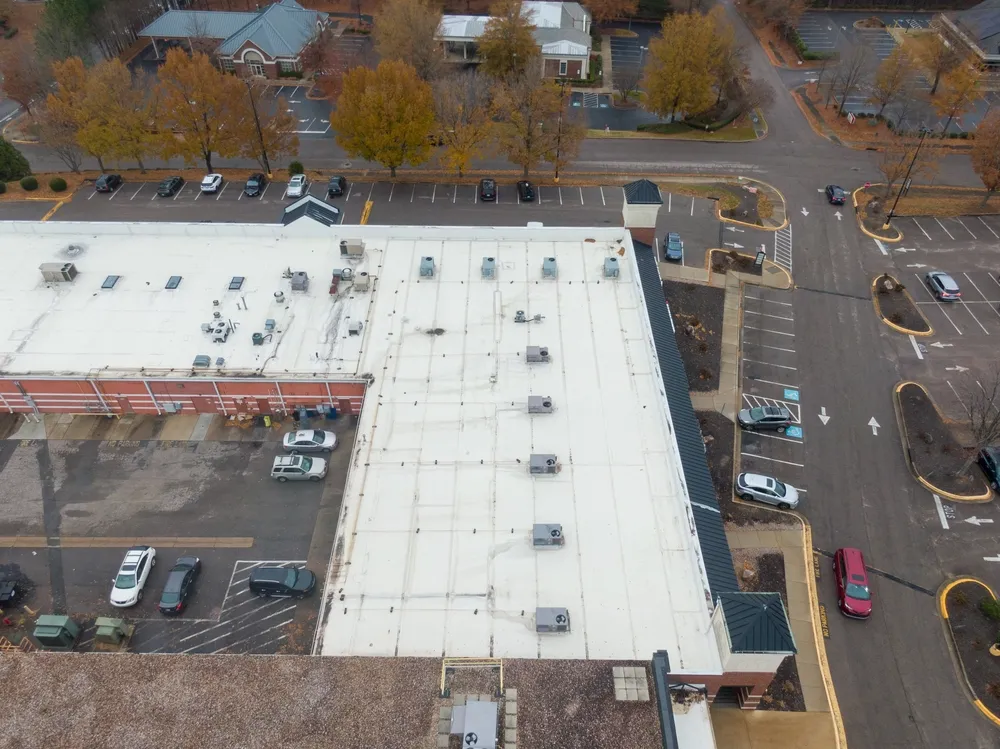
When you manage or own a commercial or industrial building, spotting early warning signs of a roof problem is essential. Recognising the need for commercial roof leak repair early can prevent hefty damage to equipment, inventory, the building structure, and your operational downtime. In this article, we explore seven urgent signs that indicate you need commercial roof leak repair — plus two additional considerations that building owners often overlook.
1. Water Stains, Discoloration or Active Drips
This section addresses how visible signs indoors often point directly to the need for commercial roof leak repair.
Ceiling Tiles, Walls or Floors Showing Moisture Marks
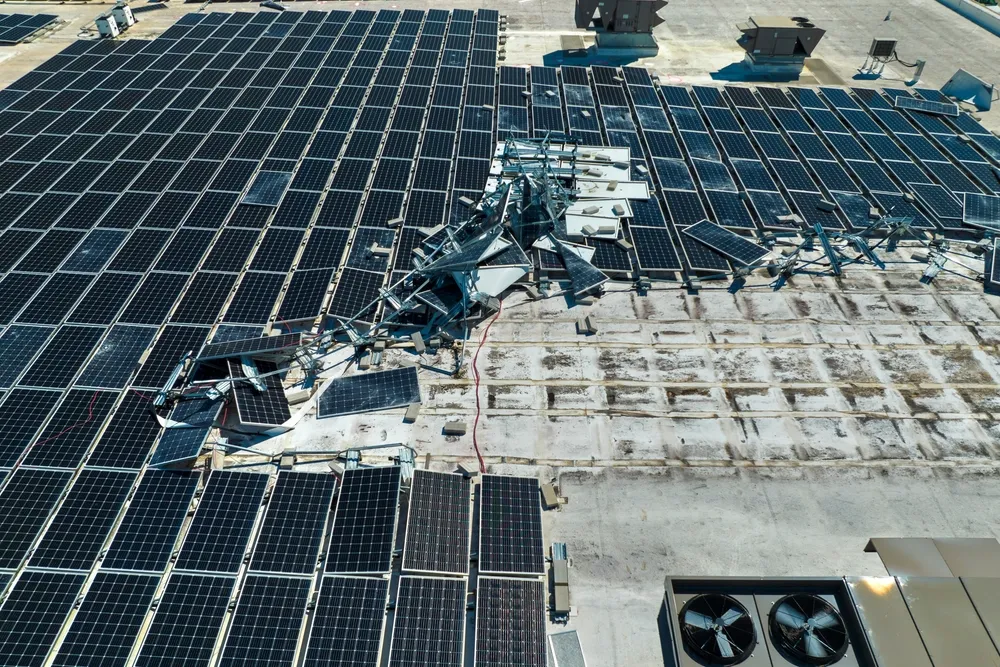
When you notice brown or yellow stains on ceiling tiles, sagging drywall near the roofline, or glossy finish where water is trapped, these are textbook signs of water infiltration. Since the roof is the first line of defence, such moisture inside the building strongly suggests you need commercial roof leak repair. Moisture that enters can spread across insulation and decking, meaning the source may be far from where you see the stain. Early detection and prompt repair mitigate interior damage.
Drips, Puddles or Musty Odours Inside the Building
Unmistakable dripping or visible water accumulation inside the facility demand immediate action. A leak that drips during or after rainfall, or a musty smell signalling hidden moisture, constitute urgent triggers for commercial roof leak repair. The longer you wait, the more insulation, structural elements and internal finishes will deteriorate — increasing both direct repair cost and indirect costs like business interruption.
Ponding or Standing Water on the Roof Surface
Standing water on the roof surface is a serious red flag and often precedes major damage requiring commercial roof leak repair.
Water That Persists More Than 48-72 Hours
When water pools on the roof surface for extended periods — often seen on flat or low-slope roofs — the membrane and flashing are under stress. Ponding accelerates membrane degradation, allows water to seep through seams and leads to trapped moisture beneath the surface. If you identify ponding persisting after storms, the condition is sufficient to call for commercial roof leak repair.
Clogged Drains, Poor Slope or Structural Deformation
Common causes of ponding include clogged drains, low spots, poor roof slope or structural sag. These underlying problems may force water to stay on the roof rather than shed away. These conditions elevate the risk of ongoing leakage and mean you’re likely to need commercial roof leak repair — not just patching, but evaluated by a roofing professional to correct both cause and effect.
3. Blisters, Bubbles, Cracks or Membrane Wrinkles
Damage to the membrane surface itself is a signal that the waterproofing is compromised and commercial roof leak repair may be required.
Surface Irregularities Indicating Hidden Moisture
When the roof membrane shows bubbling (blisters), wrinkling, or cracking, these can indicate that moisture or vapor has become trapped under the sheet, or that the adhesion has failed. That compromised area is a likely leakage path, meaning you need commercial roof leak repair to restore integrity. Investigation should include removing the blister and assessing if substrate or insulation beneath is wet or damaged.
Seam Separation, Flashing Failure and Edge Defects
Beyond visible blisters, the seams of the membrane and flashing are common leakage points. If you notice separation, gaps, exposed fasteners, or flashing pulling away at roof-edges or penetrations, you’re seeing clear signs that the roof’s waterproof barrier has failed. Those failures often require commercial roof leak repair rather than just cosmetic touch-up.
4. Interior Mold, Mildew or Musty Odours
Hidden leakage often manifests with indoor environmental signs — these are non-roof items but strongly indicate you need commercial roof leak repair.
Mold or Mildew Growth Near Ceilings or Vents
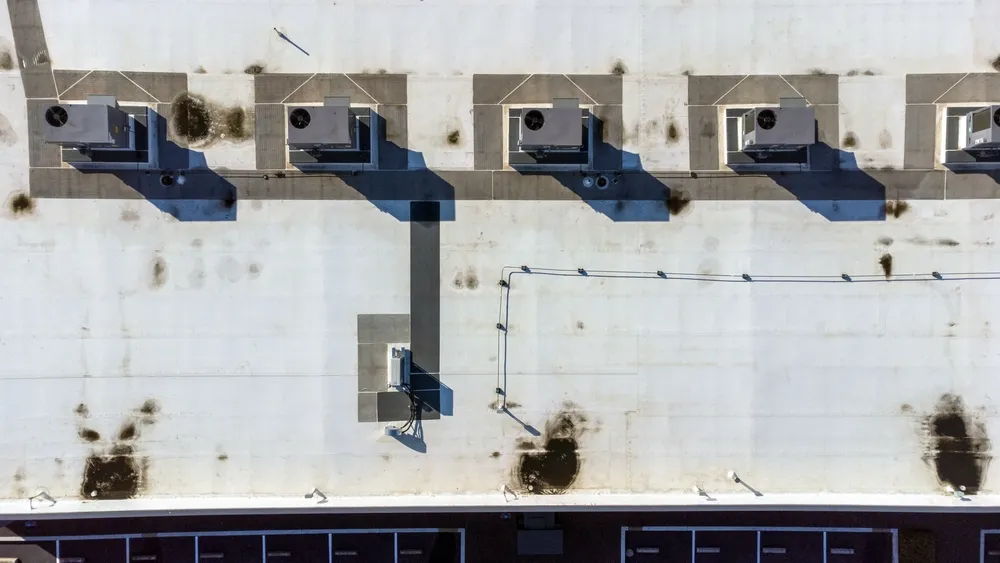
Moisture infiltration through a roof can lead to mold and mildew forming in ceilings, wall corners or around HVAC vents. The presence of consistent humidity or fungal growth is a strong indicator that the roof has allowed water in — triggering the need for commercial roof leak repair. Left unchecked, moisture can spread and pose health risks and legal liability.
Unexplained Odours or Softening Structural Elements
Sometimes you might smell musty odours without seeing visible water stains. Other times ceiling grids or drywall may feel spongy or soft. These subtle—but concerning—indications mean that water has been sitting in your roof system and you should bring in a roofing professional to perform commercial roof leak repair before the issue escalates.
5. Sagging Roof Deck or Interior Ceiling
Structural deformation is a major red flag and often means the roof issue is severe, requiring urgent commercial roof leak repair.
Roof Surface Depressed or Bowing
When your roof deck sags or you notice low spots in the roof surface, the risk of collapse increases. This deformation means the roof assembly has likely absorbed significant moisture or structural load, and you need commercial roof leak repair (or possibly replacement) as soon as possible. Ignoring this sign puts the entire building at risk.
Drooping Interior Ceilings or Panels
On the interior side, sagging ceiling panels or popcorn ceilings that appear to bulge signal that water is accumulating above, and that the roof’s waterproofing has failed. Such signs demand immediate commercial roof leak repair to avert structural failure, electrical hazards and increasingly expensive repairs.
6. Rapidly Rising Energy Costs or HVAC Issues
The roof impacts a building’s thermal performance — unexpected HVAC load or energy costs are indirect signs you may need commercial roof leak repair.
Insulation Saturation from Roof Leakage
When a roof leaks, insulation becomes saturated, losing its R-value and forcing HVAC systems to work harder to maintain comfortable temperatures. If you see a sudden jump in heating or cooling costs without other obvious changes, then roof leakage is a likely culprit and commercial roof leak repair should be explored. Moisture-logged insulation is both an energy drain and a sign of more widespread roof system failure.
HVAC Mounts or Roof Equipment Showing Rust or Corrosion
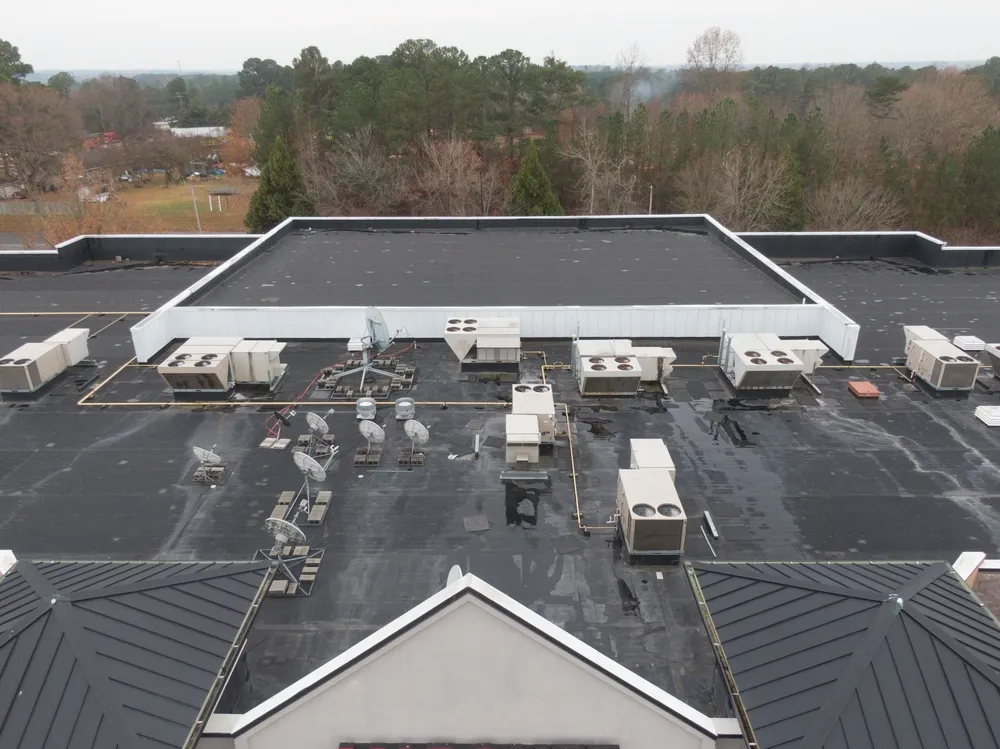
Roof equipment such as air-conditioning units, ducts or vents that sit on the roof deck can suffer when the roof leaks. Rusting of mountings, corroded sheet metal, or failing seals near equipment are signs that water has breached the roof surface — meaning you likely need commercial roof leak repair to protect both the roof and the HVAC investment.
7. Roof Age and History of Previous Repairs
Age and repair history don’t guarantee failure, but they are important context for knowing when commercial roof leak repair is imminent.
Approaching or Exceeded Service Life
Most commercial flat roofs are designed to last 20-25 years depending on the materials and maintenance. If your roof is nearing or past its expected lifespan and you are seeing other warning signs, you’re in a high-risk category where commercial roof leak repair is likely needed. A roof nearing its end-of-life may merit replacement rather than repeated patching.
Frequent or Recurring Repair History
If your roof has had repeated repairs for leaks, you’re effectively investing in temporary fixes rather than a full solution. That pattern indicates the roof system is failing, making commercial roof leak repair (or full replacement) the smart move rather than continuing to chase symptom after symptom. A reputable roofing specialist can assess whether repair or replacement is more cost-effective.
8. Storm or Impact Damage Following Severe Weather
Often overlooked, damage from storms, wind-blown debris or freezing/thawing cycles can trigger the need for commercial roof leak repair quickly.
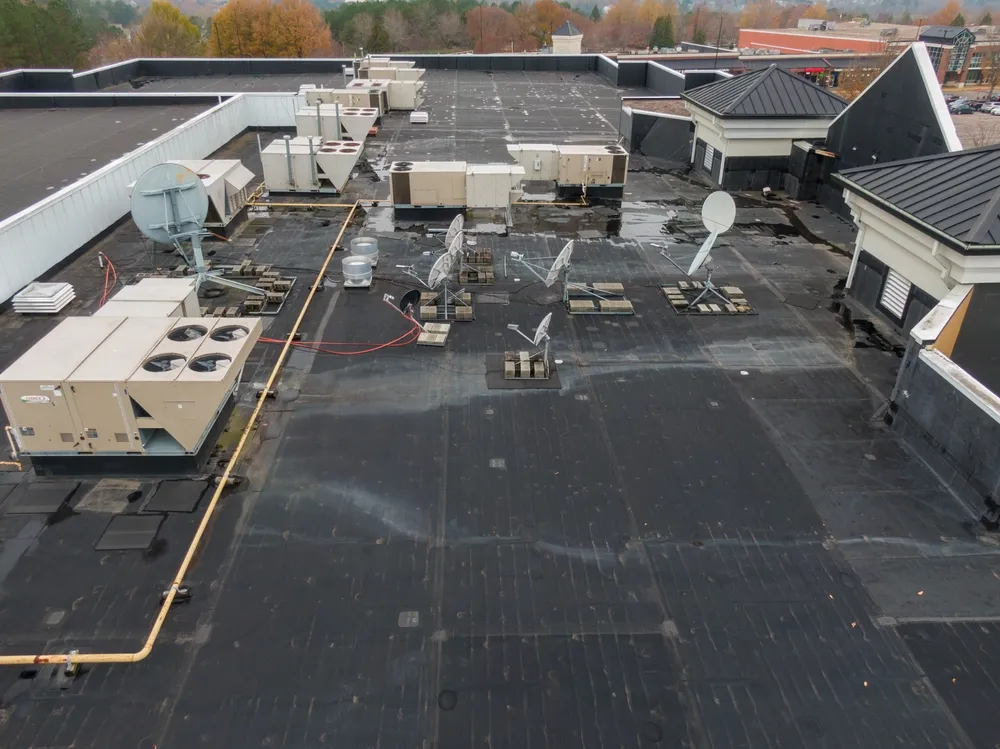
Visible Punctures, Lifted Membrane Edges or Debris Impact
After a heavy storm, hail, wind-driven debris or falling tree limbs can puncture the roof membrane, lift seams, or dislodge flashings. These impact points are prime leak sources and should prompt the scheduling of commercial roof leak repair. Quick intervention prevents small damages from turning into large-scale water intrusion.
Membrane Shrinkage, Tear from Thermal Cycling or Freeze/Thaw
Commercial roofs in climates with temperature extremes may suffer shrinkage, membrane tear or junction failures due to freeze/thaw cycles. If you observe cracks, tears, or signs of movement along the membrane after winter, you’re likely entering a phase where commercial roof leak repair is required. Ignoring it may reduce the remaining lifespan of the roof significantly.
9. Unusual Roof Deck Vibration or Structural Movement
Another less-commonly highlighted sign: structural movement or vibration registered on the roof deck often indicates serious underlying issues needing commercial roof leak repair.
Roof Deck Shaking Under Foot Traffic or Equipment Load
If the roof deck feels unstable under foot traffic or when HVAC units run, it may indicate degradation of the substrate or moisture-compromised structural members. That motion means the roofing system is failing and you should seek commercial roof leak repair before a structural issue arises.
Crack Formation in Parapets, Walls or Roof Perimeter
When you notice new cracks in parapet walls, roof edges or where the roof edge meets the façade, these may be caused by movement in the roof assembly — often driven by water intrusion or structural fatigue. That’s a sign your roof needs thorough inspection and commercial roof leak repair rather than a superficial patch-job.
FAQs About Commercial Roof Leak Repair
How soon should I act once I suspect a leak?
As soon as you identify any of the signs above, you should schedule a professional inspection. Delaying commercial roof leak repair can lead to far greater damage and cost.
Can small leaks be ignored until scheduled maintenance?
No. Even small leaks can compromise insulation, structure and internal finishes, and often escalate rapidly. Early commercial roof leak repair is far more cost-effective than delayed action.
Will commercial roof leak repair extend the roof’s life?
Yes — if performed correctly by qualified professionals. Repairing failure points and restoring membrane integrity helps maximize remaining service life and protect building assets.
Do I always need full roof replacement instead of repair?
Not always. Repairs are appropriate when damage is isolated and the remainder of the roof is in good condition. However, if the roof is aged, has a history of repairs or systemic issues, replacement may be more prudent than repeated commercial roof leak repair.
What should I ask a roofing contractor when scheduling commercial roof leak repair?
Ask about the inspection process, what tools will be used (e.g., moisture scanning), how leak sources will be traced, how repairs will be documented, what warranties apply, and whether drainage or structural correction is included.
Conclusion
Recognising when you need commercial roof leak repair is critical to protecting your facility, your assets and your business continuity. From visible water stains and pooled roof water to sagging structures and unseen moisture build-up, these warning signs should never be ignored. Early, professional intervention prevents costly damage and prolongs the lifespan of your roof system.
At Single Ply Roofing Experts, we specialise in both commercial and residential flat-roofing services and are fully equipped to handle urgent commercial roof leak repair needs. Our team conducts thorough inspections, identifies the root cause of leaks, implements precise repairs and supports long-term maintenance to safeguard your building. If you suspect your roof is leaking—or simply want a professional health-check—contact us today for a consultation and let us help you protect your property.