
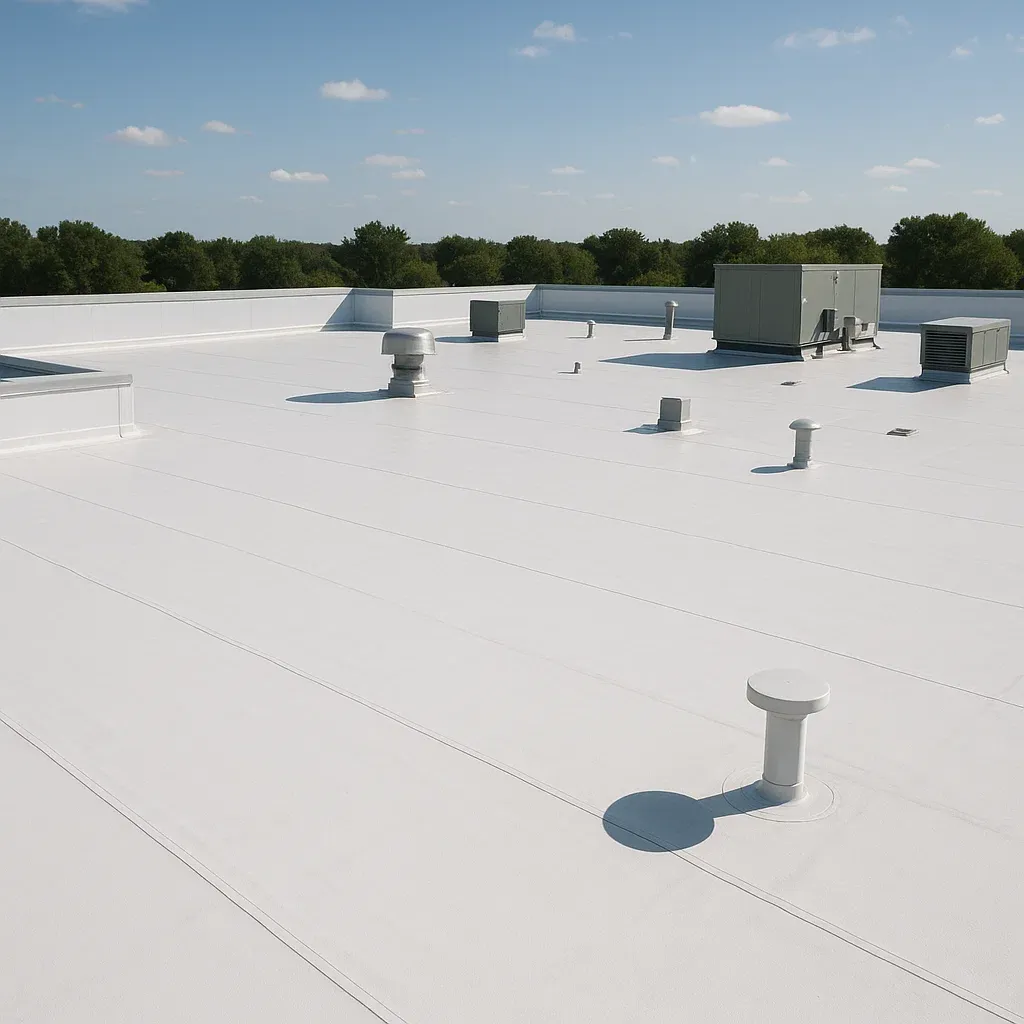
If you own or manage a building with a flat or low-slope roof, you’ll almost certainly hear the term single ply membrane roof sooner or later. This modern roofing system is widely used in commercial projects and increasingly in residential settings because it offers a strong combination of durability, energy efficiency and design flexibility. Understanding how it works helps you make confident, cost-effective decisions about protecting your property.
1. What Is a Single Ply Membrane Roof and Why It’s So Popular?
A single ply membrane roof is a lightweight, flexible roofing system designed for flat and low-slope roofs, using a single layer of synthetic sheet to keep your building watertight.
Composition and Materials
At its core, a single ply membrane roof is made from factory-produced sheets of synthetic material such as PVC, TPO or EPDM. These membranes are typically reinforced with fibres or scrims to increase their strength and dimensional stability.
PVC systems offer strong chemical resistance and good weldability at the seams. TPO membranes are known for their reflective surfaces and good heat-welded seams, making them popular on energy-conscious projects. EPDM, a synthetic rubber, is valued for its flexibility and proven performance in a wide range of temperatures. All of these materials are designed specifically to handle the unique challenges that flat and low-slope roofs face, such as standing water, UV exposure and temperature swings.
Why It’s Gaining Popularity in Modern Roofing
The growing popularity of the single ply membrane roof comes down to performance and practicality. Because the membrane is relatively light, it puts less stress on the building’s structure than many traditional built-up roofs. The sheets are wide and have fewer seams, which helps reduce leak risk when installed correctly. Many membranes are compatible with insulation systems that improve thermal performance, and their clean, modern appearance is attractive on contemporary buildings. Combined with faster installation times and predictable performance, it’s easy to see why many architects, developers and homeowners now specify this system by default.
2. Lifespan and Durability of a Single Ply Membrane Roof
The durability of a single ply membrane roof is one of its biggest attractions, especially for owners who look at long-term value rather than just initial cost.
Typical Service Life Expectations
When properly installed and maintained, a single ply membrane roof commonly delivers a service life in the range of 20 to 30 years, and premium systems may last even longer. The exact lifespan depends on factors such as membrane type, thickness, exposure conditions, drainage design and maintenance quality. Thicker membranes, good insulation and correct detailing around penetrations all contribute to better long-term performance. Regular inspections and timely repairs help you get the maximum life from the system.
Performance Against Weather and Everyday Wear
A single ply membrane roof is engineered to stand up to harsh weather conditions. The membranes are designed to resist UV radiation, ozone and general weathering, which are major causes of roof degradation. They can cope with thermal movement, expanding and contracting as temperatures change without cracking when properly installed. Impact resistance and puncture resistance are also key considerations; while the system is robust, it is still important to manage roof traffic and protect the membrane from unnecessary damage, such as dropped tools or sharp equipment.
3. Energy Efficiency and Environmental Benefits
Many property owners choose a single ply membrane roof because it can support energy savings and environmental goals alongside practical performance.
Reflective Properties and Thermal Comfort
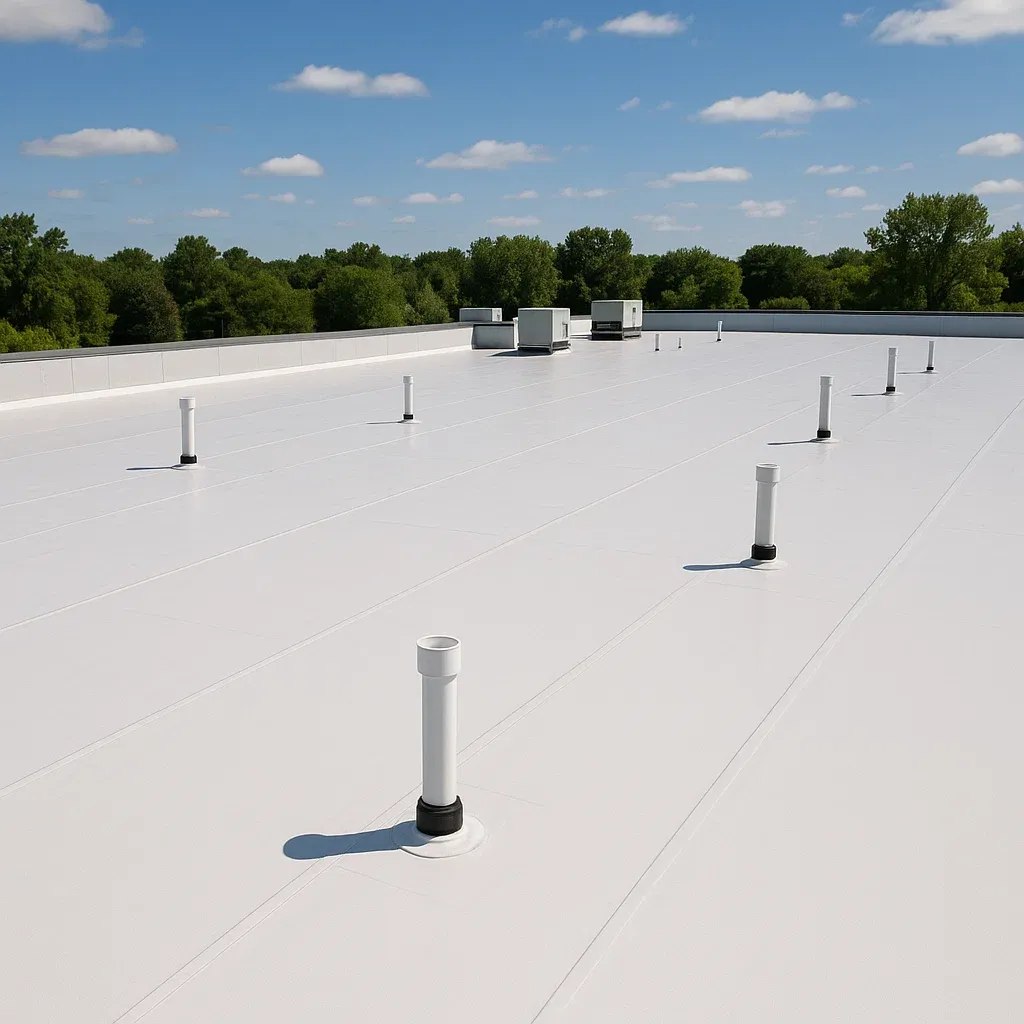
Certain single ply membranes come in highly reflective, light-coloured finishes that help reflect a significant portion of the sun’s energy away from the building. On hot days, this can reduce the amount of heat absorbed into the structure, easing the workload on cooling systems and improving interior comfort. Paired with appropriate insulation beneath the membrane, a single ply membrane roof can contribute to lower energy bills and a more consistent indoor temperature throughout the year.
Reduced Material Use and Environmental Impact
Because the system uses a single layer of membrane, it generally requires fewer materials than traditional multi-layer built-up roofing. This can lower the environmental impact associated with raw material extraction, manufacturing and transport. Many manufacturers now offer membranes that can be recycled at the end of their service life, and some products integrate into broader sustainable building strategies. For owners focused on environmental performance and certifications, a well-designed single ply membrane roof can support those objectives when combined with responsible installation and maintenance.
4. Installation Methods and Attachment Options
How your single ply membrane roof is attached to the building has a major influence on its performance, cost and suitability for different structures.
Main Installation Approaches Explained
There are three main ways a single ply membrane roof is typically installed: mechanically fastened, fully adhered and ballasted.
In a mechanically fastened system, the membrane is secured to the roof deck with specialised fasteners and plates placed at the seams or through the field of the sheet. This approach is widely used on large commercial roofs because it is efficient and relatively straightforward.
A fully adhered system uses adhesives to bond the membrane directly to the substrate or insulation. This creates a smooth, clean appearance, reduces fluttering in high winds and can improve resistance to uplift forces. It can be especially appealing where aesthetics and wind performance are priorities.
Ballasted systems place the membrane loosely over the roof and then hold it in place with a layer of ballast, usually rounded stone or paving slabs. This reduces the number of mechanical fasteners and can speed up installation on very large roofs, but it requires the structure to safely carry the additional weight.
How Attachment Choices Impact Performance
The choice of installation method affects everything from how the roof looks to how it performs in extreme weather. Mechanically fastened systems are often more economical but include more penetrations through the membrane. Fully adhered systems may cost more in labour and materials but create a continuous bond that resists uplift and reduces billowing. Ballasted roofs can be durable and low-maintenance, but finding leaks can be more challenging because the membrane is covered. Working with an experienced installer helps you match the right single ply membrane roof system and attachment method to your building, budget and local climate.
5. Maintenance, Repairs and Cost Considerations
Like any building system, a single ply membrane roof performs best when it is cared for over its lifetime and budgeted as a long-term investment.
Routine Inspections and Preventative Care
Although a single ply membrane roof is comparatively low-maintenance, it still needs regular attention. At least once or twice a year, and after severe weather, the roof should be inspected for debris, ponding water, punctures, seam issues and damage around penetrations such as vents, skylights and plant equipment supports. Cleaning leaves and rubbish from outlets and gutters keeps water moving off the roof and reduces stress on the membrane. Promptly addressing small defects helps prevent localised issues turning into more serious water ingress or structural concerns.
Balancing Upfront Cost and Long-Term Value
The initial investment for a single ply membrane roof may be higher than some basic options, but it is important to consider the total cost over the system’s lifetime. A quality membrane, professional installation and good insulation can reduce repairs, extend service life and improve energy efficiency, all of which save money over time. When evaluating quotes, look beyond the cheapest headline price and examine the membrane type, thickness, attachment method, insulation, warranty terms and maintenance recommendations. This holistic view gives a more realistic picture of value.
FAQs About Single Ply Membrane Roofs
How long does a single ply membrane roof usually last?
Many systems last around 20 to 30 years when installed correctly and maintained regularly, and high-quality membranes can last even longer in favourable conditions.
Can a single ply membrane roof be used on houses as well as commercial buildings?
Yes, it can be a great choice for flat or low-slope residential roofs, such as extensions, garages and contemporary homes, provided the design and detailing suit the building.
Is a single ply membrane roof noisy in heavy rain?
The noise level is usually more influenced by the roof deck and insulation than the membrane itself. With adequate insulation, most occupants notice little difference compared to other roofing systems.
How often should I have my single ply membrane roof inspected?
A general rule is at least once a year, plus after severe storms. More frequent inspections may be advisable on heavily used roofs or critical buildings.
Can solar panels be installed on a single ply membrane roof?
Yes, many systems work very well with solar installations, but it is important that the mounting system and detailing are compatible with the membrane and installed by experienced professionals.
Conclusion
A single ply membrane roof offers a compelling blend of durability, flexibility and energy performance for flat and low-slope buildings. By understanding the key facts about how it is made, how long it can last, what installation methods are available, and how to look after it, you can make informed decisions that protect your property and budget over the long term. When combined with regular inspections, thoughtful design and appropriate warranties, this roofing system can provide reliable, cost-effective protection for decades.
If you are considering a new single ply membrane roof or looking to replace or upgrade an existing flat roof, Single Ply Roofing Experts can guide you through every step. Our team specialises in commercial and residential flat roofing, from detailed roof surveys and honest recommendations to high-quality installation, maintenance and repair services. We focus on matching the right system to your building, ensuring it is installed correctly and backed by strong warranties, so you can enjoy peace of mind and long-lasting performance from your roof. Get a consultation from Single Ply Roofing Experts Today.