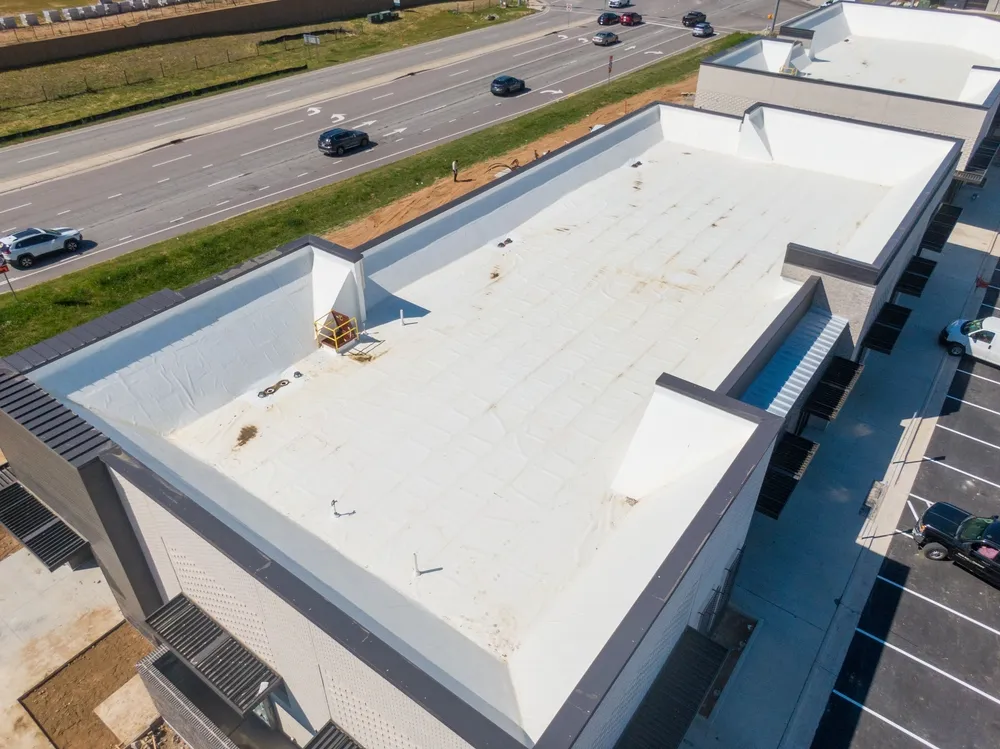
Knowing how to fix commercial roof leak problems starts with one important truth: the visible drip inside the building is often not directly below the roof opening. Water can travel along insulation, decking, pipes, seams, and structural members before appearing on a ceiling tile, wall, or floor.
A commercial roof leak should be handled quickly, but not carelessly. The first steps are to protect the interior, document the damage, identify safety risks, inspect the roof system, locate the source, and choose the right repair method for the membrane type. For many flat and low-slope roofs, especially TPO, PVC, EPDM, built-up roofing, and coated systems, a professional roofing contractor should verify the source before permanent repairs begin.
What to Do First When a Commercial Roof Starts Leaking
The first response to how to fix commercial roof leak damage should focus on safety, containment, and documentation.
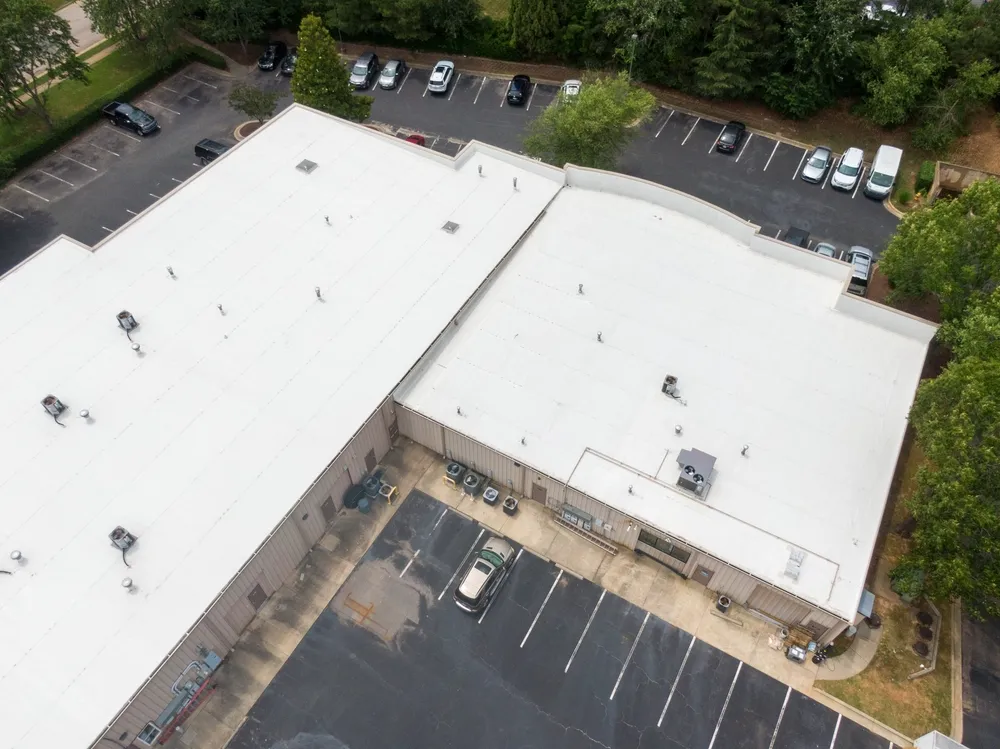
Before anyone walks onto the roof or opens ceiling materials, the property owner or facility manager should reduce interior damage and make the area safer for occupants.
Protect People, Inventory, and Equipment
Move people, inventory, electronics, documents, furniture, and machinery away from the leak area when possible. If water is near electrical panels, outlets, lighting, or equipment, shut off power to the affected area if it can be done safely and call the appropriate professional. Wet floors should be marked immediately to reduce slip hazards.
Place containers under active drips, but avoid puncturing ceiling tiles unless the area has been evaluated and it is safe to do so. A water-filled ceiling tile can collapse without warning, so keep people out of the immediate area until the source and severity are understood.
Document the Leak Before Cleanup
Take photos and videos of the leak, stained ceiling tiles, wet insulation, damaged products, wall marks, puddles, and exterior roof conditions if they can be documented safely from the ground or an accessible area. Record the date, time, weather conditions, wind direction, and whether the leak appeared during rain, after rain, during snowmelt, or after HVAC operation.
This documentation helps a roofing contractor diagnose the problem more accurately. It can also support insurance communication, maintenance records, warranty review, and future repair planning.
How to Locate the Source of a Commercial Roof Leak
A major part of how to fix commercial roof leak problems is finding the actual entry point. On flat and low-slope roofs, water can move horizontally before entering the building, which makes leak detection more detailed than simply looking above the interior stain.
Start With Interior Clues
Begin inside the building by identifying where water appears, how fast it is entering, and what systems are nearby. Look for stained ceiling tiles, wet drywall, rusted metal, damp insulation, water trails, and recurring marks around vents, skylights, drains, or roof-mounted equipment.
The timing of the leak is also important. A leak that appears only during heavy rain may point to membrane, drain, flashing, or seam issues. A leak that appears even without rain may involve HVAC condensation, plumbing, or another mechanical source rather than the roof membrane itself.
Inspect Common Exterior Leak Points
On the roof, trained inspectors typically check seams, flashing, penetrations, drains, scuppers, pitch pockets, curbs, parapet walls, skylights, edge metal, membrane punctures, and ponding areas. Single Ply Roofing Experts’ guide to roof leak detection signs, causes, and solutions provides a useful internal reference for understanding how leak patterns develop on flat roofs.
Commercial roofs often leak around details rather than open field membrane. Even a small split near a pipe boot, curb, or drain can allow significant water entry during a storm.
Safety Comes Before Any Roof Leak Repair
Any guide on how to fix commercial roof leak issues must emphasize roof safety.
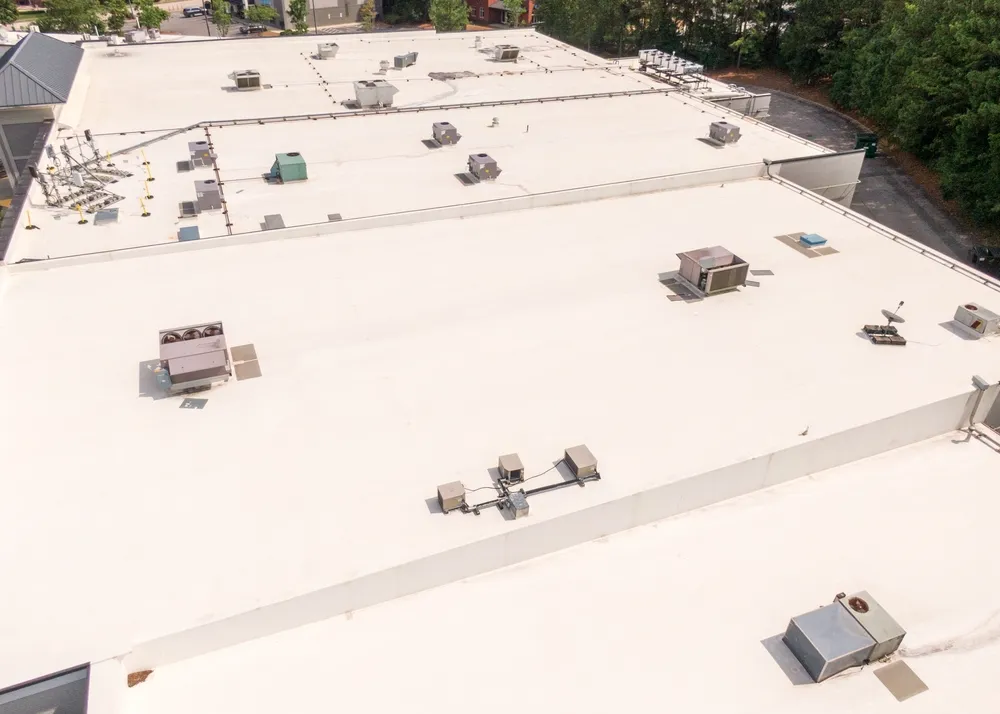
Commercial roofs may look flat and walkable, but they still include fall hazards, skylights, wet surfaces, unstable decking, electrical risks, and hidden damage under the membrane.
Avoid Walking the Roof During Unsafe Conditions
Do not send untrained staff onto a wet, windy, icy, storm-damaged, or unfamiliar roof. Water, algae, loose granules, damaged insulation, and membrane contamination can create slippery conditions. Skylights and roof openings are especially dangerous when they are not clearly marked or protected.
OSHA requires fall protection for construction work at specific elevations, including roofing work on low-slope roofs with unprotected sides and edges six feet or more above lower levels. Review OSHA’s fall protection requirements before allowing roof access.
Use a Qualified Roofing Professional for Active Leaks
A qualified commercial roofing contractor has the equipment and experience to inspect the roof safely, identify the membrane type, and determine whether the damage is isolated or part of a larger system problem. This is especially important when the roof has ponding water, soft insulation, storm damage, or suspected structural concerns.
The National Roofing Contractors Association notes that maintenance is one of the most important factors in determining roof system life after proper installation, which reinforces why professional repair and ongoing roof management matter. You can review NRCA’s roof repair and maintenance resource for industry context.
Temporary Steps to Limit Damage Until Repairs Are Made
Temporary control is often necessary when deciding how to fix commercial roof leak issues during active weather. Temporary measures are meant to reduce damage until the roof can be properly inspected and repaired, not to replace permanent work.
Contain Interior Water First
Inside the building, contain water with buckets, plastic sheeting, wet vacuums, and absorbent materials. Remove or protect inventory and equipment in the affected area. If water is spreading across a warehouse, office, restaurant, or retail floor, create a clear safety perimeter so employees and customers do not walk through the wet zone.
If the ceiling is bulging, keep people away from the area and contact a professional. A saturated ceiling can release water suddenly and may bring down ceiling material, insulation, dust, and debris.
Avoid Improvised Roof Patches That Trap Water
It may be tempting to smear generic sealant over anything that looks suspicious. This can make diagnosis harder and may trap moisture under the membrane. Some temporary patches also fail quickly because they are not compatible with TPO, PVC, EPDM, asphalt, coatings, or metal flashing.
A temporary repair should match the roof material whenever possible and should be clearly documented. The permanent repair still needs to address the actual cause, whether that is a seam failure, puncture, drain issue, flashing gap, or deteriorated membrane.
Common Causes of Commercial Roof Leaks
Understanding the cause is essential to how to fix commercial roof leak problems correctly. Commercial roof leaks usually come from a combination of age, weather exposure, installation details, drainage problems, maintenance gaps, or physical damage.
Membrane Punctures and Open Seams
Single-ply roofs can be punctured by dropped tools, HVAC service traffic, sharp debris, storm damage, or loose equipment. Seams may also open if they were poorly welded, stressed by movement, contaminated during installation, or damaged by age and exposure.
Punctures and seam issues require material-specific repair. TPO and PVC repairs often involve cleaning and heat-welding compatible membrane patches. EPDM repairs usually require cleaning, primer, and compatible patch materials. Using the wrong method can lead to another leak.
Flashing, Curbs, and Roof Penetrations
Many commercial roof leaks begin at transitions. HVAC curbs, vent pipes, skylights, drains, parapet walls, edge metal, and wall flashings all interrupt the roof membrane. These details must handle expansion, contraction, water flow, and movement around equipment.
When flashing fails, water can enter even if the main roof field is still in good condition. A repair may require rebuilding the flashing detail, resealing termination bars, replacing deteriorated pitch pockets, or correcting poor drainage around the penetration.
Ponding Water and Drainage Problems
Flat roofs are designed to drain, even if they appear level. Clogged drains, blocked scuppers, settled insulation, poor slope, and debris buildup can leave standing water on the roof. Ponding water increases stress on seams, flashing, insulation, and membrane surfaces.
If drainage is the cause, patching the membrane alone may not solve the problem. The repair plan may need drain cleaning, tapered insulation, added scuppers, improved overflow drainage, or correction of low areas.
How Different Flat Roof Materials Are Repaired
The best method for how to fix commercial roof leak issues depends on the roof system. TPO, PVC, EPDM, built-up roofing, modified bitumen, SPF, coatings, and metal roof sections all require different repair techniques.
TPO and PVC Roof Leak Repairs
TPO and PVC are thermoplastic single-ply membranes. Repairs typically involve cleaning the surface, preparing the damaged area, and heat-welding a compatible patch over the affected section. A trained technician then checks the welded edges to confirm the patch is sealed.
Single Ply Roofing Experts provides dedicated service information for TPO roofing systems and PVC roofing systems, both of which are common choices for commercial flat roofing applications.
EPDM Roof Leak Repairs
EPDM is a rubber roofing membrane. Leak repairs usually involve cleaning the area, applying primer, and installing compatible EPDM repair tape or patches. The repair must be rolled properly so the patch bonds tightly and does not lift at the edges.
EPDM details around penetrations, seams, and edges require careful inspection because the membrane can shrink or pull over time. Single Ply Roofing Experts’ EPDM roofing services page provides more information about this flat roofing option.
Built-Up and Coated Roof Repairs
Built-up roofs and coated systems may require patching with compatible materials, repairing blisters, resealing cracks, or addressing worn coating areas. These systems should be evaluated for trapped moisture before adding new material over the top.
If a coating is applied over wet insulation or an active leak source, the problem may continue below the surface. Moisture testing and a proper repair plan are important before restoration work begins.
When a Commercial Roof Leak Is an Emergency
Some leaks can wait for a scheduled repair, while others require immediate attention. Part of knowing how to fix commercial roof leak damage is recognizing when the situation threatens safety, operations, inventory, or the structure.
Signs That Require Immediate Response
A commercial roof leak may be an emergency if water is entering near electrical equipment, ceiling materials are sagging, water is spreading across occupied floors, inventory is being damaged, mold-like odor is developing, or the roof surface appears unstable. Leaks after high winds, heavy rain, hail, or impact damage should also be treated seriously.
If the building is actively taking on water, contact a roofing contractor quickly. Single Ply Roofing Experts’ article on urgent signs you need commercial roof leak repair explains when fast action can help reduce damage and downtime.
When to Consider Temporary Roof Protection
Temporary roof protection may be appropriate after storms, sudden membrane damage, or impact damage, especially when permanent repairs cannot be completed immediately. The U.S. Army Corps of Engineers describes temporary roofing as a way to protect property until permanent repairs can be arranged after disaster damage.
For commercial buildings, temporary protection should be installed by professionals whenever roof access, fall hazards, wind exposure, or membrane compatibility create risk.
How to Decide Between Repair, Restoration, and Replacement
A realistic approach to how to fix commercial roof leak problems includes evaluating whether a small repair is enough or whether the roof needs broader restoration or replacement.
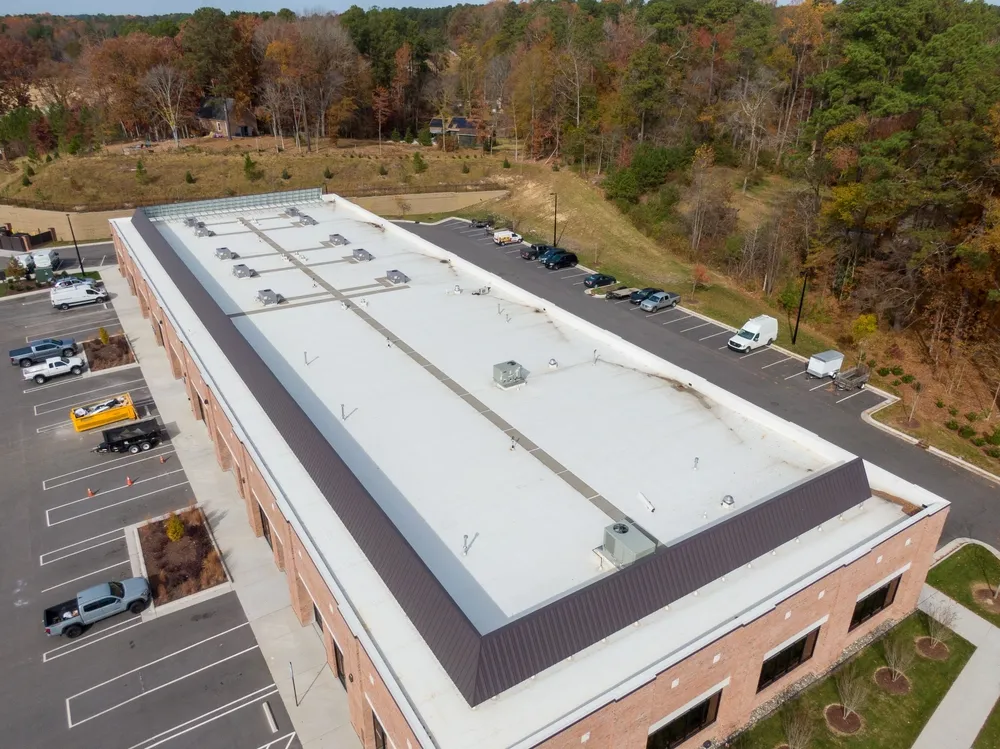
The answer depends on roof age, leak history, membrane condition, insulation moisture, and drainage performance.
When a Targeted Repair May Be Enough
A targeted repair may be appropriate when the roof is generally in good condition and the leak comes from a specific puncture, isolated seam issue, loose flashing, clogged drain, or minor detail failure. In this case, the contractor can repair the affected area and document the condition of the surrounding roof.
Targeted repairs work best when the problem is caught early. A small puncture that is repaired quickly may not require major work if water has not saturated insulation or spread beneath the membrane.
When Restoration or Replacement Makes More Sense
If the roof has multiple leaks, widespread membrane deterioration, wet insulation, chronic ponding, repeated seam failures, or aging flashing, a patch may only delay the larger issue. Restoration may be an option when the roof is structurally sound and dry enough for a coating or overlay system. Replacement may be the better choice when the system is beyond repair.
Single Ply Roofing Experts’ guide to commercial roofing repair or replacement can help building owners understand how contractors evaluate long-term value.
Two Additional Factors Many Building Owners Overlook
Two often-missed parts of how to fix commercial roof leak problems are warranty requirements and roof traffic control. Both can affect repair quality, liability, and the life of the roof after the leak is fixed.
Check Warranty and Maintenance Requirements
Before authorizing major repairs, check whether the roof has a manufacturer warranty, contractor workmanship warranty, or maintenance agreement. Some warranties require approved materials, approved contractors, documentation, and timely maintenance.
Unauthorized repairs can sometimes complicate warranty coverage. Keep records of inspection reports, photos, invoices, repair materials, and moisture findings so future decisions are easier to support.
Control Roof Traffic After the Repair
Many commercial roof leaks are caused or worsened by rooftop traffic. HVAC technicians, maintenance crews, satellite installers, sign contractors, and other trades may walk across the membrane without understanding how easily a roof can be punctured.
After repairs, create designated walk paths where appropriate, keep sharp tools and debris off the roof, and require contractors to report dropped screws, fasteners, or damage. A roof access policy can prevent small punctures from becoming expensive leaks.
How to Prevent Future Commercial Roof Leaks
The best long-term answer to how to fix commercial roof leak issues is prevention. A commercial roof should be managed as a building asset, not ignored until water enters the interior.
Schedule Routine Roof Inspections
Have the roof inspected regularly and after major storms. A professional inspection can identify open seams, cracked sealant, loose flashing, damaged membrane, clogged drains, deteriorated coating, and punctures before they create interior damage.
Routine inspections are especially important for flat roofs because problems can stay hidden until water reaches insulation, decking, or occupied spaces. Preventive maintenance is usually less disruptive than emergency leak repair.
Keep Drains, Gutters, and Scuppers Clear
Drainage maintenance is one of the most important ways to reduce leak risk on a flat roof. Leaves, debris, dirt, packaging materials, and loose roof particles can block drains and scuppers, causing water to pond.
A simple drain cleaning schedule can protect seams, flashing, insulation, and roof structure. When drainage problems keep returning, the building may need a design correction rather than repeated cleanup.
FAQ
What Is the First Step in Fixing a Commercial Roof Leak?
The first step is to protect people and property inside the building, contain the water, document the damage, and contact a qualified commercial roofing contractor for inspection.
Can I Patch a Commercial Roof Leak Myself?
Minor temporary containment inside the building may be safe, but roof repairs should usually be handled by trained professionals because of fall hazards, membrane compatibility, and hidden moisture risks.
Why Is the Leak Not Directly Under the Roof Damage?
Water can travel along insulation, decking, pipes, beams, and membrane layers before appearing inside the building. The interior drip is not always below the entry point.
What Causes Most Commercial Flat Roof Leaks?
Common causes include open seams, punctures, flashing failures, clogged drains, ponding water, aging membrane, storm damage, and poorly sealed roof penetrations.
How Long Does Commercial Roof Leak Repair Take?
Small repairs may be completed quickly after inspection, while leaks involving wet insulation, multiple failure points, or major flashing work may require more time and planning.
Should Wet Insulation Be Replaced?
Wet insulation often needs to be removed and replaced because it can reduce roof performance, hold moisture, and contribute to ongoing damage beneath the membrane.
How Often Should a Commercial Roof Be Inspected?
Many commercial roofs benefit from inspections at least twice a year and after major storms, heavy wind, hail, or unusual rooftop activity.
Conclusion
Knowing how to fix commercial roof leak problems means moving in the right order: protect the interior, document the damage, avoid unsafe roof access, locate the true source, choose material-specific repairs, and correct the underlying cause. A temporary patch may reduce immediate water entry, but a lasting solution depends on proper diagnosis, compatible materials, safe workmanship, and a maintenance plan that prevents repeat leaks.
Single Ply Roofing Experts helps property owners protect commercial and residential flat roofs with professional inspections, leak detection, flat roof repair, maintenance, and single-ply roofing solutions. Whether your building has TPO, PVC, EPDM, built-up roofing, or another low-slope system, our team can identify the problem and recommend a practical path forward. To schedule help for an active leak or plan a roof evaluation, contact Single Ply Roofing Experts through our commercial and residential flat roofing service page.