
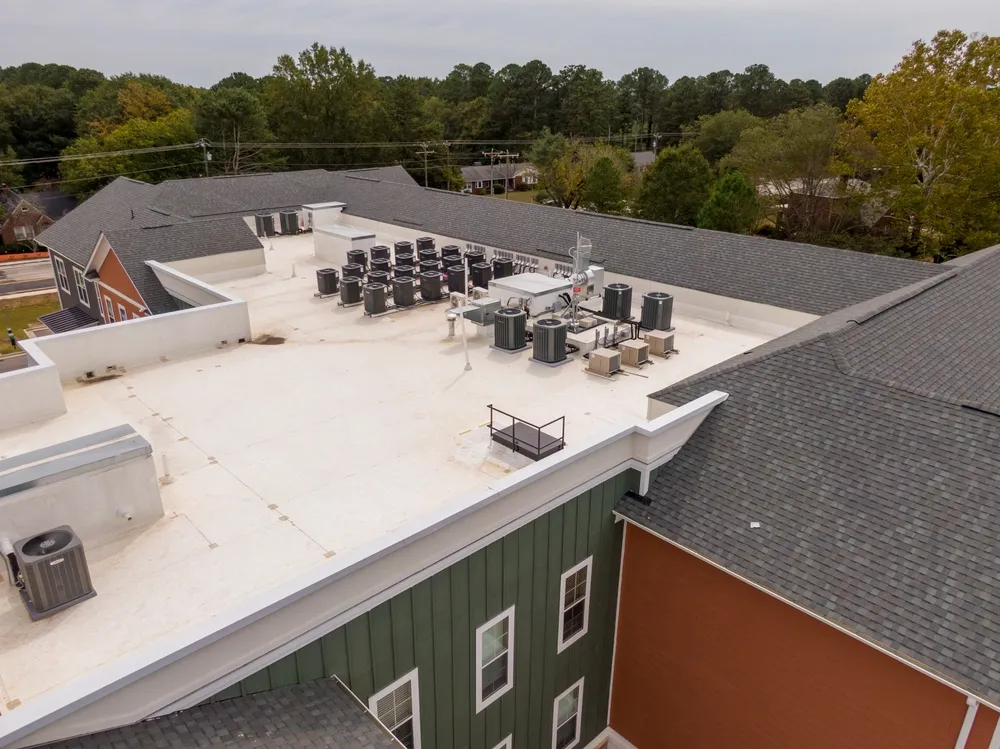
The TPO roofing benefits for commercial buildings include heat-welded seams, reflective membrane options, installation flexibility, compatibility with modern insulation systems, and suitability for many large low-slope roofs. These qualities have made thermoplastic polyolefin, commonly called TPO, a widely considered option for warehouses, offices, retail properties, multifamily buildings, schools, and other commercial facilities.
However, TPO performance depends on more than the membrane itself. Roof deck condition, insulation, drainage, attachment method, seam welding, flashing, rooftop traffic, and ongoing maintenance all affect long-term results. Property owners exploring TPO roofing benefits for commercial buildings should evaluate the complete roofing assembly rather than choosing a system based only on price or membrane color.
The Usage of TPO Roofing
Before evaluating TPO roofing benefits for commercial buildings, it helps to understand what the material is and how it fits into a low-slope roof assembly.
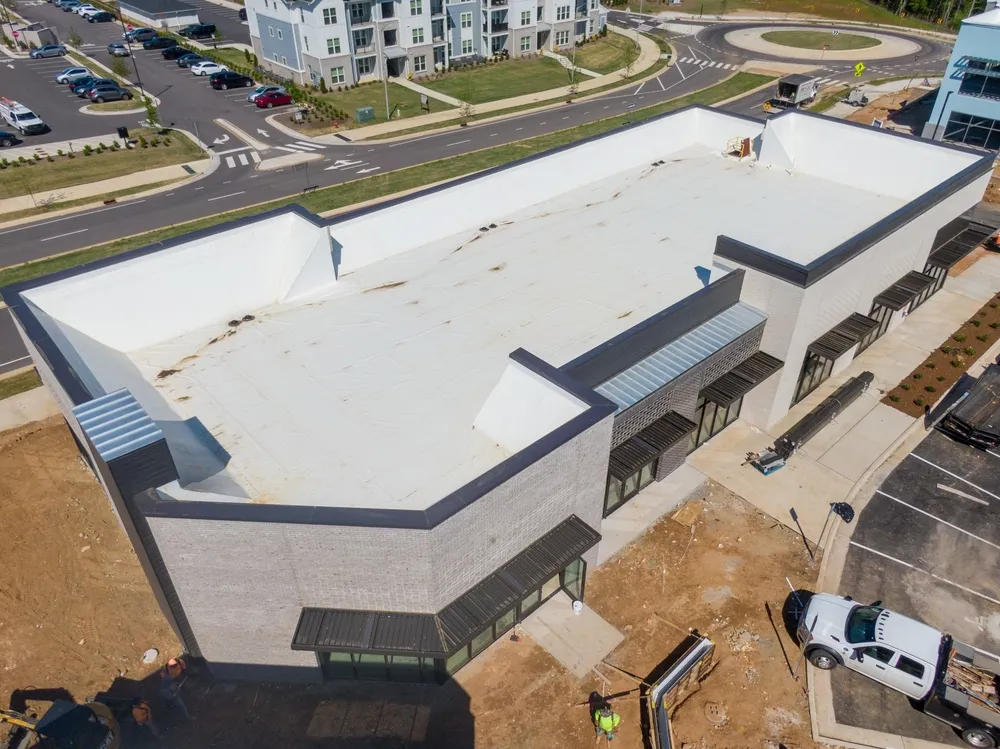
TPO is a reinforced single-ply thermoplastic membrane designed for commercial and residential roofing applications.
TPO Uses Heat-Welded Seams
One of TPO’s defining features is that compatible membrane sheets are joined with controlled hot air. Proper welding can create strong seams across large roof areas and around many flashing details.
The quality of those seams still depends on correct surface preparation, welding temperature, equipment settings, weather conditions, and installer experience. GAF’s TPO roofing resources provide additional manufacturer-level information about membrane construction and heat-welded seam systems.
TPO Is Part of a Complete Roof Assembly
A commercial TPO roof may include the structural deck, vapor-control components where needed, insulation, tapered insulation, cover board, attachment materials, membrane, flashing, drains, scuppers, and perimeter securement.
This matters because even a high-quality membrane cannot compensate for wet insulation, poor drainage, deteriorated decking, or incorrectly flashed penetrations. The roof should be designed as one coordinated system.
Reflective Roofing Can Help Manage Solar Heat
One of the best-known TPO roofing benefits for commercial buildings is the availability of highly reflective membrane colors, especially white. Reflective roofing can help reduce solar heat absorption at the roof surface, although actual building performance depends on climate, insulation, HVAC efficiency, and building use.
White TPO Can Reflect More Sunlight
The U.S. Department of Energy explains that cool roofs are designed to reflect more sunlight and absorb less solar energy than conventional roofs. Property owners can review the DOE’s cool roof guidance when considering whether reflective roofing aligns with their climate and building needs.
Large commercial properties with substantial roof area may benefit from evaluating white TPO as part of a broader energy strategy. Warehouses, offices, schools, and retail buildings are common examples.
Reflectivity Works Best With Proper Insulation
A reflective membrane and roof insulation perform different functions. Reflectivity affects solar heat at the exterior surface, while insulation reduces heat flow through the roof assembly.
During replacement, contractors should inspect existing insulation for moisture, compression, gaps, and poor drainage. A new white membrane installed over wet or inadequate insulation may leave significant roof problems unresolved.
Heat-Welded Seams Are a Practical Advantage
Among the most important TPO roofing benefits for commercial buildings is the ability to join membrane sheets using hot-air welding. This can create continuous seams across broad roof areas when installation is completed correctly.
Welded Seams Support Large Roof Areas
Automatic welding equipment can be used across long field seams, while hand welding is typically required around curbs, penetrations, corners, and smaller details. This approach can be practical for large warehouses, distribution facilities, and other broad commercial roofs.
Welding quality must be checked as work progresses. Dirt, moisture, inconsistent speed, poor machine settings, or changing weather can affect the finished seam.
Details Still Require Skilled Installation
Commercial roofs rarely consist only of open membrane. HVAC units, drains, pipes, skylights, walls, and roof edges create complex transitions.
This means contractor experience matters. A fast installation across the open roof field does not guarantee that penetrations and flashing details are equally reliable.
TPO Offers Flexible Installation Methods
Installation flexibility is another reason owners consider TPO roofing benefits for commercial buildings.
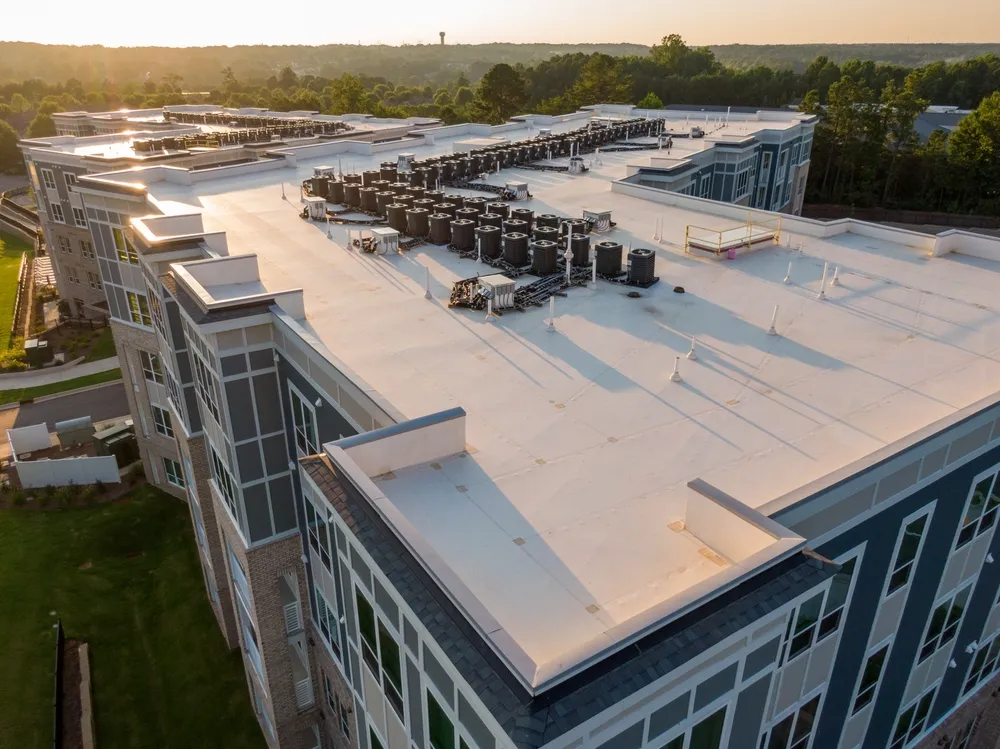
Depending on the selected system, deck, wind requirements, and project conditions, TPO may be mechanically attached, fully adhered, or installed using other approved methods.
Mechanically Attached TPO Systems
Mechanically attached systems use approved fasteners and plates to secure roofing components to the deck. This approach can be efficient on large roof areas when the building and deck are suitable.
Fastener patterns should be based on the roof design, deck type, and wind pressures. Corners and perimeters may require different attachment than the center of the roof.
Fully Adhered TPO Systems
A fully adhered system bonds the membrane to an approved substrate. This can reduce broad membrane movement and create a smooth finished appearance.
The substrate must be properly prepared. Dust, moisture, contamination, or incorrect adhesive application can reduce bond quality. Product-specific requirements should always guide installation.
TPO Can Work Well for Commercial Roof Replacement
The TPO roofing benefits for commercial buildings also include compatibility with many replacement strategies. Depending on existing conditions, a project may require full tear-off or may qualify for an approved recover approach.
Full Replacement Can Correct Hidden Problems
When an old roof has extensive wet insulation, failed materials, or widespread deterioration, removal may be necessary. This gives the contractor access to the deck and creates an opportunity to improve insulation, drainage, and flashing before the new TPO roof is installed.
A full replacement may cost more initially, but it can address problems that surface patches cannot solve.
Some Buildings May Qualify for a Recover System
A recover system places a new approved assembly over an existing roof when conditions support it. This may reduce demolition and building disruption.
However, recover should not be used to hide wet insulation, unstable materials, or serious drainage problems. Existing conditions must be evaluated carefully before deciding whether the roof can remain in place.
TPO Can Integrate With Modern Insulation Systems
Another important part of TPO roofing benefits for commercial buildings is compatibility with insulation and cover-board strategies. These layers can influence energy performance, drainage, puncture resistance, and long-term membrane support.
Tapered Insulation Can Improve Drainage
Commercial flat roofs should still direct water toward drains, scuppers, or gutters. Tapered insulation can help create slope when the existing deck does not drain effectively.
This may reduce recurring low spots and improve the movement of water across the roof. Drainage planning should be completed before membrane installation rather than treated as an afterthought.
Cover Boards Can Add Protection
A cover board may provide a stronger surface beneath the membrane and improve resistance to impacts or concentrated foot traffic.
This can be especially useful on roofs with frequent HVAC service or other maintenance activity. High-traffic areas should also be planned with appropriate walk paths or protective materials.
TPO Can Be Practical for Large Commercial Roofs
Scale is another reason to consider TPO roofing benefits for commercial buildings. Large roof areas can be organized into planned membrane runs with coordinated seams, attachment, drainage, and flashing details.
Large Roof Areas Can Be Installed Systematically
TPO membrane layouts can be planned around roof dimensions, drains, equipment, walls, and other penetrations. This helps contractors control seam placement and installation sequencing.
On large projects, careful planning also supports material staging, daily dry-in, and business continuity. A roofing crew should avoid exposing more roof than can be safely protected before weather changes.
Complex Roofs Still Need Detailed Planning
Large buildings often contain many rooftop systems. HVAC units, vents, electrical conduits, pipes, and equipment supports interrupt the membrane and create additional flashing work.
These details may represent a small percentage of total roof area but often require the greatest level of workmanship and inspection.
TPO Maintenance Is Manageable but Necessary
TPO roofing benefits for commercial buildings should not be interpreted as maintenance-free performance.
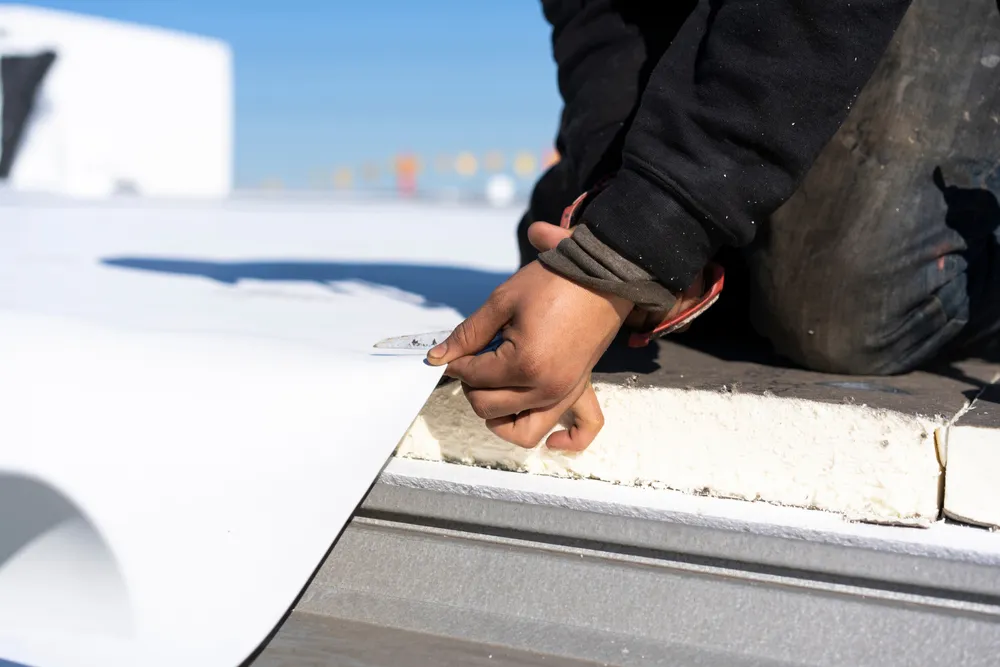
Regular inspections can identify damage before small issues become expensive interior leaks.
Inspections Help Identify Developing Problems
Roof inspections should focus on seams, penetrations, drains, scuppers, perimeter metal, traffic areas, and visible membrane damage. Additional checks may be appropriate after major storms or significant rooftop work.
Single Ply Roofing Experts’ commercial roof maintenance checklist offers a practical starting point for building owners planning routine roof care.
Drainage Maintenance Is Critical
Blocked drains and scuppers can allow water to collect in low areas. Leaves, packaging, vegetation, and construction debris should be removed before they interfere with drainage.
If the same location repeatedly holds water even when drains are clear, the building may need a more detailed slope or drainage assessment.
TPO Can Deliver Strong Long-Term Value
Long-term value is another reason property owners evaluate TPO roofing benefits for commercial buildings. The best roofing system is not necessarily the one with the lowest upfront cost, but the one that balances installation, maintenance, performance, disruption, and future repair needs.
Project Scope Determines Real Cost
TPO project costs vary depending on roof size, tear-off requirements, insulation, membrane thickness, cover board, drainage correction, attachment method, access, and flashing complexity.
Two proposals described as “TPO roofing” may represent very different assemblies. Owners should compare what is included rather than reviewing only the final price.
TPO Can Be Repaired When Conditions Allow
Compatible TPO repair membrane can often be hot-air welded over localized damaged areas when the existing roof is suitable for repair. Punctures and certain isolated defects may therefore be addressed without replacing the entire roof.
However, recurring leaks, wet insulation, broad seam issues, or failing flashing may indicate that more extensive work is needed. Owners comparing options can review the difference between commercial roof repair and replacement.
Two Additional Factors Owners Often Miss
Two overlooked TPO roofing benefits for commercial buildings involve future rooftop use and project disruption. Planning for these issues before installation can improve long-term roof performance.
Plan for Future Rooftop Equipment
Commercial buildings change over time. New HVAC equipment, solar systems, communication equipment, and exhaust components may be added after the roof is installed.
Future penetrations should be coordinated with roofing professionals. Unrelated contractors should not cut through the membrane and rely on generic sealants to create permanent waterproofing.
Roofing Work Can Be Phased Around Operations
Large commercial roof projects may be completed in controlled sections to reduce exposure and coordinate work around occupants, tenants, deliveries, and business operations.
Good phasing considers weather, material staging, access routes, HVAC operations, and daily dry-in. This can be especially important for occupied offices, retail properties, schools, and active industrial buildings.
When TPO May Not Be the Best Choice
A balanced review of TPO roofing benefits for commercial buildings should also acknowledge limitations. No membrane is ideal for every property.
Chemical Exposure Needs Careful Review
Restaurants, manufacturing facilities, and industrial buildings may expose roofing materials to grease, oils, or chemicals. The roof system should be selected according to the actual exposure rather than assuming TPO is automatically suitable.
In some specialized environments, another membrane such as PVC may deserve consideration based on the project conditions.
Heavy Roof Traffic Requires Extra Protection
TPO is a roofing membrane, not a general-purpose walking surface. Frequent access can increase puncture and wear risks.
Commercial buildings with regular rooftop service should consider cover boards, walk paths, and controlled access procedures to help protect the system.
FAQ
The following concise answers address common questions about TPO roofing benefits for commercial buildings.
What Are the Main TPO Roofing Benefits for Commercial Buildings?
Common benefits include heat-welded seams, reflective membrane options, installation flexibility, compatibility with insulation systems, and suitability for many commercial low-slope roofs.
Is TPO Good for Large Commercial Buildings?
Yes. TPO can be suitable for warehouses, offices, retail properties, schools, and distribution facilities when the complete roof assembly is properly designed.
Does White TPO Lower Energy Costs?
It may help reduce solar heat absorption in appropriate conditions, but actual savings depend on climate, insulation, HVAC efficiency, utility rates, and building use.
Are TPO Seams Glued?
TPO field seams are commonly joined with hot-air welding. Installation should follow the selected manufacturer’s technical requirements.
Can TPO Be Installed Over an Existing Roof?
Sometimes. A recover may be possible if existing roof conditions, moisture levels, structural capacity, compatibility, and code requirements support it.
Does TPO Require Maintenance?
Yes. Routine inspections, drainage maintenance, and prompt repair of punctures or flashing problems help protect long-term performance.
Is TPO Better Than EPDM?
Neither is universally better. TPO offers thermoplastic welded seams and reflective options, while EPDM has different material and installation characteristics. The building should guide the choice.
Conclusion
The TPO roofing benefits for commercial buildings can include heat-welded seams, reflective surface options, installation flexibility, compatibility with modern insulation systems, practical replacement strategies, and strong suitability for many low-slope properties. The best results still depend on proper roof assessment, drainage, insulation, attachment, seam welding, flashing, and maintenance.
Single Ply Roofing Experts helps commercial and residential property owners evaluate flat roofing systems based on real building conditions. Our team works with TPO and other low-slope roofing systems for installation, replacement, repairs, leak detection, drainage concerns, and maintenance. To discuss whether TPO is right for your building or plan a professional flat roof evaluation, contact us through the Single Ply Roofing Experts contact page.